



More gas, more costs, and more emissions
The main conclusion is that closing Almaraz would likely increase both emissions and supply costs. The electricity no longer generated by the plant would need to be replaced, to a greater extent than foreseen in the NECP, by a more intensive use of combined-cycle gas turbines (CCGTs). The NECP itself assumes very limited operation of CCGTs by 2030, below 10% of equivalent full-load hours, which would require additional capacity mechanisms and therefore entail further regulatory costs.
Although renewable capacity has expanded significantly in recent years—mainly driven by utility-scale photovoltaic (PV) plants—this growth does not eliminate the structural challenge. Solar generation is concentrated in daylight hours and shows substantial daily variability. By contrast, nuclear generation provides stable output across hours and seasons, with annual equivalent operating hours per megawatt more than four times those of PV. This difference is critical to ensure supply outside peak solar production periods.
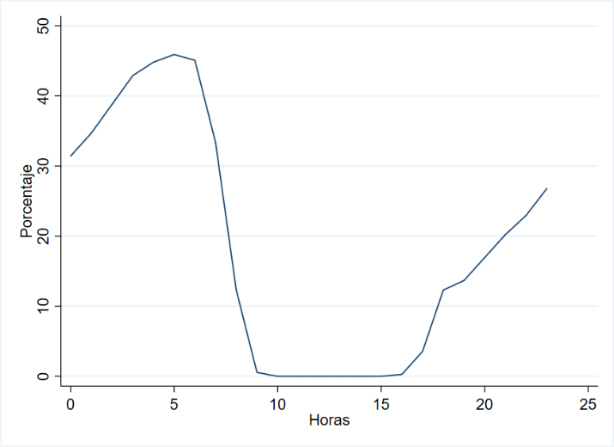
A simulation for 2029, assuming the planned PV capacity targets are met and that wind and storage grow moderately, indicates that between 21:00 and 8:00 CCGT generation would need to increase in more than one third of the hours of the year. This would raise the probability that gas-fired plants set the marginal price in the wholesale market, leading to higher day-ahead prices and higher balancing costs. The magnitude of the increase would depend on gas and carbon allowance prices. The last one is expected to remain under upward pressure in the context of tighter European climate policy.
Impact on the climate target and security of supply.
From a decarbonisation perspective, the closure would make it more difficult to achieve the objective of reducing power sector emissions by 56% compared to 2025 levels. At the same time, energy-intensive industries—operating more than 6,000 equivalent hours per year—and the expected growth in electricity demand from data centres require firm and non-seasonal generation, a role that nuclear energy performs reliably. Regarding taxation, the electricity-related taxes introduced in 2012 were designed to address the tariff deficit, which has now largely been resolved. The analysis suggests that temporarily removing the tax on spent nuclear fuel and radioactive waste would have a limited impact on household bills, around 1%, while the cost increase associated with higher gas generation could be significantly larger.
An alternative scenario that maintains existing nuclear capacity and optimises the entry of renewables and storage would reduce total system costs compared to the official NECP pathway. In that framework, the marginal cost of avoiding an additional tonne of CO2 under the NECP would reach €753 per tonne.
Overall, the findings suggest that postponing the closure of Almaraz could contribute to a more orderly transition, with lower system costs and reduced risks for security of supply and decarbonisation targets.


