

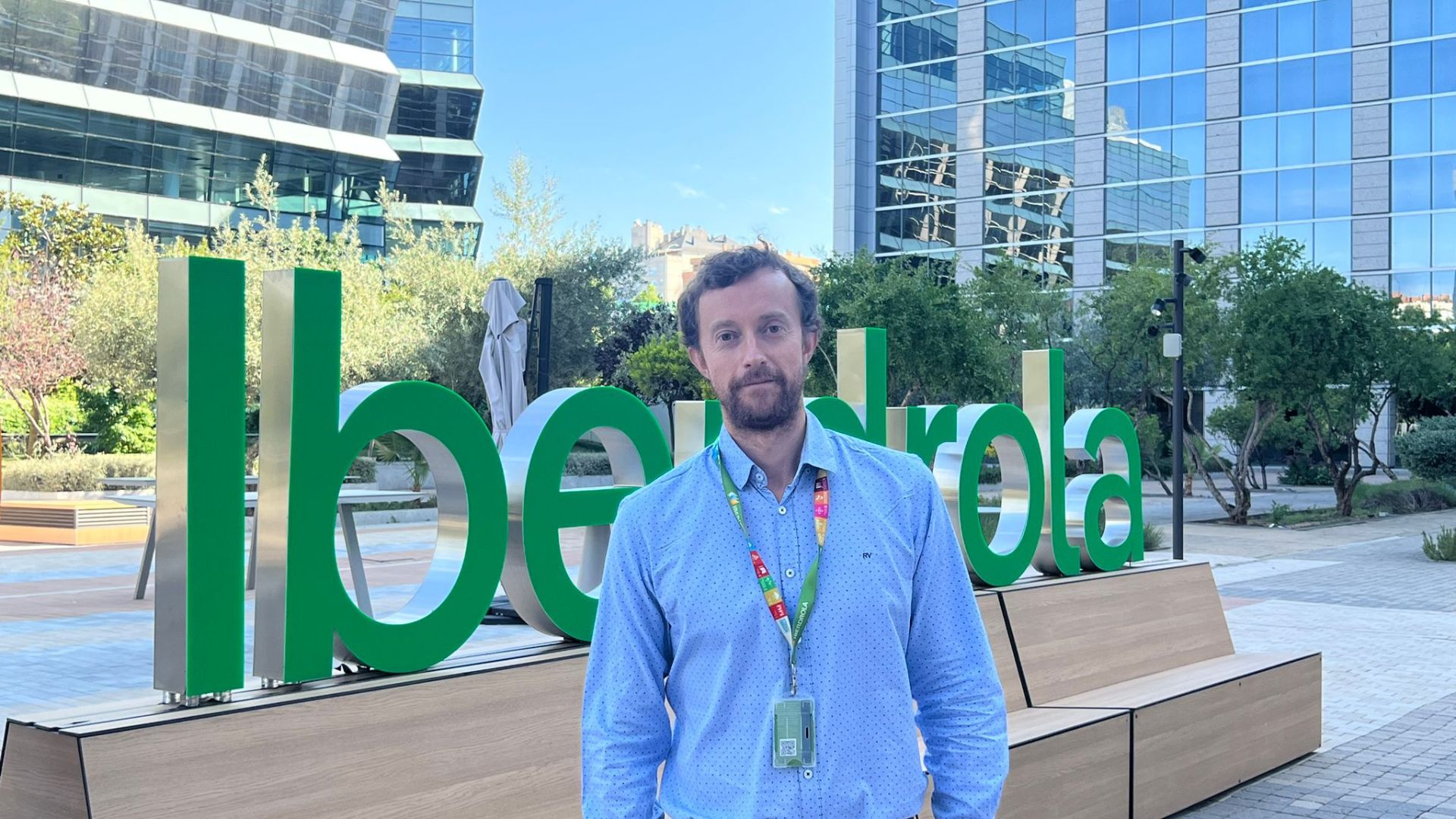
- Full Name: Tomás Villar Sánchez.
- Current Position or Responsibility: PSA Project Manager at Almaraz Nuclear Power Plant.
- Current Company: Iberdrola Generación Nuclear.
- Qualification: Industrial Engineer specialized in Energy Technologies from UPM. Master’s Degree in Electric Power Generation Technologies from UPM/Tecnatom.
- Experience: 17.5 years in the nuclear sector. Over 15 years of experience in Probabilistic Safety Assessment (PSA).
How many years have you been in your current job and what are the main activities you carry out? What drove you to get to your current position?
Over two and a half years providing support to the Almaraz Nuclear Power Plant in Probabilistic Safety Assessment (PSA) tasks. This includes maintaining and reviewing the various PSA scopes (internal events, flooding, fire, shutdown modes, spent fuel, Level 2, etc.), ensuring alignment with the current plant status and the state-of-the-art methodologies. Additionally, I contribute by offering a probabilistic perspective to support risk-informed decision-making. A significant part of this work involves the development of PSA applications, such as the Risk Monitor, which continuously evaluates the safety margin of the plant when certain systems or components are out of service. It also includes performing risk evaluations to assess the impact of potential plant changes or design modifications.
Regarding the second question, I have spent nearly my entire professional career working in PSA, an area I find highly interesting, useful, and broad. It offers continuous learning opportunities, and I am fortunate to work alongside exceptional professionals in every sense.
The most interesting part of your job… any milestone you would like to highlight?
The most attractive aspect of this work is the wide range of areas that require knowledge and synergy with other disciplines. First and foremost, it is essential to have a detailed understanding of the plant systems and the potential scenarios that could lead to safety-related incidents. This requires a solid grasp of the plant’s thermohydraulic behavior. Additionally, it is important to consider both personal and shared experience, supported by statistical tools. Equally relevant is human behavior, which plays a key role in ensuring stability and overall safety at the site.
As a notable milestone, I would highlight the tremendous effort made by the team in establishing the new Fire Protection licensing basis at Almaraz, where probabilistic risk analyses play a critical role.
The most rewarding thing about your day to day at work….
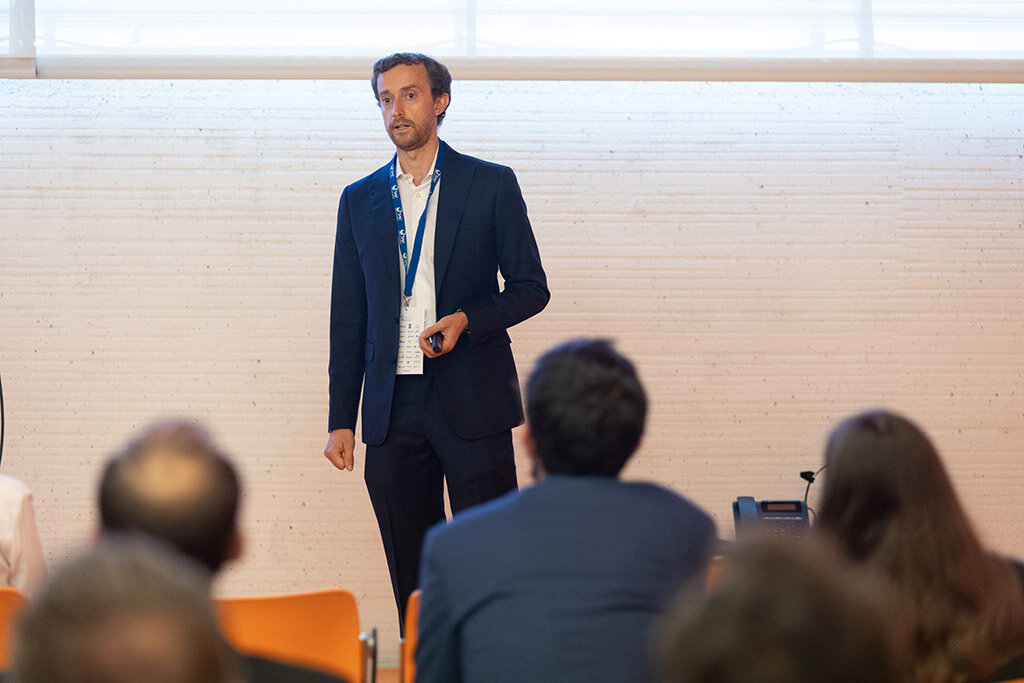
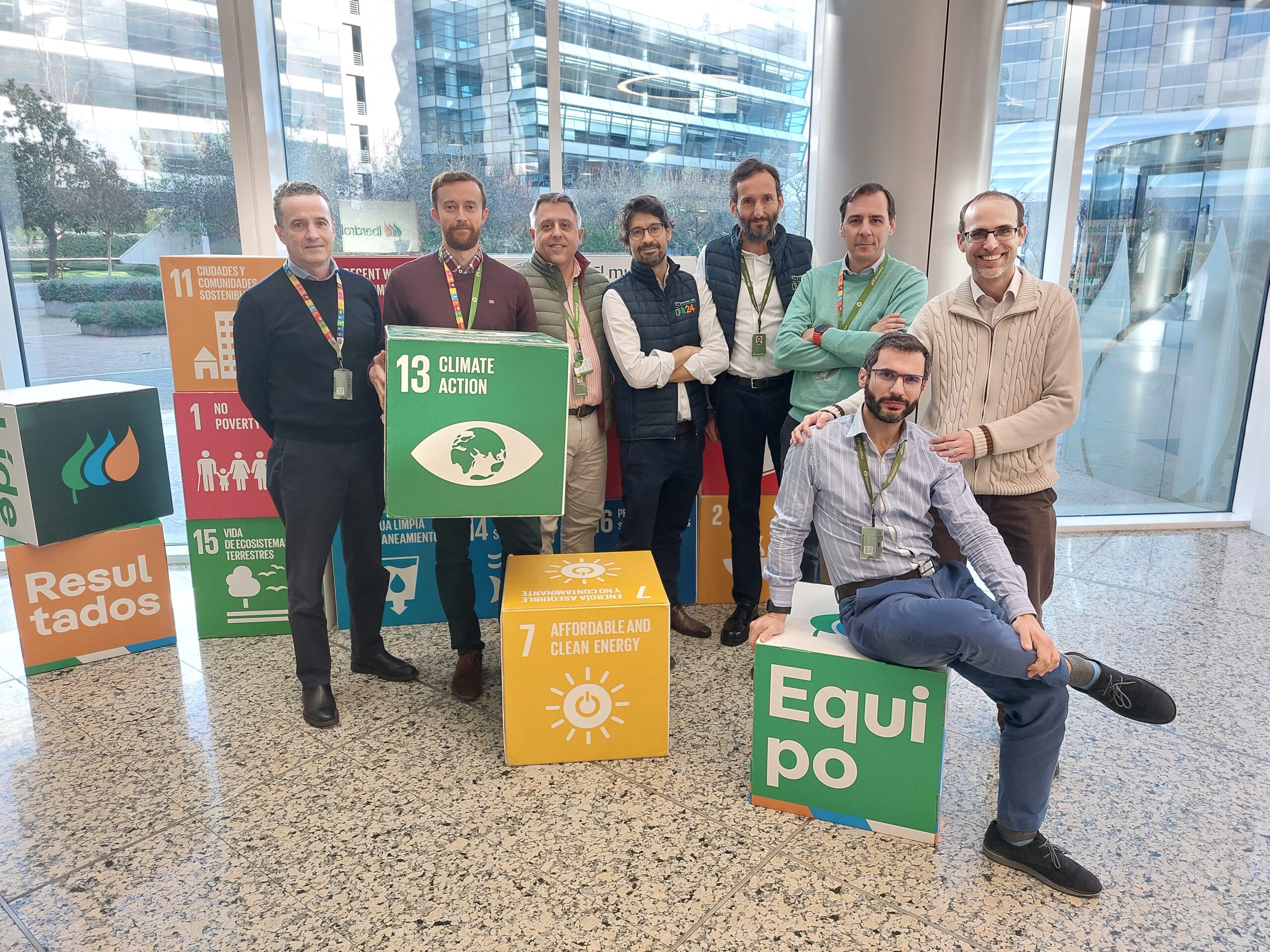
One of the most rewarding aspects of the job is realizing that the people around me—whether from my own company or others, including clients and contractors—are all top-level professionals with whom any challenge or objective can be tackled on a daily basis. It is also deeply satisfying to receive trust and recognition after a job well done, and to feel supported both by the company and by colleagues.
What brought you to the nuclear industry and how did people around you react to your decision? and now?
I joined the nuclear sector directly, driven by a long-standing interest in energy sources—particularly nuclear energy—which led me to choose the Power Technologies specialization at university, where a strong foundation in this field was provided. With this background, my job search focused on engineering companies within the sector.
The reaction from my environment to this decision was very positive, as these companies typically seek highly qualified professionals and offer quality, stable employment. Of course, the current situation is not the same as it was 20 years ago, and that is reflected in the feedback I receive today. Nevertheless, I continue to be encouraged to pursue what I am passionate about and to maintain my ability to adapt to change.
How do you see the evolution of the industry since you joined it? and well, … And now what?
When I joined the sector, the future looked promising, with new reactor designs offering extremely high safety standards and even the potential to generate less hazardous waste. However, the Fukushima accident impacted the perception of nuclear energy as a robust and reliable source. Nevertheless, the safety improvements implemented afterward, along with the strategic interests of many countries, helped reverse that perception, leading to a renewed and growing interest in nuclear energy.
Despite the global momentum toward a nuclear revival—driven by the increasing need for energy independence from fossil fuels and for robust, reliable, competitive, and emissions-free electricity generation—the situation here remains stagnant, with a phase-out schedule that seems disconnected from current geopolitical, economic, and environmental challenges.
Would you encourage young people to pursue a career in this industry?
Yes, of course. Not long ago, I read an article that included an analysis by the CEIDEN Technological Platform, which estimates that Spain will need to incorporate around 400 new professionals into the sector each year over the coming years.
These are highly qualified jobs, where the vast majority of contracts are permanent, and whose productivity—measured as the direct contribution to the country’s GDP per employee — is significantly above average.
The geopolitical, economic, and social challenges we’ve discussed require this reinforcement.
What message would you like to convey to the rest of your nuclear colleagues? and to non-nuclear peers?
If there’s one thing that characterizes professionals in the nuclear sector, it’s excellence—which must be maintained and continuously improved.
That’s why I’d like to share a message of encouragement and confidence that we will be able to adapt to the new challenges and needs that society demands of us now and will continue to demand in the future.
To our non-nuclear colleagues, I’m sure we share many common goals regarding how we want to build a better future for everyone, and I have no doubt that we can learn from one another and enrich our knowledge through different perspectives.
Can you tell us two hobbies?
I have more than just two hobbies, but if I had to choose, I’d say I love outdoor sports—specifically cycling, skiing, running, and mountain hiking. Being in contact with nature is something I’m passionate about and that truly motivates me.
As a second hobby, I’d say traveling—discovering new places and meeting new people. Plus, the possibilities are practically endless in this amazing and diverse world we live in.
And to get to know you a bit better: 1 book, 1 song (or music piece) and 1 movie.
I don’t have a particular book, song, or movie that stands out as my absolute favourite. So I’ll just mention the first ones that come to mind and that I’d like to recommend.
One of the latest books I’ve read and really enjoyed was Twice in the Same River by a Finnish writer named Sofi Oksanen. It encourages you to think and reflect on how history repeats itself and on the kind of world we live in.
As for a song, Countless Skies by Be’lakor, an Australian melodic heavy metal band.
And for a movie, I’d go with a classic: It’s a Wonderful Life by Frank Capra.
Finally, to conclude, a wish for the future
My wish for the future is that technical and scientific criteria are taken into account in decision-making at all levels, which will positively impact us across the board: health, prosperity, trust, and social harmony.


