

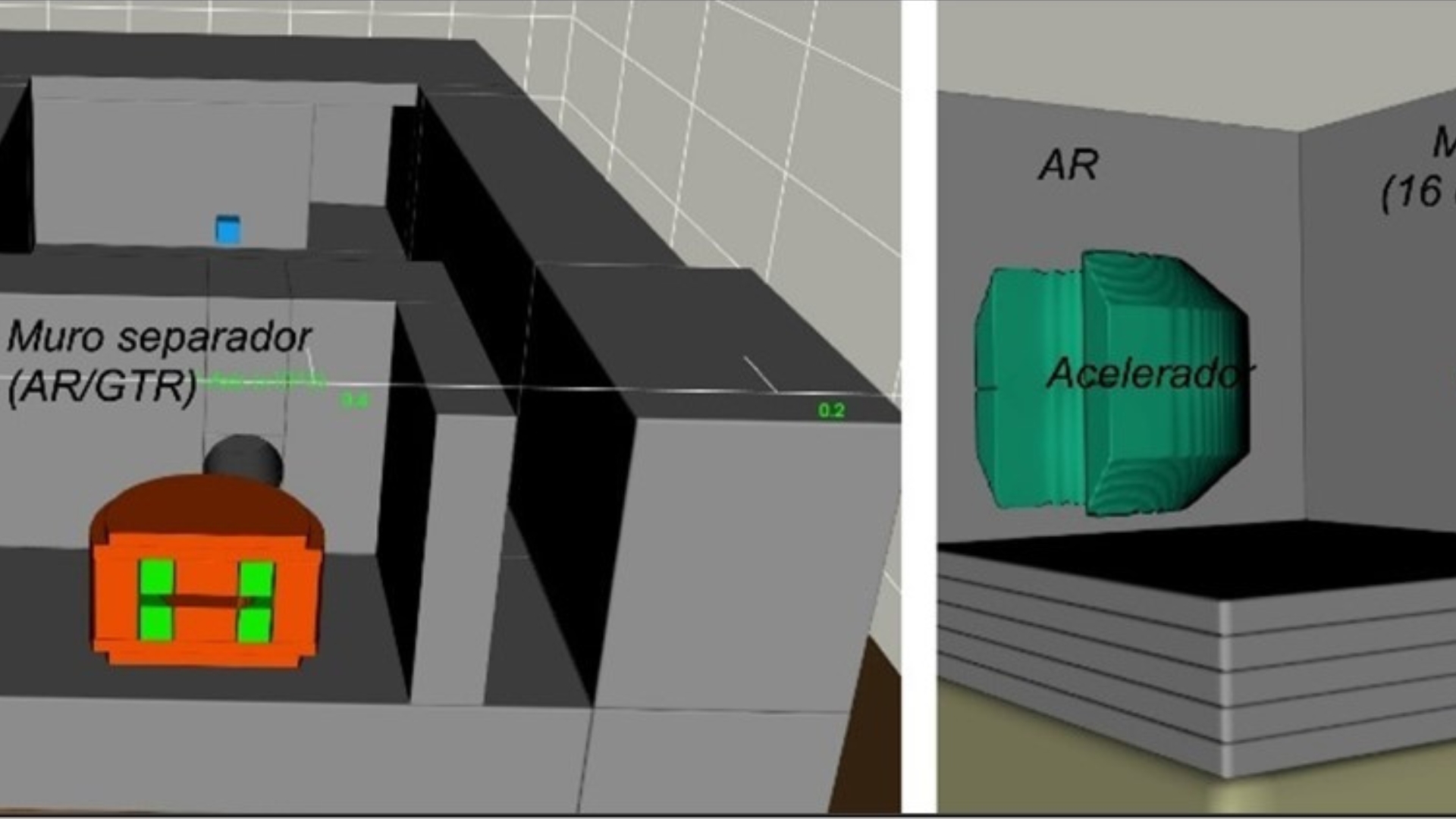

Consequently, the objective of this work has been to describe the process to evaluate the activation in the shielding of proton centers, comparing four different types of concrete, conventional Portland (HPOR), high density with magnetite (HMAG), high content in hydrogen with colemanite (HCOL), and finally, low activation (HBA1). The study has been carried out using Monte Carlo Codes (MCNP and PHITS), and selecting different nuclear data libraries and physical models, considering the energy of the neutrons present, up to 230 MeV, and the generation of radioisotopes both by capture and spallation reactions. The complete work includes the study of the activation of the three types of centers planned for Spain, but this summary includes only the facilities with synchrocyclotron, which will be the type of technology mostly used, in eleven of the thirteen planned centers (ten public and one private).
The shielding selected must attenuate immediate or prompt radiation below regulatory limits, using materials with low level of activation, to reduce the exposition to gamma radiation of the professional staff of the center and that generate low radioactive waste. The overall cost should be the lowest possible, considering both the start-up cost and the dismantling cost depending on the volume of waste generated. The choice of shielding material could then be made, considering several requirements and parameters: 1) Attenuate the immediate radiation below the regulatory dose limits; 2) Reduce exposure to gamma radiation from the activation of the enclosures, both to clinical staff and to patients and the general public; 3) Generate the smallest amount of radioactive waste possible; 4) Optimize the cost of construction and dismantling together. As the neutron spectrum varies significantly in each area of the center, one proposal would be to use different concretes in different areas, optimizing the selection based on, for example, parameters such as attenuation, activation, and cost.


