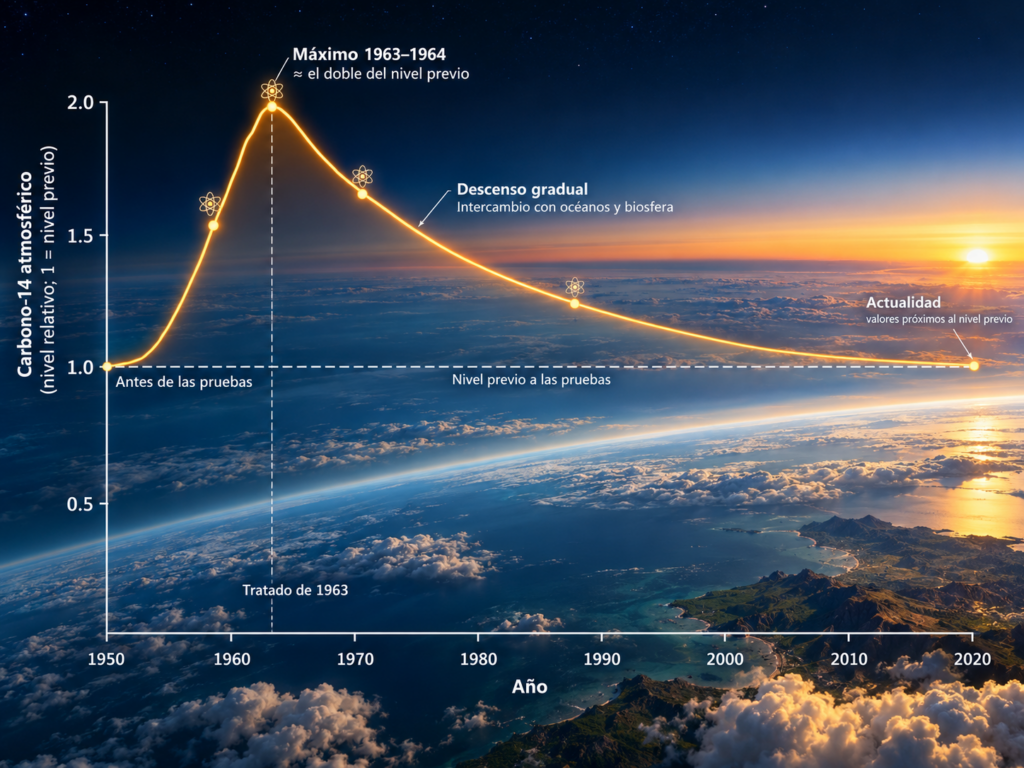
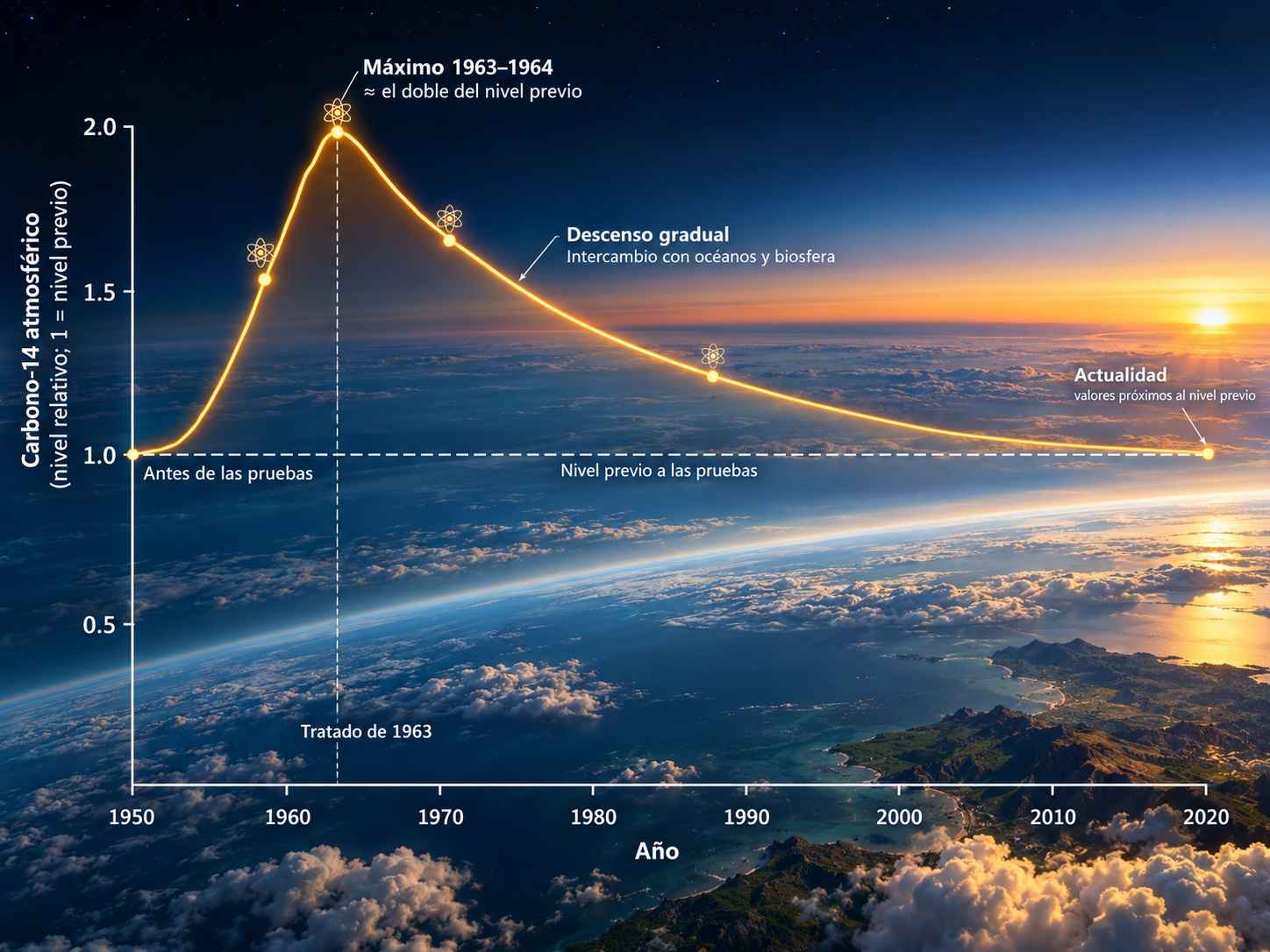
During the 1950s and early 1960s, atmospheric nuclear testing sharply increased the concentration of carbon-14 in the air. This excess radiocarbon was later absorbed by oceans, plants and food, eventually entering the human body.
Carbon-14 as a biological clock
The resulting atmospheric curve, known as the bomb pulse, became an unexpected biological clock. By measuring tiny amounts of carbon-14 in DNA, scientists can estimate when certain cells were formed and investigate how long they remain in our bodies.
The bomb pulse: The rapid rise and subsequent decline in atmospheric carbon-14 created a temporal reference that can be compared with the signal preserved in DNA.
This approach has been used to study the age of neurons, heart muscle cells, fat cells and immune cells, and it has also found forensic applications.
This article follows the journey of a carbon-14 atom from the atmosphere to our DNA and explains how an unintended legacy of the Cold War became a remarkable scientific tool for answering a surprisingly human question: how old are our cells?