


Each RBMK unit is equipped with four Steam Drum Separators (SDSs), large water-steam separation vessels that formed a critical part of the reactor primary circuit during operation. The SDSs are cylindrical steel components containing complex internal structures, approximately 34 m long and 3 m in diameter, with a mass of approximately 300 tonnes per unit. The scope of the Decommissioning Project includes the engineering, execution and management of the safe removal of the SDSs through dismantling and segmentation, together with the removal of the associated piping, thermal insulation, steel supports and adjacent structures. The resulting materials will be transferred to INPP, which will be responsible for their subsequent decontamination and final treatment as waste. The removal of the SDSs involves significant technical and radiological challenges, particularly those associated with access limitations, the handling of large and heavy components, and the appropriate application of the ALARA (As Low As Reasonably Achievable) principle.
Three-phase decommissioning strategy
To address these challenges, a bottom-up dismantling strategy has been developed and divided into three phases. The first phase involves clearing the lower and central areas by removing the recirculation piping, support structures and auxiliary systems, thereby creating the space required to introduce a mobile crane. The second phase comprises the removal of the steam piping and the components located in the upper part of the room. The third phase addresses the opening, segmentation and dismantling of the SDSs. This sequence progressively improves accessibility, maintains structural stability and delays the opening of the SDS shells until the final stages, thereby limiting the spread of contamination and the deterioration of radiological conditions.
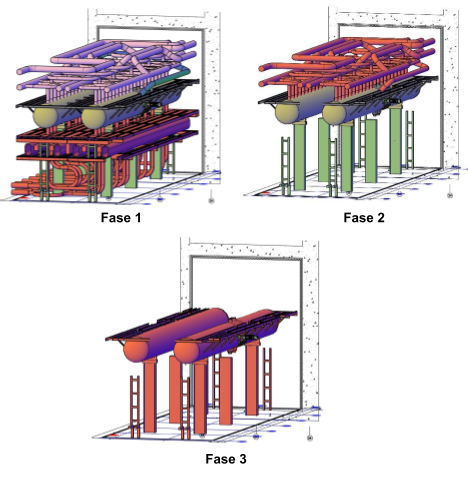
SDS decommissioning phases. Elements to be removed marked in red. Source: Westinghouse Electric Company.
Technological innovation and adapted equipment
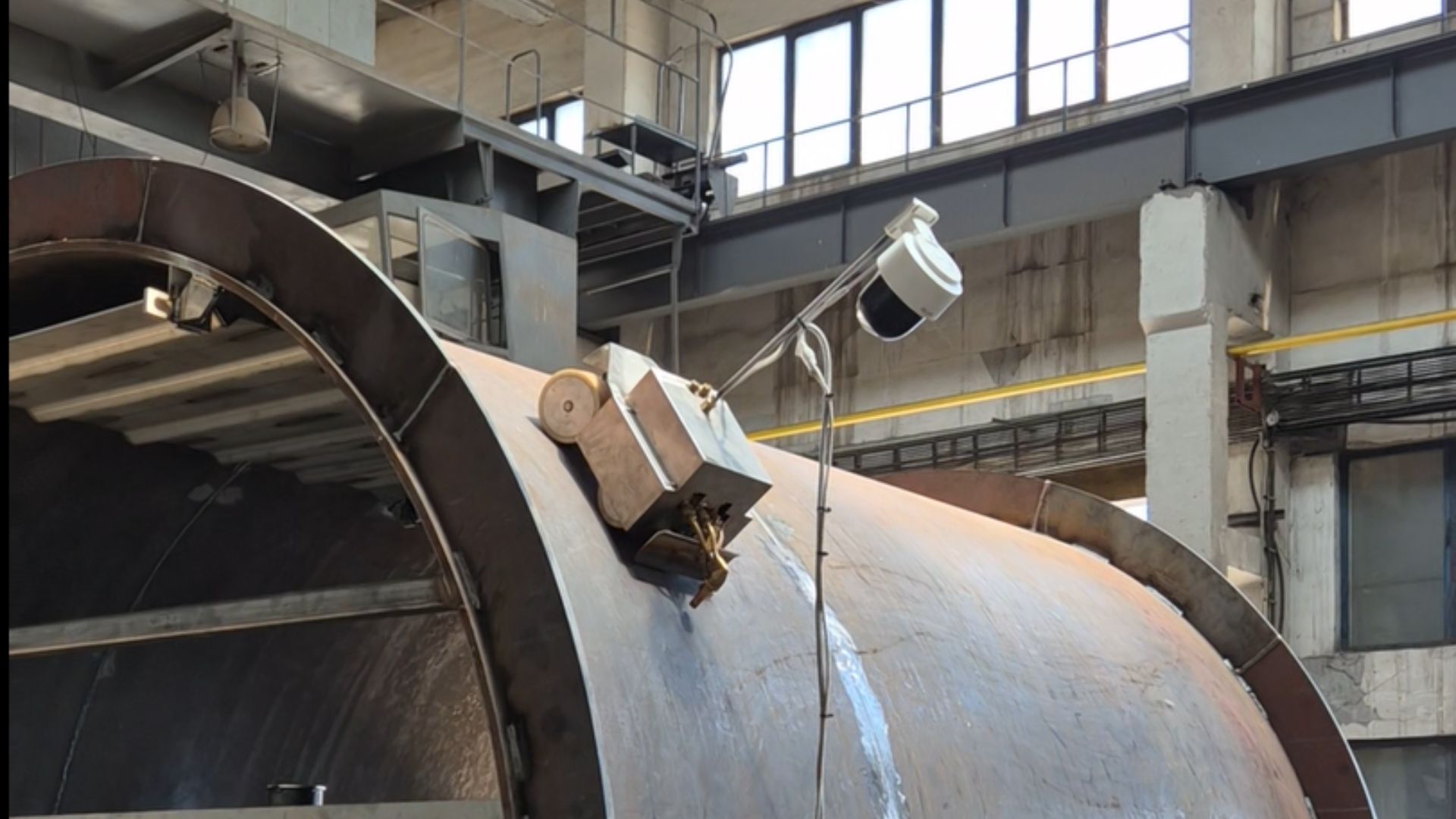
The strategy incorporates adapted commercially available equipment and solutions developed specifically for the project. Key equipment includes remotely operated demolition robots for cutting piping, handling loads and segmenting the internal components; a hydraulic jack-up lifting system for supporting and lowering heavy structures in a controlled manner; a crawler-mounted mobile crane that compensates for the absence of an overhead crane; and permanent-magnet handling systems for supporting segments and transporting containers. In addition, a remotely operated vehicle is being developed that attaches magnetically to the surface of the SDS and is equipped with an oxy-fuel cutting torch, cameras, and remote systems for controlling its movement and the gas supply.
This project demonstrates the potential to transfer and adapt proven industrial technologies and experience gained from other nuclear decommissioning projects to the dismantling of large RBMK reactor components, complementing them with solutions developed specifically to address the geometrical, structural and radiological characteristics of the SDSs.


