


Texts and photographs: Ana Gómez Cobo
Ana Gómez Cobo has been working in nuclear safety for 39 years. Her career commenced in 1985 and subsequently from 1995 to 2000 she worked at the International Atomic Energy Agency (IAEA) where she was responsible for activities on probabilistic safety assessment. Ana joined the UK Office for Nuclear Regulation in 2000, where she was a nuclear safety inspector until 2022. In 2012, she was seconded for a year to the UK Department for Energy and Climate Change, where she was an advisor on nuclear power plant technology for the Final Investment Decision Enabling Project for the Hinkley Point C nuclear power plant. In May 2022, Ana rejoined the IAEA, where she is currently the Head of the Safety Assessment Section.
How many years have you been in your job? What are your responsibilities?
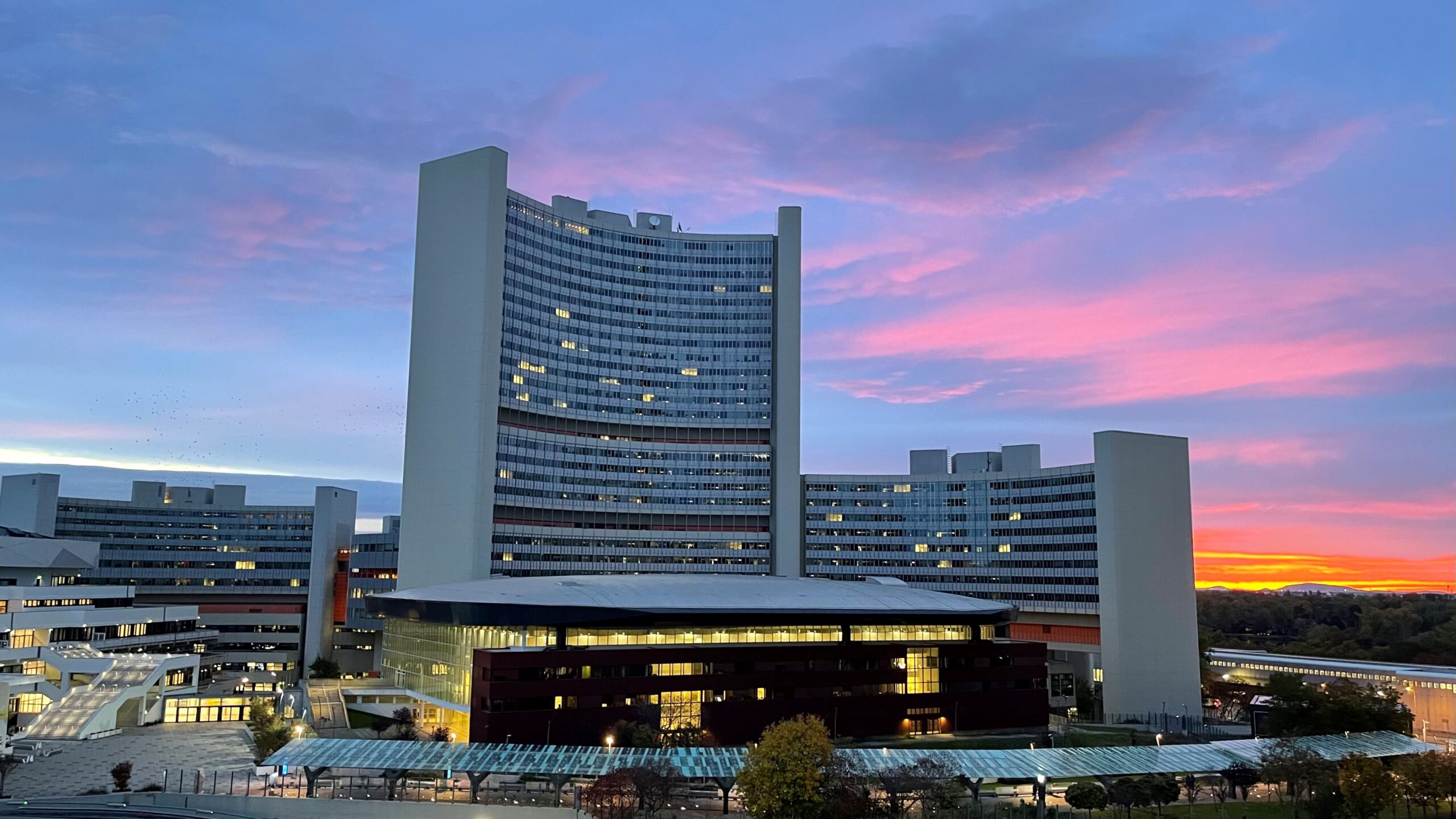
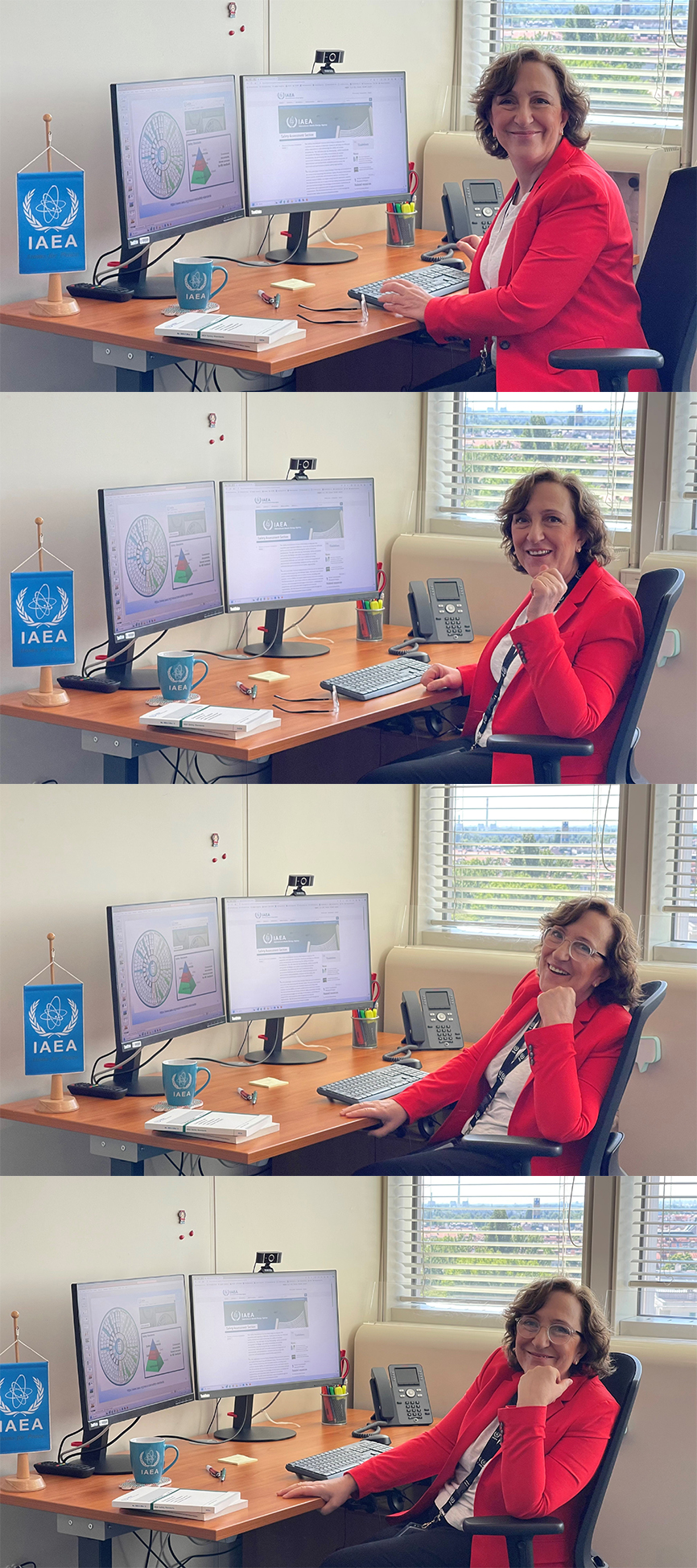
I joined the International Atomic Energy Agency (IAEA) in mid-May 2022, so I’ve been in this job for two years. I am the Head of the Safety Assessment Section (SAS), within the Division of Nuclear Installation Safety (NSNI), in IAEA’s Department of Nuclear Safety and Security (NS).
Our Department, NS, supports the Member States of IAEA in their efforts to strengthen nuclear safety and nuclear security. In this framework we develop Safety Standards, provide safety reviews and advisory services to support the effective application of the standards, and support Member States in building and maintaining capability and capacity in nuclear safety.
Which are the main activities of your current position?
My section, SAS, has a broad scope of work, because we cover all aspects of design safety and safety assessment of nuclear power plants, except those related to external events which are covered by another section within our division. The work we engage in is for nuclear power plants that already exist and for the nuclear power plants of the future, including advanced reactors, small modular reactors, including for their uses in floating nuclear power plants, and also for fusion energy facilities.
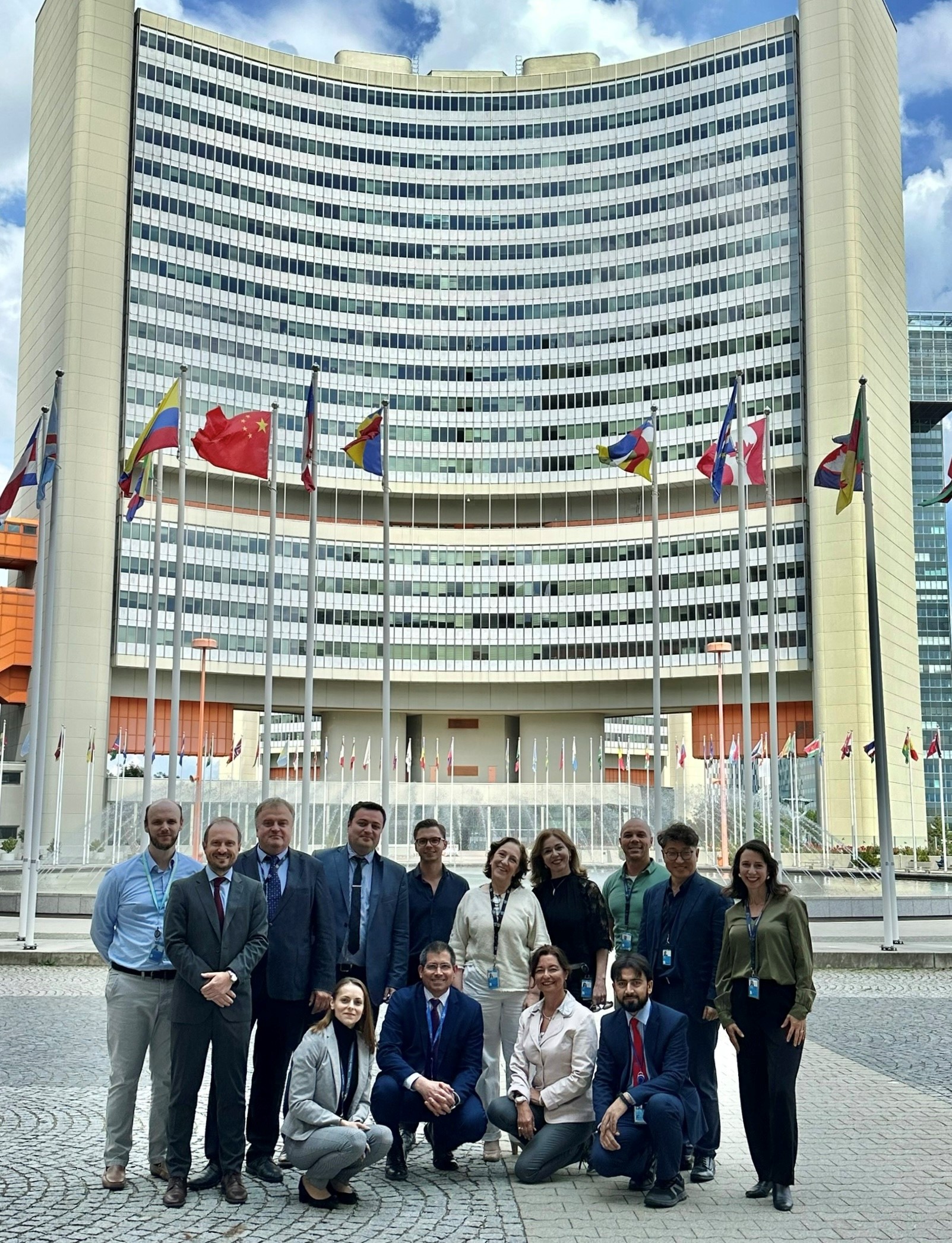
As you know, the IAEA safety standards (currently 133 published) provide the fundamental principles, requirements, and recommendations to ensure nuclear safety, and are a global reference for protecting people and the environment. At SAS we do a lot of technical work developing safety standards and other publications that compile practices on how the standards are applied, or important information for their future review and update. My section is responsible for 24 standards (two in development) in the areas of design safety and safety assessment. In the coming years, our responsibilities to update those standards will be vital as we need to make them fully applicable to advanced reactors.
Another aspect of our work is to contribute to strengthening and maintaining the technical capacity in our Member States in the areas of design safety and safety assessment of nuclear power plants, through workshops and training courses. We are passionate about these activities because they allow us to actively engage and meet many colleagues and stakeholders from across the world, bringing to them technical knowledge, while at the same time learning about their countries and their cultures, their customs, try their food, learning to say ‘good morning’ and ‘thank you’ in their languages… I think all of this is wonderful.
The third very important aspect of our section’s work is the Technical Safety Review (TSR) service. At the request of our Member States, we conduct missions to independently review the safety of the design, or the safety analyses of nuclear power plants. Examen técnico de la seguridad (TSR) | OIEA (iaea.org)
I would write pages and pages about all this, but the question is about the main activities of my position and the truth is that the hard technical work is not done by me, it is done by my dedicated team with the support of many international experts, authorities on all these issues, who very generously pass on their knowledge and experience to us.
As section head, I am responsible for managing the work of SAS, making sure that we do what Member States need, that we plan our work rigorously and get it done on time, that we use the necessary resources efficiently, that we collaborate with other teams inside or outside the IAEA when needed, and that the results of our work are of high quality. Of course, this entails a lot of administrative tasks that I don’t want to bore you with.

Another very important aspect of my job is everything related to personnel management. SAS has a team of extraordinary professionals with an incredible work ethic, and my priority is to support them, empower them, but also cover their backs if they encounter difficulties. What I want is for them to be joyful and healthy, and to wake up every morning happy, energized to face the challenges we face, and proud to work for our organization.
How did the move influence your family/personal life?
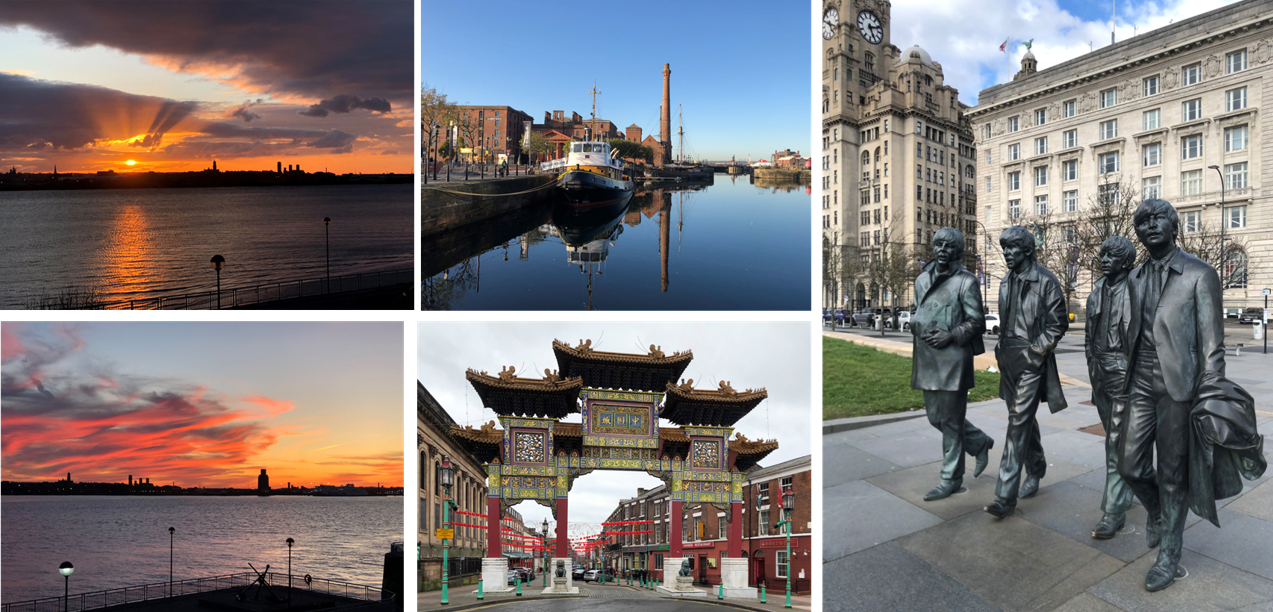
I have worked outside of Spain for most of my professional life, and one of the things I like best is to travel and get to know other countries and other cultures. Having been here and there all these years has not been difficult, and I have enjoyed every moment. I also think that the impact on my family has been, on balance, positive – my family likes Vienna, and above all they love Liverpool, where I have lived for more than 20 years, which is not surprising because it is a super fun, vibrant, beautiful city, with good football, the Beatles, and a great night life. I’ve also been lucky that my partner and I have been able to move from one country to another practically at the same time on almost every occasion.
But I don’t want you to think that this is true for everybody. Moving to another country can carry important sacrifices, especially if the family cannot move as well. If you live in Vienna and your family lives elsewhere in Europe, you will spend a lot of your free time in airports and planes to be able to see them frequently; if they don’t live in Europe, the sacrifice is even greater, of course. And keep in mind that when you travel to live in another country, it can be a bit lonely in the beginning, until you meet people, make friends, and get used to the new way of life. But, of course, working for an organisation like IAEA is a privilege.
Which are the most significant aspects of your work?
I think I already responded to this question before, haven’t I? 😊
 What do you miss from Spain?
From Spain I miss the light and the colour. I’ve lived in two countries that have short direct flights to Madrid, so, if I get a little homesick, I’ll buy a ticket and go there…. It’s easy for me!
Would you invite young people to broaden their professional horizons outside our borders?
The first time I went to live outside of Spain was in 1988, and what I wanted, above all, was to learn English well, but also to get work experience in another country. But, when you go to live abroad, the first challenge to face is that, even if you speak the language more or less well, it can be hard in the beginning because it takes a while for you to understand 100% of what is spoken around you. I was very lucky to be surrounded by people who welcomed me and helped me a lot – I imagine with a lot of patience on their part. Still, for the first few weeks, I felt lazy to get up because I was thinking: another day in English all the time – how dreadful. But one day you wake up and realize that you do understand everything – it’s a fantastic feeling.
Working in another country is an incredibly valuable experience, you get to know the world, you learn another language well, you get to know other ways of working and doing things, other cultures, you meet people who think differently from you, who have different traditions from yours, so it opens your mind and, in addition, it adds very useful experience to your CV giving you points to land future jobs. So of course, I encourage young people to broaden their professional horizons outside Spain, and to enjoy every moment of those experiences.
Review of a Professional Life
As I’ve been working in nuclear safety for many years, I would like to share with you a little bit more about my professional life.
I was born in Soria, an in the 1970s there were plans to build a research reactor close to the capital. I started to think that I could work there, that it was something I would like very much…. The reactor was not built, but I had already gotten the nuclear bug, and when I studied chemistry at university I specialized in physical chemistry, and then I did postgraduate studies in nuclear engineering at the Junta de Energía Nuclear. This is how I entered ‘the route of nuclear safety’; and this is why I always say that for me, my work in nuclear safety is not a profession, it’s a vocation.
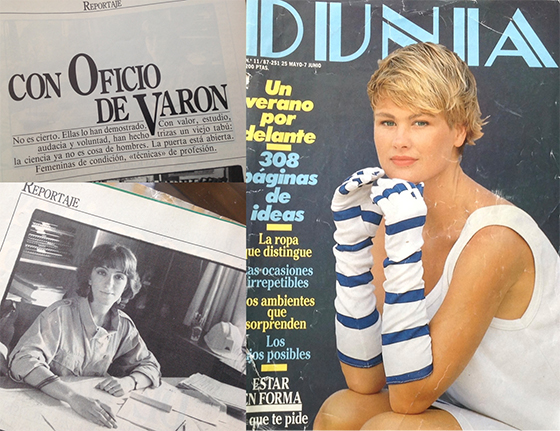
In 1985 I started my professional life and during the first 10 years I worked in nuclear engineering companies in Spain and in the UK, and I specialised in probabilistic safety assessment (PSA). I have many good memories of that time, but one I’m very fond of is that in 1987 a colleague and I were interviewed for an article entitled “Con Oficio de Varón” (With a Man’s Job) for a Spanish magazine of current affairs and fashion called Dunia, which had wide circulation. For the article, they interviewed several professional women in areas that people might think, at that time, were for men. Here are some pictures of the cover of the magazine, the picture they took of me, and the headlines of the article. I feel it’s important that the article could have been influential; it may have reached young women who were considering their future and perhaps thinking that science and engineering were not for them. Nowadays a lot of effort is being put into attracting women to technical and scientific fields, and here you see how almost 40 years ago these messages were already resonating.
The IAEA has important initiatives, such as the Marie Sklodowska-Curie Fellowship Programme, and the Lise Meitner Programme aiming to enable more women around the world to pursue a career in the nuclear field, or to boost their career development in the nuclear sector. Here I leave you the links, https://www.iaea.org/services/key-programmes/together-for-more-women-in-nuclear/iaea-marie-sklodowska-curie-fellowship-programme, https://www.iaea.org/services/key-programmes/together-for-more-women-in-nuclear/lise-meitner-programme.
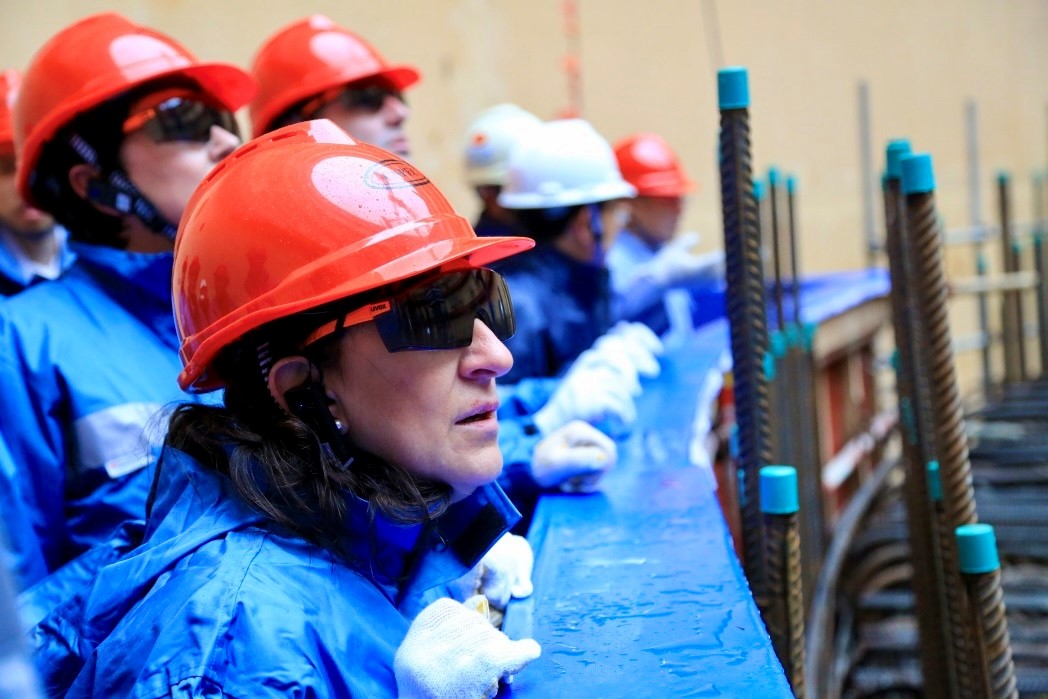
In 2000, and after working for five years as a Nuclear Safety Officer at the International Atomic Energy Agency in Vienna, I got a job with the UK Office for Nuclear Regulation and moved to Liverpool. I have to tell you that I’m passionate about Liverpool – it’s a city that has changed a lot since the 90s. If you haven’t visited Liverpool yet I recommend it! I lived there for almost 22 years; I started out as a nuclear safety inspector, then a principal inspector and ended up as a superintending inspector and section head, a senior leader in the organisation. During that time, I was head of Advanced Nuclear Technologies, and my job was to develop a team of ONR inspectors to ensure they acquired the knowledge and understanding of advanced reactor technologies, and hence developed the ability to regulate these advanced reactors in the future, including those of new generations. In addition, I was involved in all the Generic Design Assessments (GDAs) completed by ONR up until 2022. I was head of the UK HPR1000 GDA from the start in 2017 until its completion – the last two years, in which we did the detailed assessment of the design and the associated safety case, were a challenge, undertaken during the pandemic. I am very proud that the project was completed in January 2022, with my team working hard to deliver its assessment and conclusions exactly according to the original plan. I leave you a link where you can see all the technical evaluation documents that we published during that project (UK HPR1000 – Reports | Office for Nuclear Regulation (onr.org.uk)).


