



Limited capacity and urgent need
At Koeberg, irradiated fuel is initially stored in the spent fuel pools, whose capacity is limited. As the plant continues to operate, it becomes necessary to periodically transfer the fuel to dry storage systems to prevent the pools from reaching their operational limits.
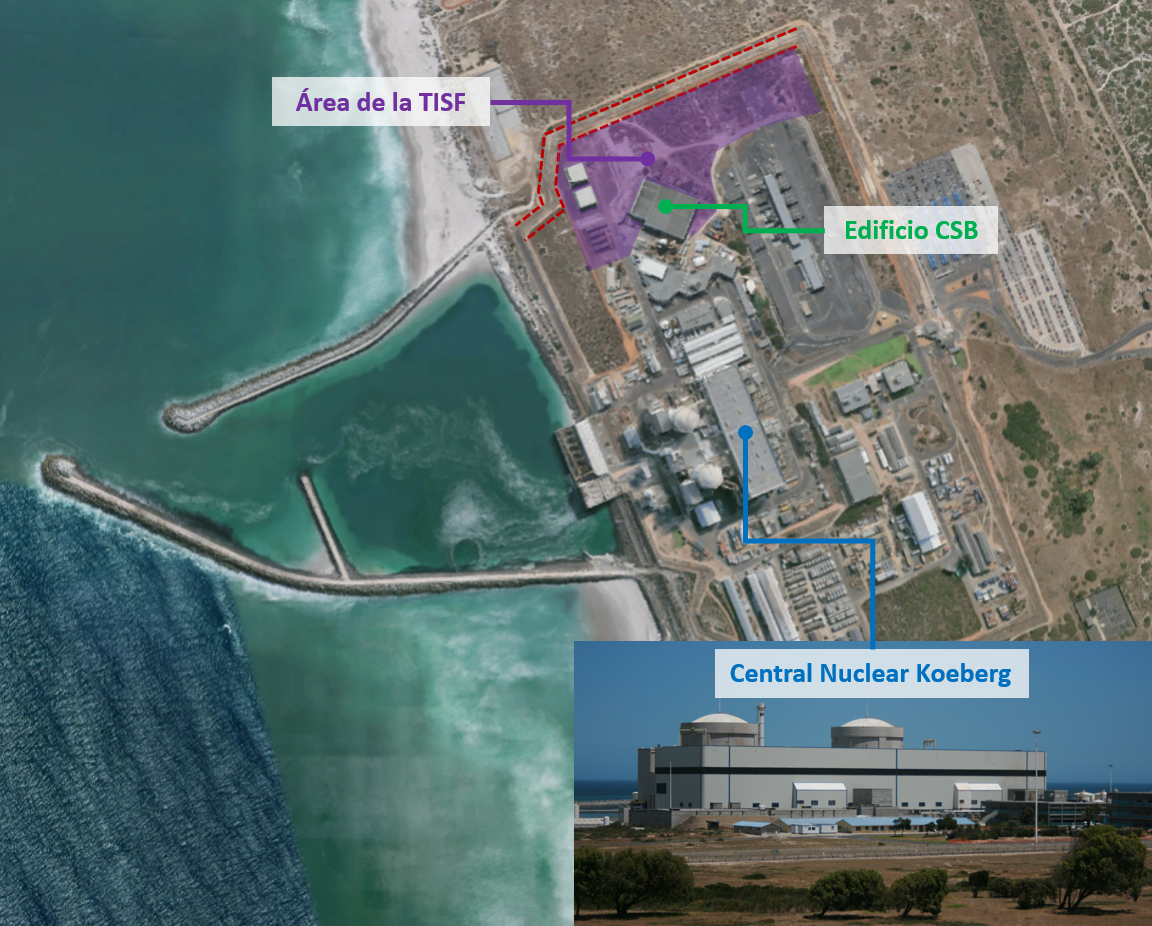
Site of the Koeberg Nuclear Power Plant (South Africa).
The existing facility, the Cask Storage Building (CSB), has capacity for 16 HI-STAR 100 casks, 15 of which were already stored, highlighting the urgent need to provide additional storage capacity. This situation was further complicated by the absence of a national repository for longterm or final disposal, whose commissioning by the National Radioactive Waste Disposal Institute (NRWDI) is not expected before 2030, forcing the plant to implement safe and operationally viable interim solutions.
In this context, the design of a Transient Interim Storage Facility (TISF) capable of accommodating 14 additional HISTAR 100 casks was initiated.
Radiological assessment and shielding solution
The first phase of the project consisted of a preliminary radiological assessment to determine whether an open storage pad could meet the dose limits established by South African regulations, in particular the limit of 0.5 μSv/h at the perimeter of the installation. The results showed that additional shielding was required to comply with dose requirements, as none of the evaluated configurations provided sufficient protection to meet them.
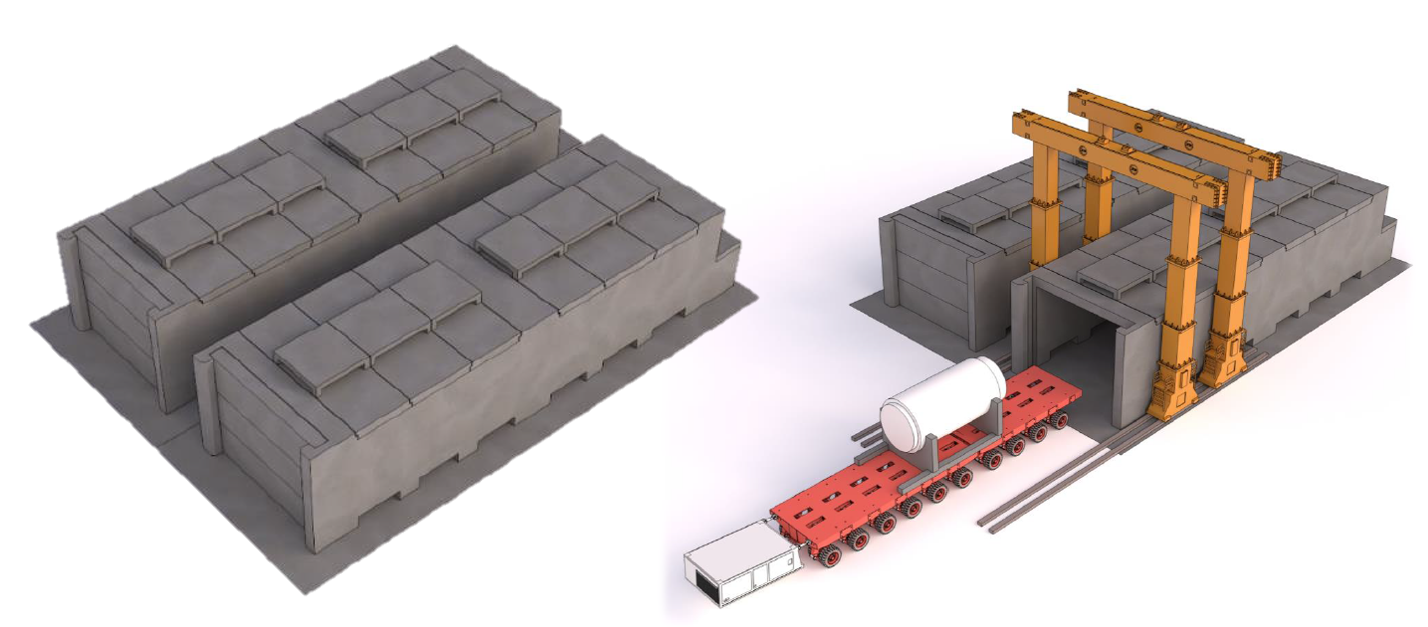
Based on this evaluation, a solution was developed involving the construction of a TISF equipped with seven Auxiliary Shielding Modules (ASMs), each capable of housing two HISTAR 100 casks. These modules were conceived as an intermediate solution between fully open storage and a closed building, providing the additional shielding needed to meet dose limits and enabling modular construction according to operational needs.
Multidisciplinary design and operational benefits
Each ASM includes optimized concrete walls, natural ventilation, interior lighting, and secure access for inspection and maintenance. The TISF is complemented by approach aprons, a turning circle, a drainage system, and qualified transport routes, ensuring safe operations for loading, unloading, and moving the casks.
Multiple engineering disciplines have been involved in the design , including shielding calculations, seismic and structural analyses, thermal studies, lateral drop assessments, and access ramp design. This multidisciplinary integration ensured that the facility met radiological, structural, and operational requirements under both normal and accident conditions.
The developed solution offered significant benefits: it relieves congestion in the spent fuel pools, ensures compliance with the plant’s operational milestones, reduces occupational doses in accordance with ALARA principles, protects the casks from external hazards and the corrosive coastal environment, and provides a flexible and expandable infrastructure.
Once the design was completed, as a result of the licensing by the National Nuclear Regulator, its construction was authorized. The storage pad and auxiliary areas were constructed, along with the first ASMs. Currently, the main infrastructure of the TISF has been completed, and the first modules are either finished or in the final stages of assembly, allowing Koeberg to maintain the necessary capacity to continue its spent fuel management program until the national repository becomes available.


