

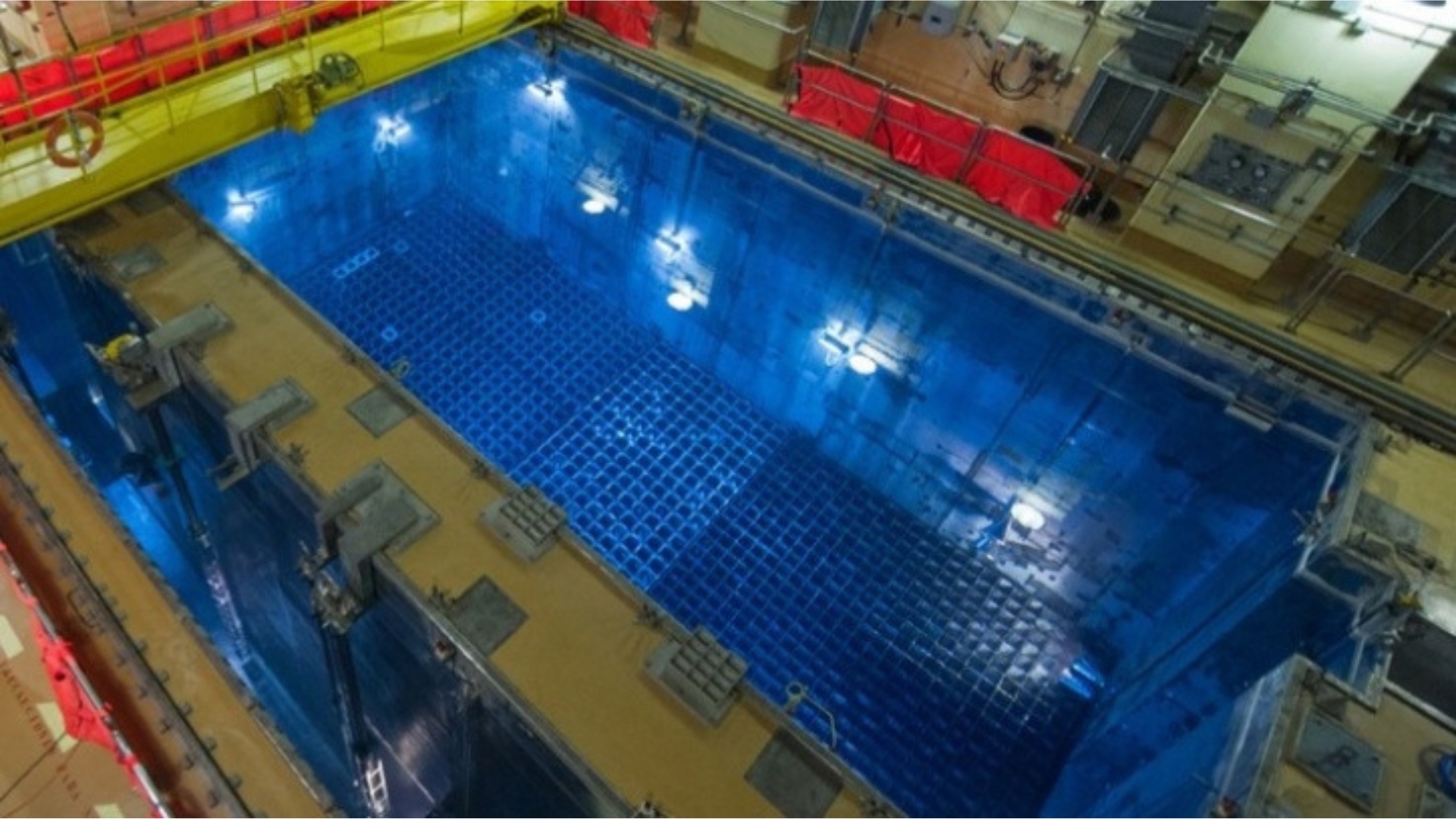
Cover photo: ANAV
After each refuelling of the nuclear reactor, nuclear safety standards require an inventory or map of the spent fuel pool. The plant maintains a continuous record of the movement of fuel in the pool and all its contents, and after the refuelling work, a verification of this record is carried out, generating a complete map of the pool. ENUSA generates this verification map in Spanish PWR plants through a video inspection of the pool, visualizing the content of all its cells, and associating to each cell the identification codes of the fuel assembly and any other fuel component it may contain, and the description of any other material found therein.
Traditional pool inspection
The process is carried out by two inspection groups. One of them is located on the pool overhead crane from where the cells are inspected with an underwater camera attached to a pole. The second work team is located at the pool edge, where an operator controls the video recording process while saying aloud the displayed content of each cell, a speech also recorded, and another inspector transcribes the information to an Excel file where a map of the pool is generated. Subsequently, a technician in the office reviews the Excel file, along with the videos recorded in the inspection, to confirm that the content of each cell has been transcribed correctly and correct, if any, wrong data. Throughout this process, the displayed content is compared with a reference map provided by the plant from its records, thus verifying it.
Digitization and automation of the process
ENUSA has developed a computer application to digitize the pool map verification process, with the aim of automating it as much as possible and reducing times and possible errors. This software automatically performs several functions: video and audio recording, image analysis to extract the identifying codes that appear in each fuel assembly, and audio transcription, extracting information from it. The data collected, from image and audio, and from reference map, are contrasted to verify the content of each cell, and a map of results is automatically generated in Excel format with the confirmed data.
The extraction of the codes that appear in the video is carried out by analysing the frames with a deep neural network, trained with thousands of images extracted from previous map recordings, in which there are labelled codes. The audio transcription with the operator’s speech is carried out using a general-purpose voice recognition model also based on neural networks, adapted to real-time processing. The coordinates and content for each cell are extracted from the transcript obtained.
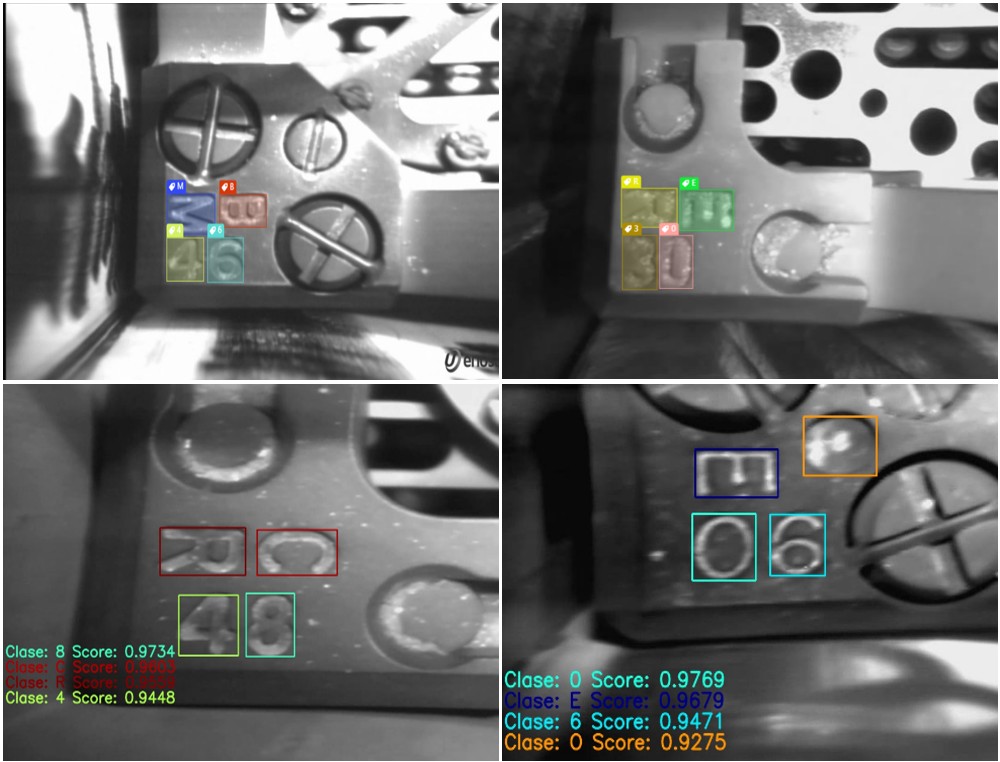
Digitization and automation of the process
All these processes are controlled and integrated into a desktop application, which serves as the operator interface. The inspection process is performed in the same way: scanning the cells with a camera, and an inspector describing the content, while the software automatically processes the image and audio. The extracted information is compared with each other and contrasted with the reference map provided by the plant, and the results recorded in a map in Excel format. This simplifies the procedure for operators and considerably reduces time, since the results confirmed during the process no longer need to be reviewed and confirmed later.
In January 2026, the application was used for the first time in the inspection and mapping of a spent fuel pool, achieving automatic confirmation and transcription of the contents of a large part of the cells. The developed system thus proved to be an improvement in the process, largely automating it and reducing verification time, meeting its objectives.


