
Modeling of the ventilation system of a PWR-W type containment in GOTHIC 8.3(QA): INTERCON3D Conclusions

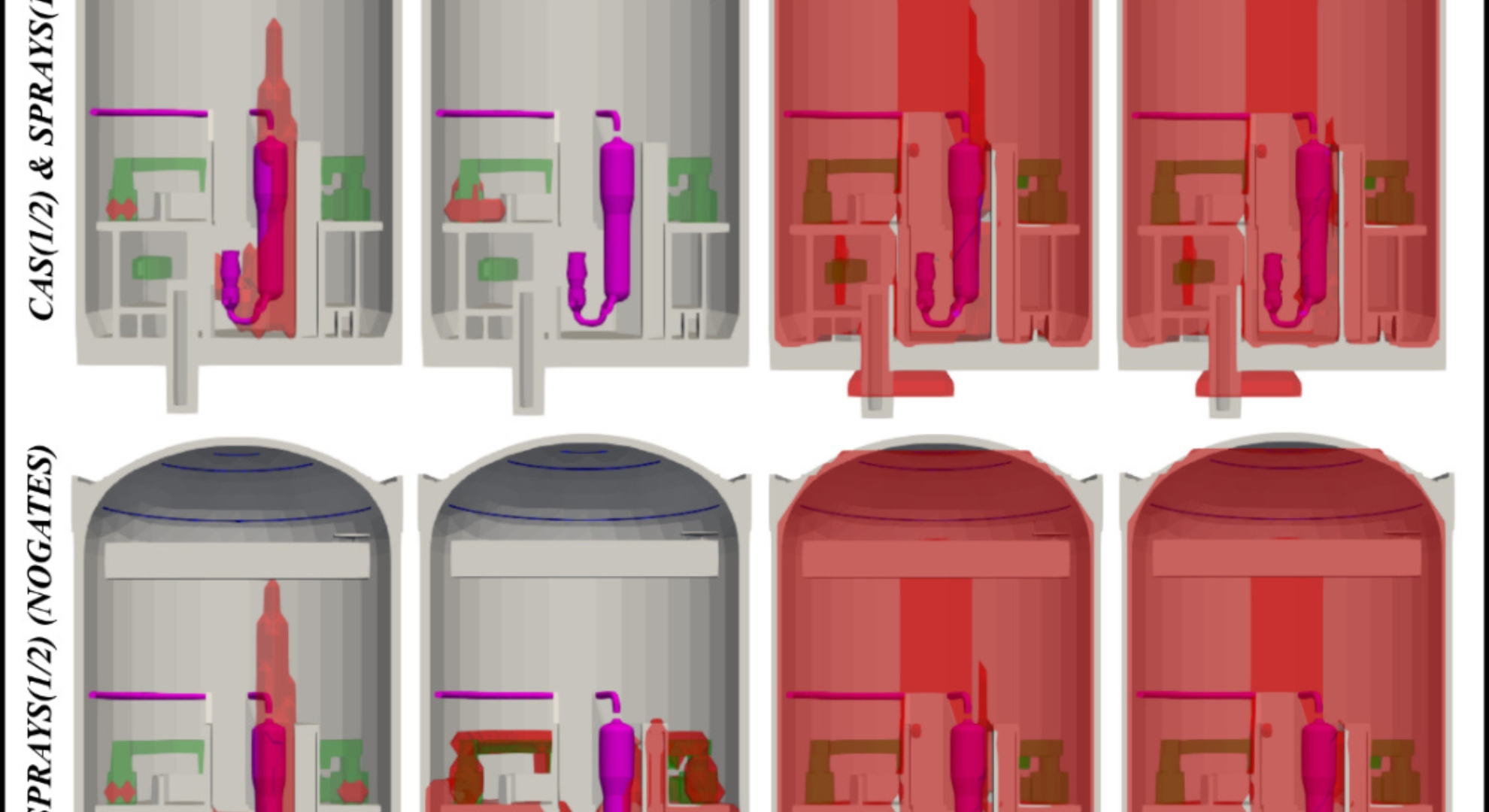
The containment building is a key element for defence in depth, representing the last barrier against potential radioactive leaks in case of an emergency. As well as other NPP buildings, the containment requires an air-cooling system to offset its heat loads and, in turn, preserve adequate conditions for its internal components. Usually, this system is designed to operate during an emergency. Historically, the safety components were evaluated for Design Basis Accidents (DBA). However, the Three Mile Island and the Fukushima Daiichi accidents have demonstrated that conditions may go further than the design basis, which may result in a risk to the containment safety function. In particular, both accidents experienced the combustion of the hydrogen generated in the core due to a degradation of cooling and the absence of mitigation systems in Containment (TMI) and reactor (FD) buildings. The operation of cooling safety systems during a severe accident may turn into a challenge due to the introduction of additional condensation sources. In this line, the introduction of cold droplets or heat exchangers involves the appearance of potentially flammable clouds in the containment building.

The INTERCON3D project

The spray system, which is the most common safety system in conventional PWR technology, has been widely studied. However, analyses regarding the operation of the safety-related air-cooling system are less common in the literature. With that in mind and supported by lessons learnt from the national project GO-MERES and the European project AMHYCO on 3D simulation of the behaviour of flammable gases, the national project INTERCON3D (2023 – 2025) was launched. This project, financed by the CSN, had the aim of studying the interaction between PWR-W containment safety and mitigation systems at severe accident conditions. Among these systems, the INTERCON3D project delves into the air-cooling system operation using the thermal-hydraulic code GOTHIC 8.3(QA).
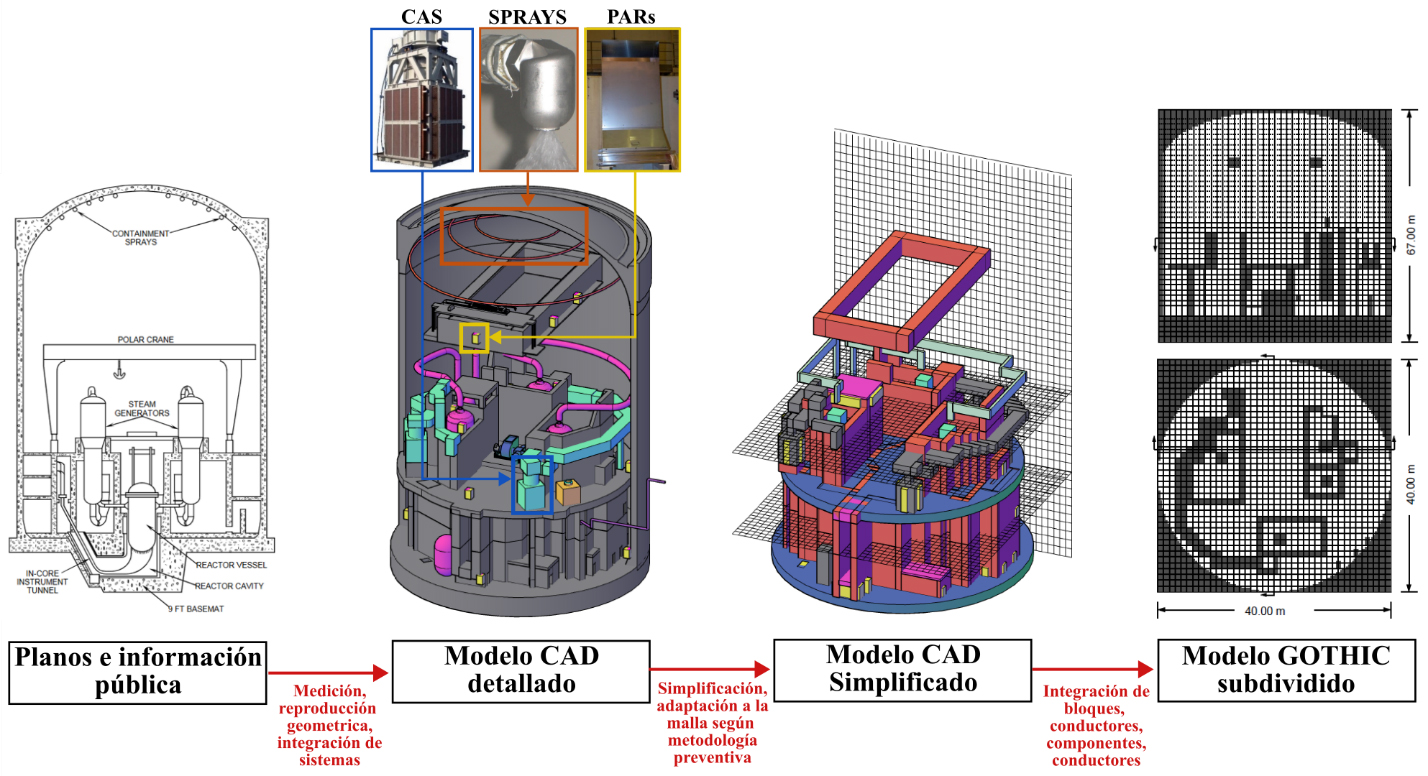
Metodología para la generación de modelos complejos en GOTHIC
Methodology for the generation of complex models in GOTHIC.
Simulation and risk mitigation

The GOTHIC code allows us to study how safety systems affect the containment atmosphere during an accident. An overall analysis links safety systems with faster depressurisations. Nevertheless, a deeper analysis shows how these systems promote the generation and propagation of potentially hazardous flammable clouds, even in the presence of PARs. These results promote the proposal of alternative system’s operation strategies, oriented to flammable gases management, to mitigate this important drawback.

¡Recibe nuestra newsletter!

    The data provided by you is processed by the Spanish Nuclear Society in accordance with EU Regulation 2016/679 on Data Protection, with the purpose of managing your requests, answering queries, administrative, statistical processing and sending SNE communications, about your activity, events, etc. The transfer of data is not foreseen (unless legally required) or international data transfers; and through the Privacy Policy you have all the rights that assist you in terms of privacy.