


Currently, plants have emergency procedures in place to try to prevent this undesired nitrogen injection (FSG-10). These procedures rely on operators detecting the depletion of the accumulators and attempting to close the isolation valves on time.
However, during a total loss of electrical power accident (LTSBO) like Fukushima, with the complete loss of control of the equipment, there is a high probability that the nitrogen in the accumulators will end up in the RCS (Reactor Coolant System). Even without a loss of electrical power, injection could occur if any of the valves involved do not close properly and in time, or if they leak internally. It’s important to remember that these valves are designed to open and remain open, and that they are de-energized and disconnected 99.99 % of the time. They are not leak-tested because their safety function is to remain open.
Faced with this problem, an employee of a Spanish nuclear plant designed a new type of valve, solving this problem automatically and passively: the ASVAD Valve. Unlike isolation valves, it uses the strategy of depressurizing the accumulator and releasing the residual nitrogen into the containment atmosphere.
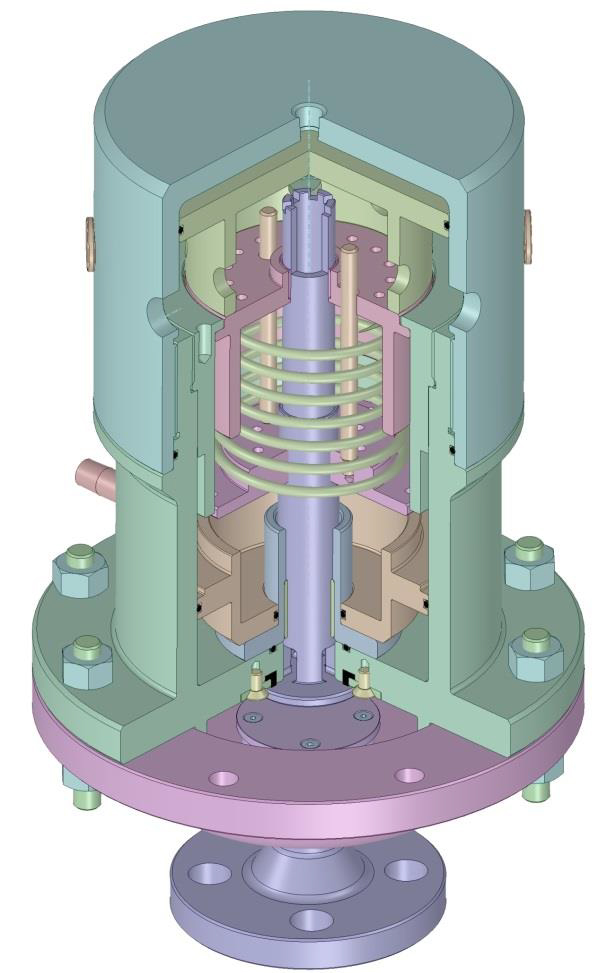
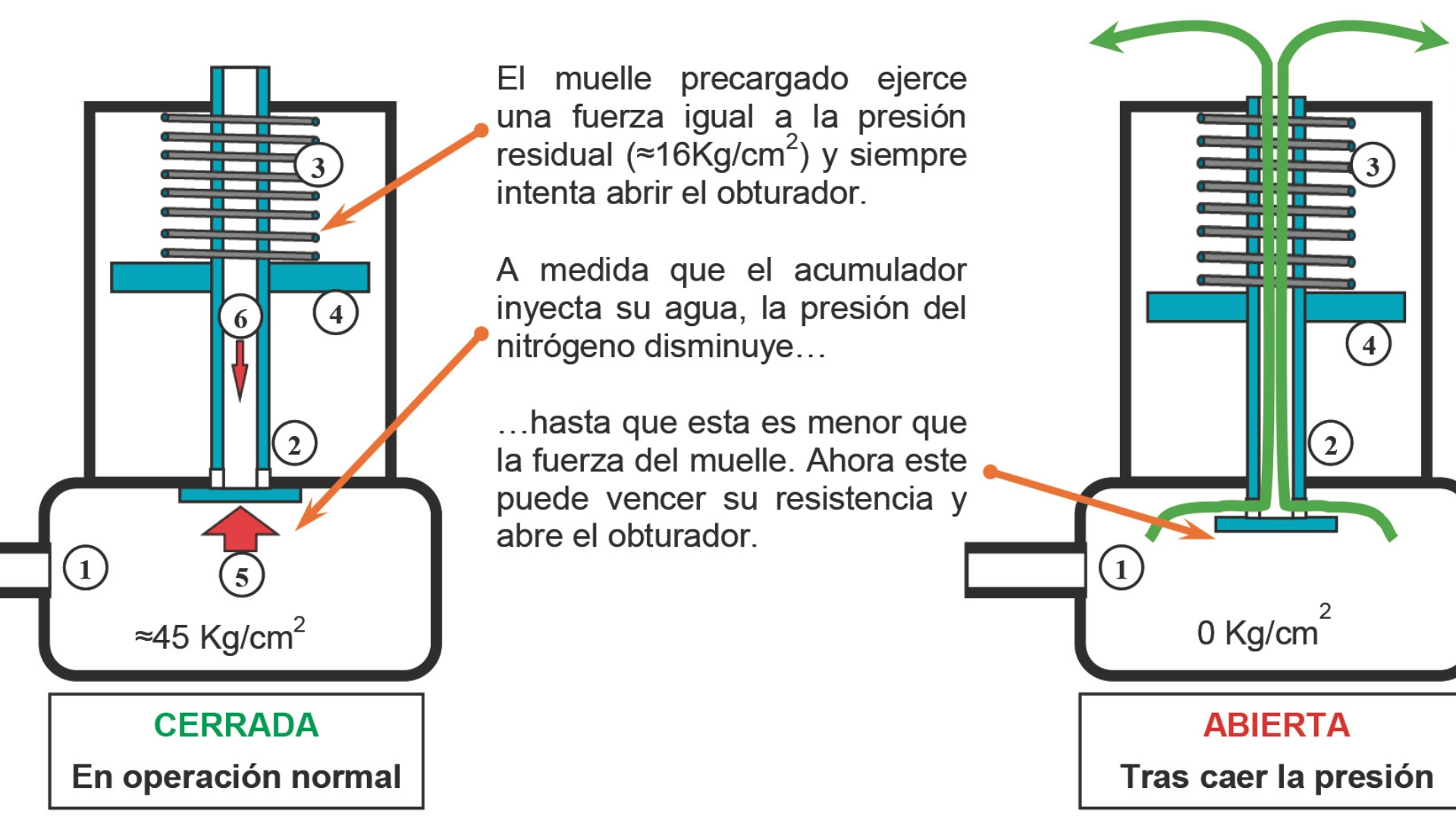
Its construction is similar to standard relief valves. However, it operates in the opposite way. This valve only activates when the pressure drops below a predetermined setpoint, and remains closed during normal operation. The valve automatically detects the appropriate moment to vent the nitrogen and operates passively without requiring electrical power or human intervention.
Its operating principle is extremely simple and elegant. It is based on the imbalance between the force exerted by the nitrogen pressure and that of a preloaded spring. While the pressure is normal, the valve remains closed. The spring will only open the valve when the pressure is residual (accumulator empty). It is a simple valve with few parts. This same simplicity gives it robustness and reliability. Furthermore, it can be adapted to any accumulator design and is easily integrated with existing systems, so any PWR accumulator in the world can use it. Its design and manufacture are entirely Spanish, and it is patented in the world’s leading nuclear nations.
Its design and manufacture have been entirely Spanish, and it is patented in the world’s leading nuclear nations. Among its most significant achievements are the following:
- The ASVAD solution was a finalist in the Nuclear Safety Innovation category at the WNE 2022 World Nuclear Expo in Paris (among 137 projects from 87 companies).
- The European Commission, EURATOM, awarded it second prize in the 2025 Nuclear Innovation Prize in the reactor systems safety category (among 28 proposals).
- Finally, after a rigorous validation process, ASVAD received approval from the Spanish Nuclear Safety Council (CSN) for use in Spanish nuclear power plants.


