

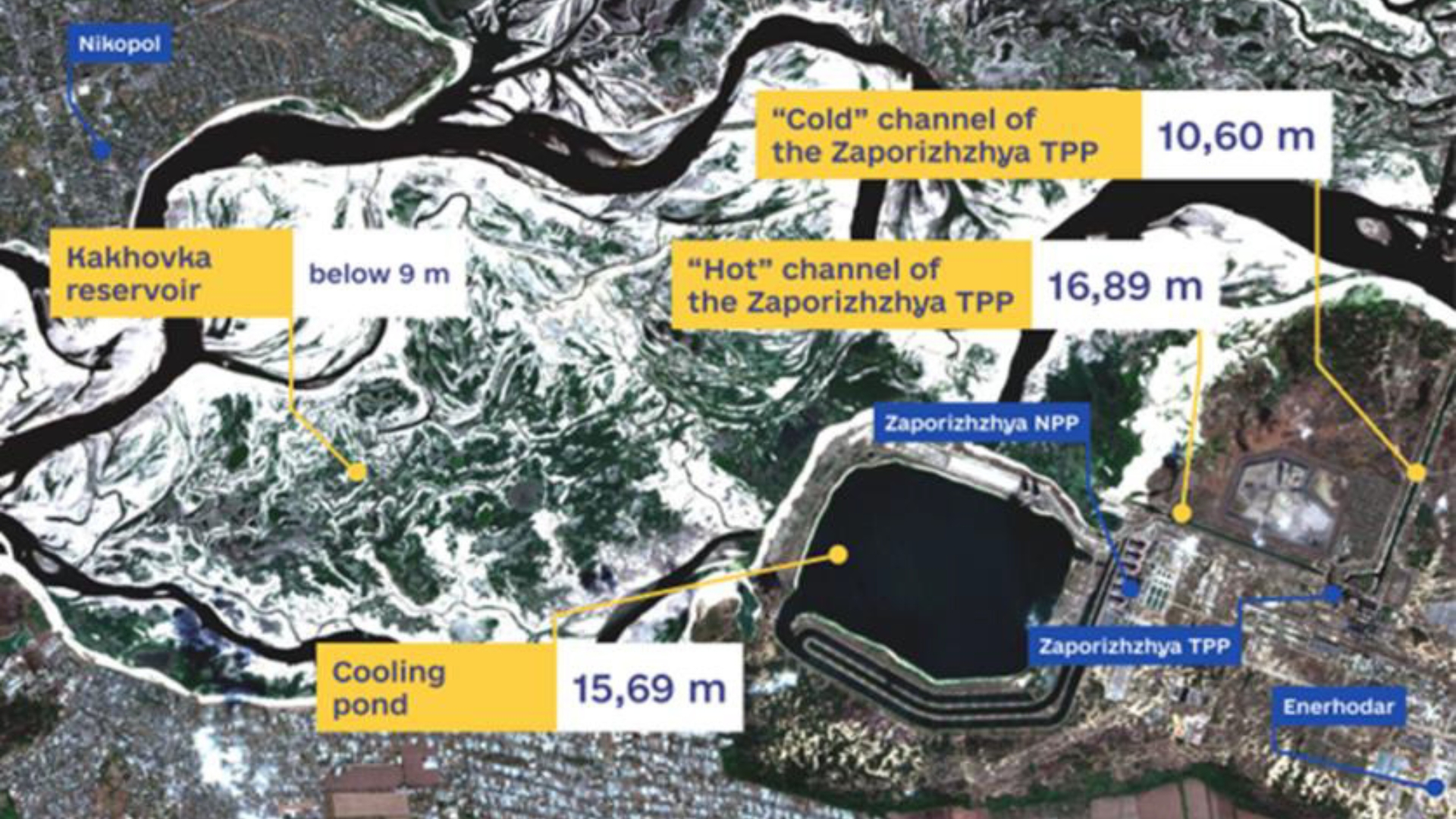

The present safety fragility and main risks at ZNPP are summarised under the degradation of safety defence in depth and military activities near the plant. The reduction in safety levels and margins is based on the instable power supply and poor cooling and on the staffing situation. Out of ten high voltage power lines only one or two are operational and a loss of off-site power situation occurred already eight times with operation of emergency diesel generators as last defence. Moreover, after the Kakhovka dam destruction, the cooling to the shutdown reactors depends on eleven wells drilled within the site and the structural stability of the cooling pond. Many Ukrainian personnel left the plant and, together with the reduction of external contractors and shortage of spare parts, it creates doubts on the capacity to fully carry out maintenance and in-service inspection programmes. There is also significant risk that shelling, explosions, drones or sabotage would affect essential equipment touching irradiated nuclear fuel, the cooling pond or safety systems. All this makes the actual situation at ZNPP precarious and unsustainable in the medium term. ZNPP needs to be protected since its gradual reduction in safety levels and margins may be brewing a potential nuclear accident to the frustration of the international community.
The implications of the actual situation at ZNPP exceeds technical aspects addressing issues of global concern. It reflects the lack of a ratified global agreement to protect nuclear infrastructures, but also represents an opportunity to adapt and develop IAEA nuclear safety and security standards to be applied to nuclear facilities in armed conflicts.
On legal international regimes, the 1949 Geneva Conventions extended by the 1977 Additional Protocol I referring to international armed conflicts, as well as the 1979 IAEA Convention on the Physical Protection of Nuclear Material and Nuclear Facilities are not covering military attacks to nuclear facilities. These rules are insufficient and ambiguous conferring a certain legal vacuum, which may formally mean that attacking a nuclear facility may not be illegal. It is urgent to ratify a specific global convention or treaty on non-aggression against nuclear facilities to prevent them from being used as military targets. IAEA is pushing in this direction, but attempts addressing the need to prohibit armed attacks on nuclear facilities failed at recent IAEA General Conferences and at the Nuclear Non-Proliferation Treaty Review Conference.
After the outbreak of the war, the IAEA established seven pillars of nuclear safety and security to assess risks in wartime contexts and since a demilitarised safety protection zone was not achieved, the UN Security Council further endorsed in May 2023 five concrete principles essential for averting a catastrophic incident at ZNPP. On this basis, the IAEA mandate should be revised and adapted to fully develop safety and security standards for armed conflicts. The IAEA Safety Standards Commission already launched in 2022 a working group to analyse the practical applicability of current IAEA standards, as well as the shortcomings and challenges in their application.


