

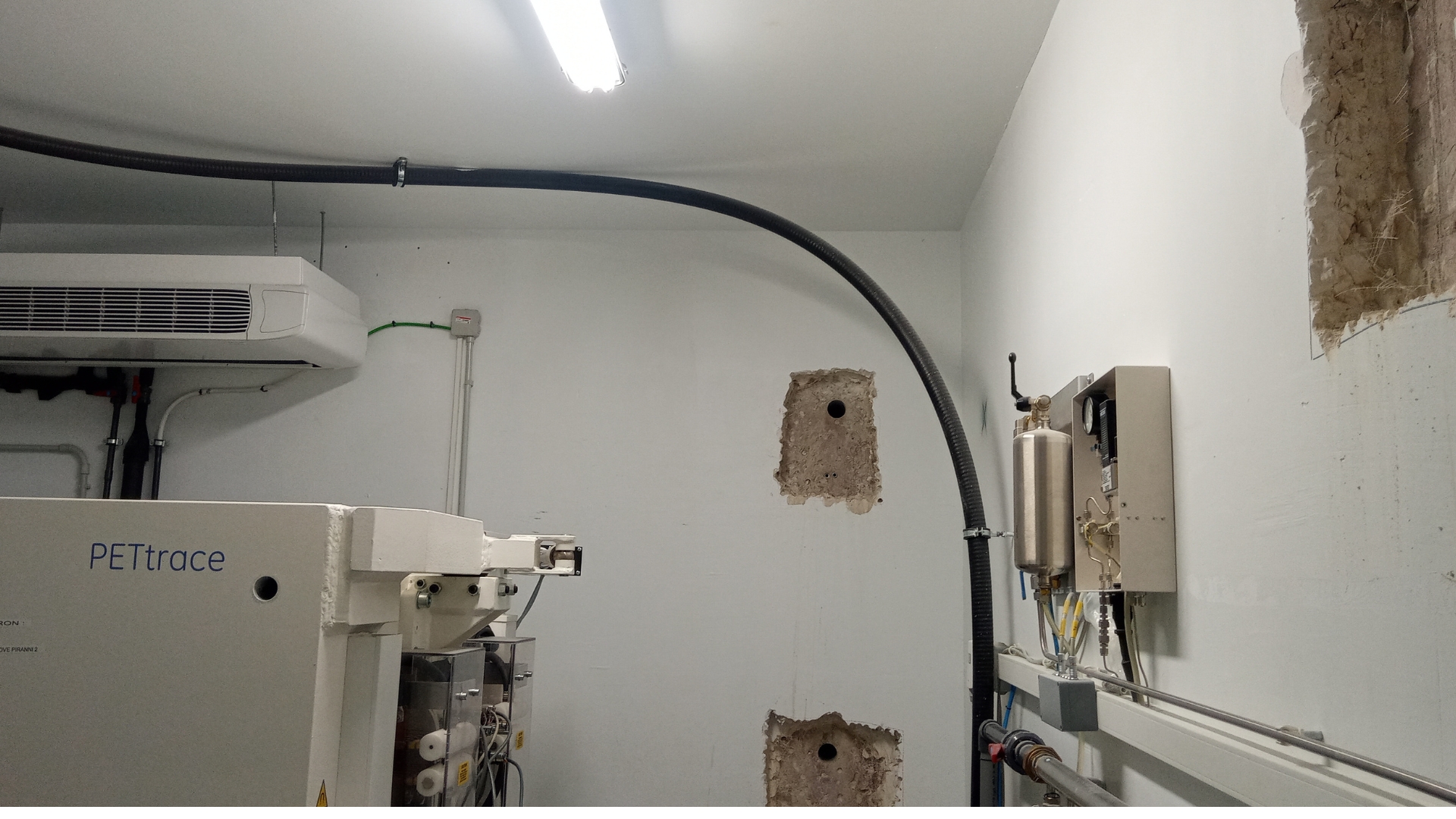

Due to the presence of the cyclotron, there is a radiological background that complicates characterization through direct non-destructive measurements. Therefore, ENUSA-ENSA AIE (EE-AIE) proposed the extraction of samples from areas of greater interest.
To optimize the number and position of the extractions, EE-AIE designed a model using the MCNP6.2 code to determine the neutron fluence in the bunker, considering both the cyclotron’s structural elements, the neutron moderator, and the source term. With the results of the model, areas of higher and lower neutron impact were determined, creating a fluence map that guided the sampling points. Ten samples were extracted, distributed across walls, floors, and doors. Gamma spectrometry was used to determine the isotopic composition and activity concentration at various depths, with the activity results of the samples aligning with the areas of highest and lowest impact as predicted by the Monte Carlo model.
By comparing the analysis of the extracted samples with the model, it was concluded that the model is valid for representing the radiological impact of the cyclotron in the bunker, and the applied methodology is transferable to other facilities with similar characteristics.


