

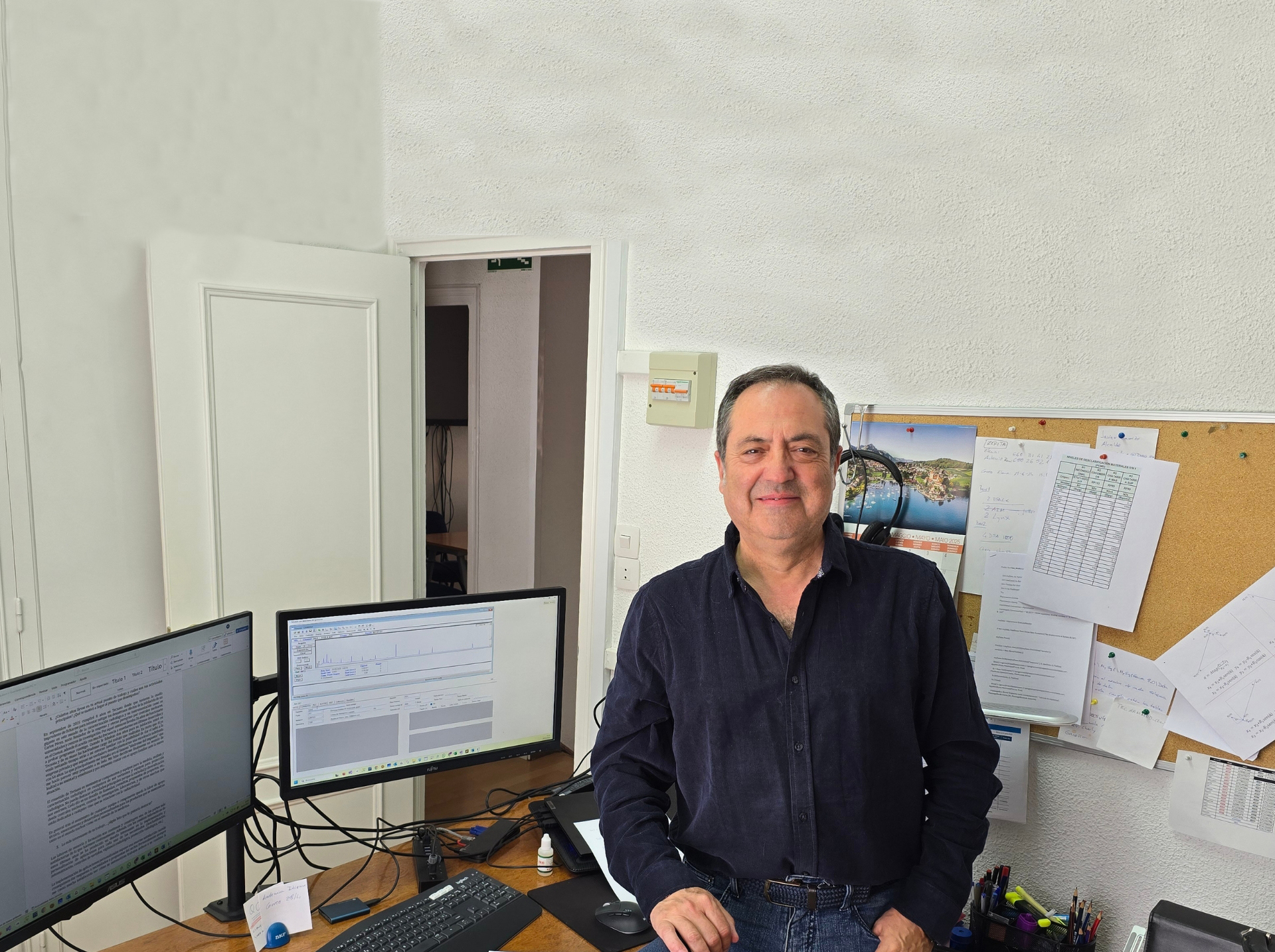
- Full Name: Heliodoro Sújar Moraga.
- Current Position or Responsibility: Technical manager.
- Current Company: Tecnasa S.L.
- Qualification: Graduate in Pharmacy from the Complutense University of Madrid.
How many years have you been in your current job and what are the main activities you carry out? What drove you to get to your current position?
In September 2025, I will have been with Tecnasa for eight years, since they had the reckless audacity to recruit me to try to mitigate the disastrous effects of the retirement of a giant in the world of radiological characterization and instrumentation, Carlos Pérez, a founding partner of the company and an eternal traveler through nuclear power plants, universities, and research centers. At that time, I had been a civil servant at Ciemat for 26 years, where he frequently visited to show me his latest developments and test programs with me. Two years before his retirement, I joined Tecnasa and, with him, I began taking over the work he was doing. It’s true that he had been tempting my family for some time with the possibility of a move to private enterprise, and considering an indefinite leave of absence at 54 was a real challenge. What mainly held me back was the famous “imposter syndrome,” which made me seem tiny next to him. What made me finally decide was a sense of loyalty to his friendship and teachings and of course, counting on the support of my family in the face of the new situation.
Tecnasa’s mission is to supply components and equipment for radiological measurement, analysis, and characterization in all its forms, as well as equipment for radiation protection. I cannot single out the main activities because the variety and diversification are enormous. Every day is a challenge for calls, inquiries, project proposals, etc., from nuclear power plants, research centers, laboratories, and many others dedicated to anything related to radioactivity.
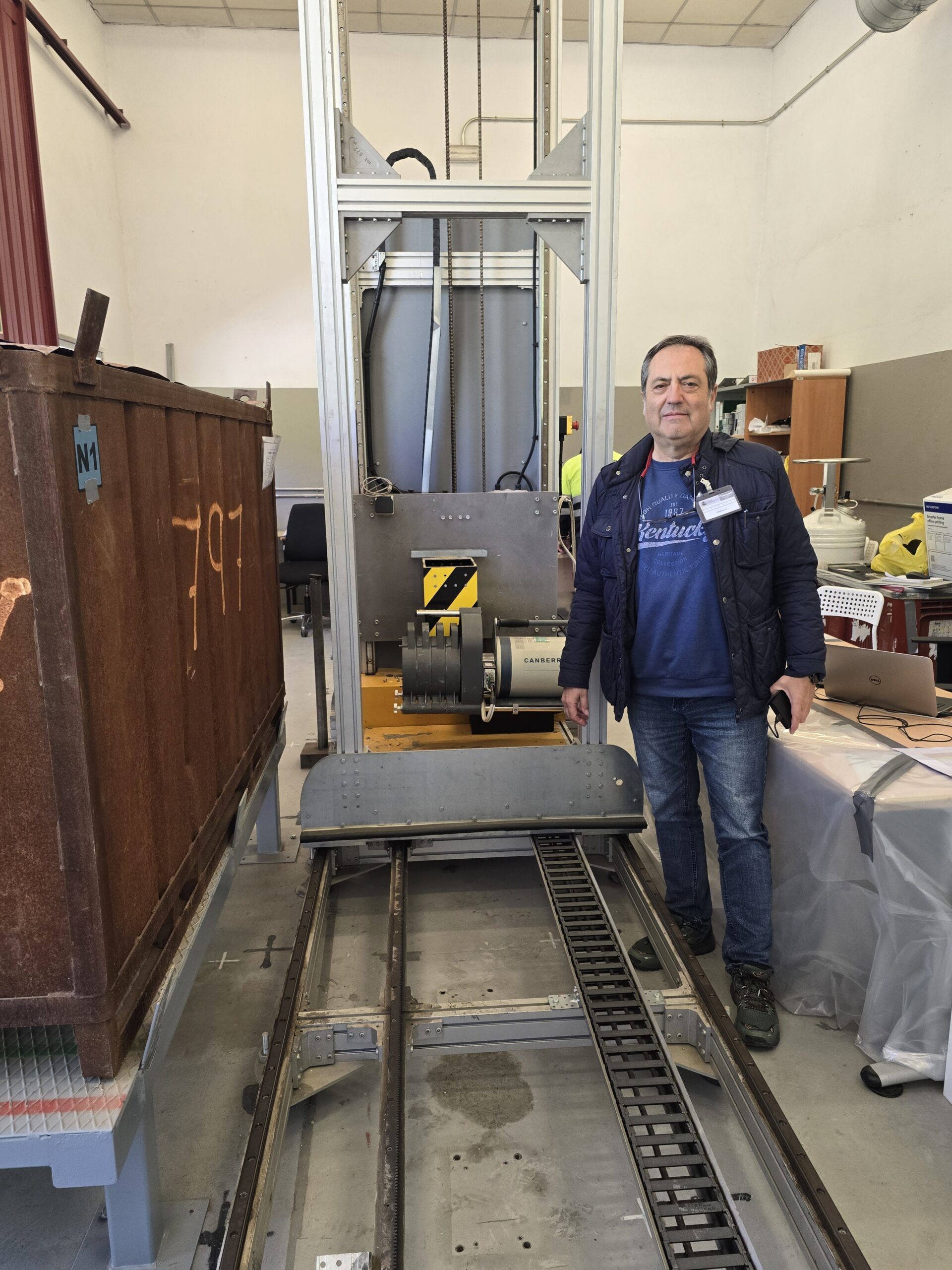
In general, after the supply of any equipment or component, there is the work of technical support, consulting, and customized development for the products supplied in both the nuclear and medical sectors.
The most interesting part of your job… any milestone you would like to highlight?
Consulting and training are ongoing and constitute one of the most satisfying aspects of what we do. Furthermore, the IT changes of recent years have created an interesting challenge in implementing and customizing applications for each specific need (declassification, automation, efluent controls, radiation monitoring, radiation protection, etc.).
The implementation of customized applications is extremely satisfying when we are able to respond to the needs or proposals of the sector. Personally, I am always delighted to see how arduous tasks are automated or how mechanics and motors are combined with measurement and analysis applications that not only prevent doses but also minimize process errors.
The most rewarding thing about your day to day at work….
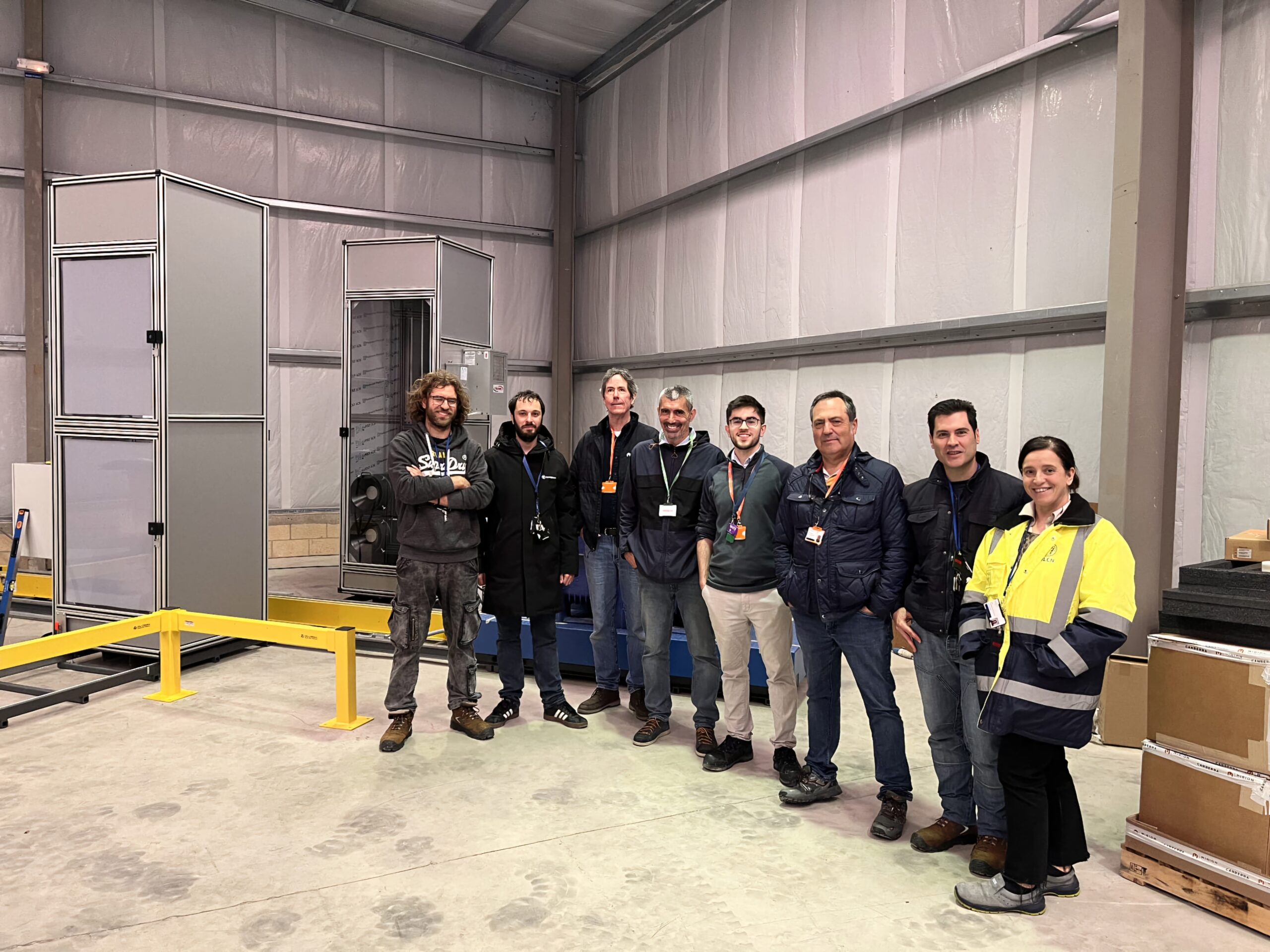
The most rewarding thing every day is dealing with people on two levels. Internally at Tecnasa, I found a phenomenal team always willing to lend a hand with any assistance needed, without the conflicts that seem inevitable in any company. Externally, with the people in the sector we work with, I’ve had the opportunity to meet extraordinary people.
It’s important to remember that having all the resources available on a daily basis, as well as the freedom to operate, makes us very dynamic and effective despite being a small company. But it’s always given me the impression of being present in many places and known by many people in the sector.
What brought you to the nuclear industry and how did people around you react to your decision? and now?
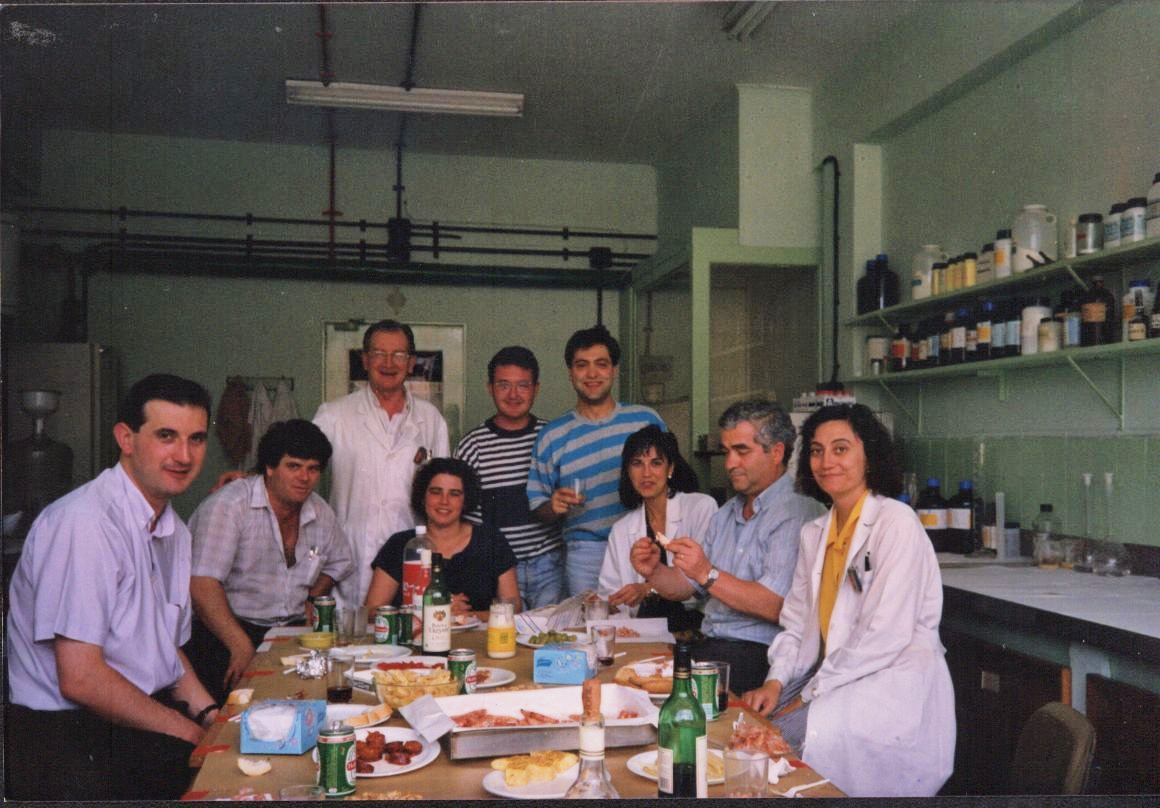
It was actually a fluke, like almost everything in our lives. Back in 1991, I passed a free competitive examination for a technical research specialist at Ciemat. About 26 of us entered as civil servants, I think I remember, and when it came to choosing positions in such a diverse organization, I opted for a laboratory position, which was what I liked and what I was best at. It turned out to be the radiochemical analysis laboratory of what was then the Institute of Nuclear Technology, and there I learned radiochemistry and ventured into the world of radioactivity. From analyzing exchange resins and evaporator concentrates from nuclear power plants for Enresa’s scale factor calculation project, I soon moved on to non-destructive methods for analyzing waste drums, and the vast world of gamma spectrometry, a time of great technological change at the time, opened up before me. There I met Carlos Pérez from Tecnasa, who was then learning (and I with him) to program in a new Visual Basic platform developed by Microsoft. We made great strides in the automation of gamma spectrometry applied to laboratories and non-destructive methods.
Over time, I managed to be promoted internally to the A2 group, and everything seemed stable and peaceful, with fairly monotonous and controlled daily tasks until the vortex of taking the leap into new adventures arrived. It wasn’t about leaving my comfort zone, but rather abandoning it forever.
I always had support in my personal circle for pursuing something I enjoyed professionally and for the interest of continuous learning.
How do you see the evolution of the industry since you joined it? and well, … And now what?
Over so many years of development, the evolution has been more than noticeable, at all levels. In terms of technology and systems, I experienced the entire evolution of computing and the equipment used. For example, gamma spectrometry analysis programs were based on the old MS-DOS, and we were still using Windows 3.1. Multichannel systems were huge and heavy pieces of equipment that had to be communicated with via code. And finally, the dreaded Y2K effect arrived, which would have brought planes down from the sky and, of course, shut down all our systems. None of that happened, and we experienced a huge technological revolution in the sector that hasn’t stopped to this day.
We now face the unfortunate threat of the closure of all nuclear power plants, and whether it is carried out or not, we will have to face technical challenges that the new generations that replace us will have to undertake, because everything is a long and continuously developing process. In the nuclear sector, new generations of reactors and the near future of the use of fusion energy will revive the sector with a impetus it has not known until now. In the radioactive sector, there will never be an end. It has existed since the formation of the planet and will accompany us until its end. It is up to us to ensure the correct use and development of methods and technologies for all fields of application.
Would you encourage young people to pursue a career in this industry?Of course. I believe that the growth in energy needs of future generations will be exponential and cannot be met by conventional means. As I mentioned before, it’s not just an energy issue but also the use of everything related to radioactivity in countless fields of science and technology, both known and yet to be discovered. If we think about accelerators and particle physics, fusion, space exploration, artificial intelligence and robotics, computing, and a thousand other things, we can get an idea of everything we can do with atoms. And what we don’t know yet.
What message would you like to convey to the rest of your nuclear colleagues? and to non-nuclear peers?
The main thing right now is not to give in to despair. As we’ve always shown, if we have to reinvent ourselves, we will. The main lesson we can draw from all these years since the beginning of the former Junta de Energía Nuclear is that we are capable of starting from nothing and improving capabilities in all aspects, both scientific and technical. Although it now seems like we’re stagnating (or being stagnated), we won’t be able to go against the rest of the world, and that inertia will drag us up.
Until now, radioactivity has been used in fields as diverse as medicine to discover metabolic pathways or diagnose diseases, cancer treatments, etc., industry, and even radiometric dating in paleontology. The examples are countless and require increasingly sophisticated techniques, used and implemented by increasingly well-trained technicians. The range of new applications is now almost infinite and almost a drop of water compared to the immense ocean to be imagined. The key is always the same: training, training, and more training. And of course, curiosity and imagination.
To my non-nuclear colleagues in other sectors, I’d like to share one of Marie Curie’s most brilliant quotes: “Nothing in life is to be feared, only understood.” I believe that everything we fear and oppose because it’s dangerous points us toward a path of knowledge to acquire to help mitigate those dangers. Without knowledge, we wouldn’t have advanced from the tropical rainforests to the savannas beyond the Rift Valley despite our fear of predators, nor would we have made the first tools that would get us out of Africa. They were certainly more afraid of the unknown than we are now. Let’s trust science, and if we don’t trust it completely, let’s contribute to it to make it more reliable.
Can you tell us two hobbies?
A fundamental one, from which many others derive: reading, primarily historical and scientific essays. This has made me deeply interested in paleoanthropology, which is one of my most pleasurable interests. I’m also rediscovering my old textbooks, which remind me of and inspire me to explore botany, biology, microscopy, geology, and all the typical sciences that would occupy a good 18th-century naturalist’s studio. In my house in the village, I have a collection of microscopes, telescopes, binocular magnifying glasses, mineral and rock collections, a herbarium, and all the necessary tools for going out into the countryside to enjoy natural knowledge. I think I’ll have almost less free time in my upcoming retirement than I do now.
And to get to know you a bit better: 1 book, 1 song (or music piece) and 1 movie.
There will be two books: Cosmos by Carl Sagan for what both the series and the book meant to me in my youth, and lately Theodor Mommsen’s History of Rome for the infinite pleasure I’m finding in its pages to understand the complexity of a civilization that is our roots.
About music, I lean towards two paths: symphonic rock from the last century and, of course, classical music. Particularly Mozart’s sacred pieces.
I don’t watch many movies (except for all the children’s movies I’ve had to endure during my children’s childhood, even Doraemon), and now I watch even less so with TV shows. But Interstellar left a huge impact on me, and now I think a sequel is in the works.
Finally, to conclude, a wish for the future
Let us look to the past and learn. To all pasts. To our species’ past with admiration for the progress we made in difficult times of survival; to our historical past because we were a great nation of great people and great values; and to our most recent past because we knew how to rise from our disasters. With this perspective, my fundamental wish is that we believe in ourselves and build the future, not endure it.


