

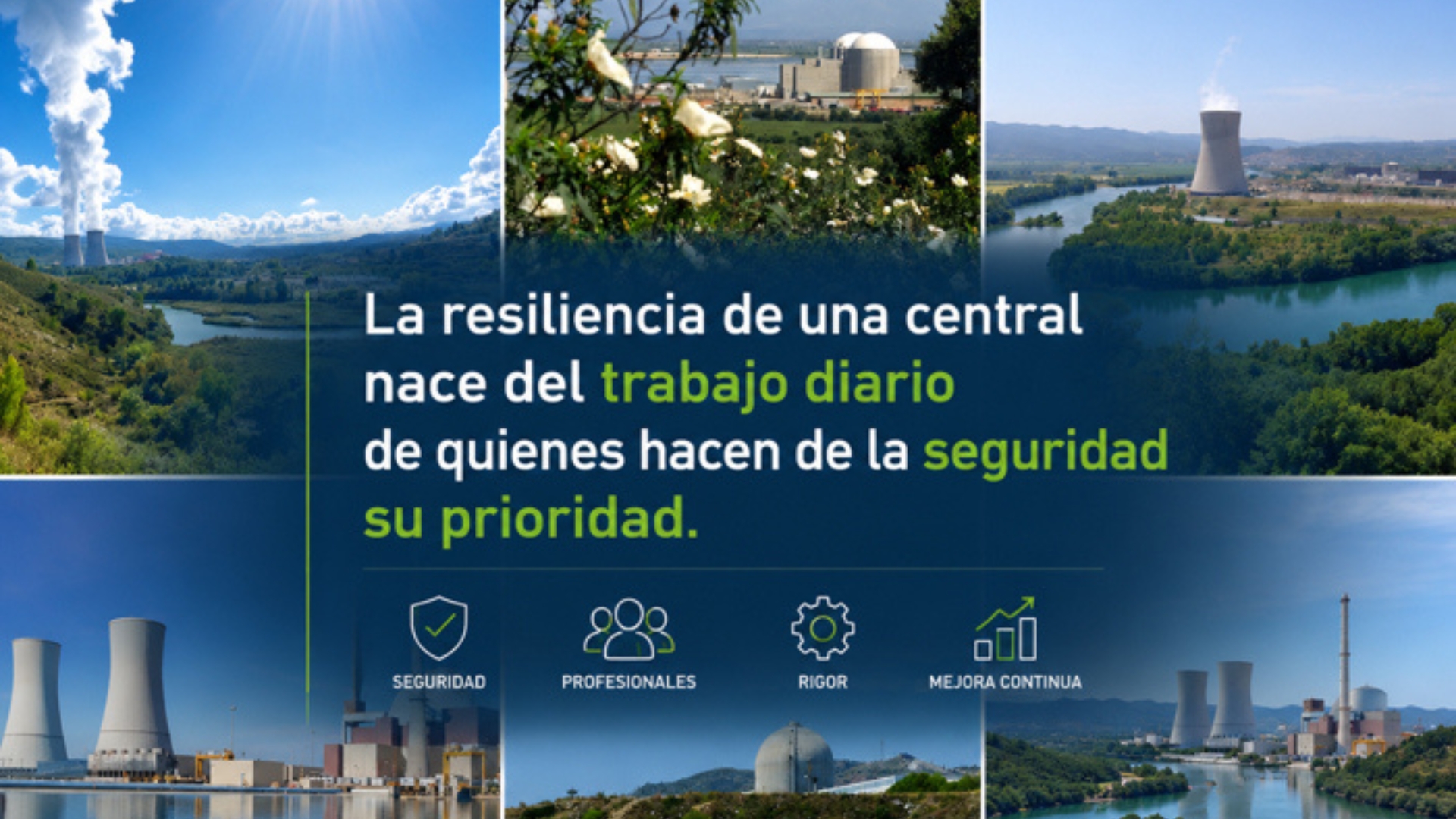

The guided idea of the conference was shared by all presentations: resilience is not improvised when an emergency occurs. It is built beforehand through design, engineering, training, operating experience, safety culture, technological modernisation and cooperation between organisations. In the current context this approach is particularly relevant. Climate change is increasing the frequency and severity of certain extreme events; the energy transition is reshaping the structure of the power system; the growing share of variable renewable generation requires new stability and flexibility capabilities; and digitalisation offers new possibilities while introducing additional technical and organisational challenges.
The Role of Nuclear Energy in the Electricity System
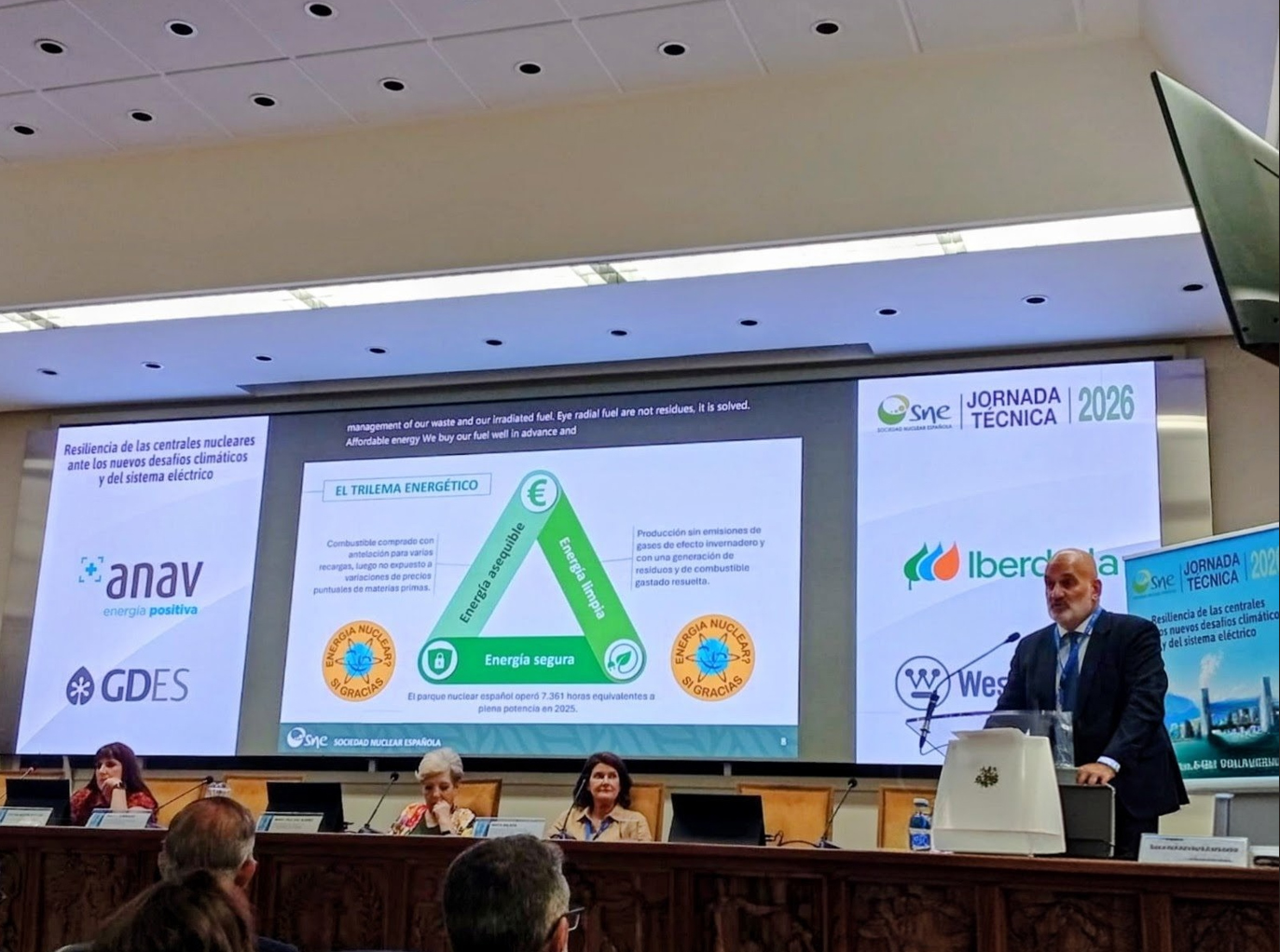
The thirteen presentations addressed the subject from a broad perspective. They analysed European energy priorities, increasingly focused on security of supply, industrial competitiveness and strategic sovereignty; the evolution of the Spanish power system and its electricity markets; the role of nuclear energy as a firm, dispatchable and low-carbon technology; and the need for voltage control, inertia, reserves and ancillary services in a system with a higher share of renewable generation.
The Iberian blackout of 28 April 2025 was a central element of the discussion. The experience of Spanish nuclear power plants, and particularly the sequence of events at Vandellós II, provided a valuable case study of the response of a nuclear facility to the loss of off-site power, the performance of safety systems, the implementation of emergency procedures and the lessons learned. These included the value of periodic emergency training, the robustness of response organisations and the need to strengthen certain communication and support systems during extended emergency situations.
Engineering and Digitalization to Anticipate Risks
The conference also highlighted the role of engineering as an essential tool for adapting nuclear power plants to new challenges. Presentations included practical examples related to hydrological events, thermal control of water discharges, water pretreatment under high turbidity conditions, replacement of HVAC systems driven by new environmental requirements, flexible operation studies, advanced manufacturing, plant services, digitalisation, predictive models and digital twins. These capabilities help anticipate deviations, reduce uncertainty and support operational decision-making with a stronger technical basis.
A Continuous Process of Preparedness and Improvement
Finally, future solutions were discussed, including long-duration energy storage and its potential integration with nuclear and renewable generation, together with the need to maintain close cooperation between utilities, regulators, industry, engineering organisations and international bodies. The main conclusion was clear: nuclear resilience is a continuous process. It is not limited to withstanding an extreme event; it requires preparation, response, learning and systematic improvement to continue contributing to a safe, reliable and decarbonised power system.


