

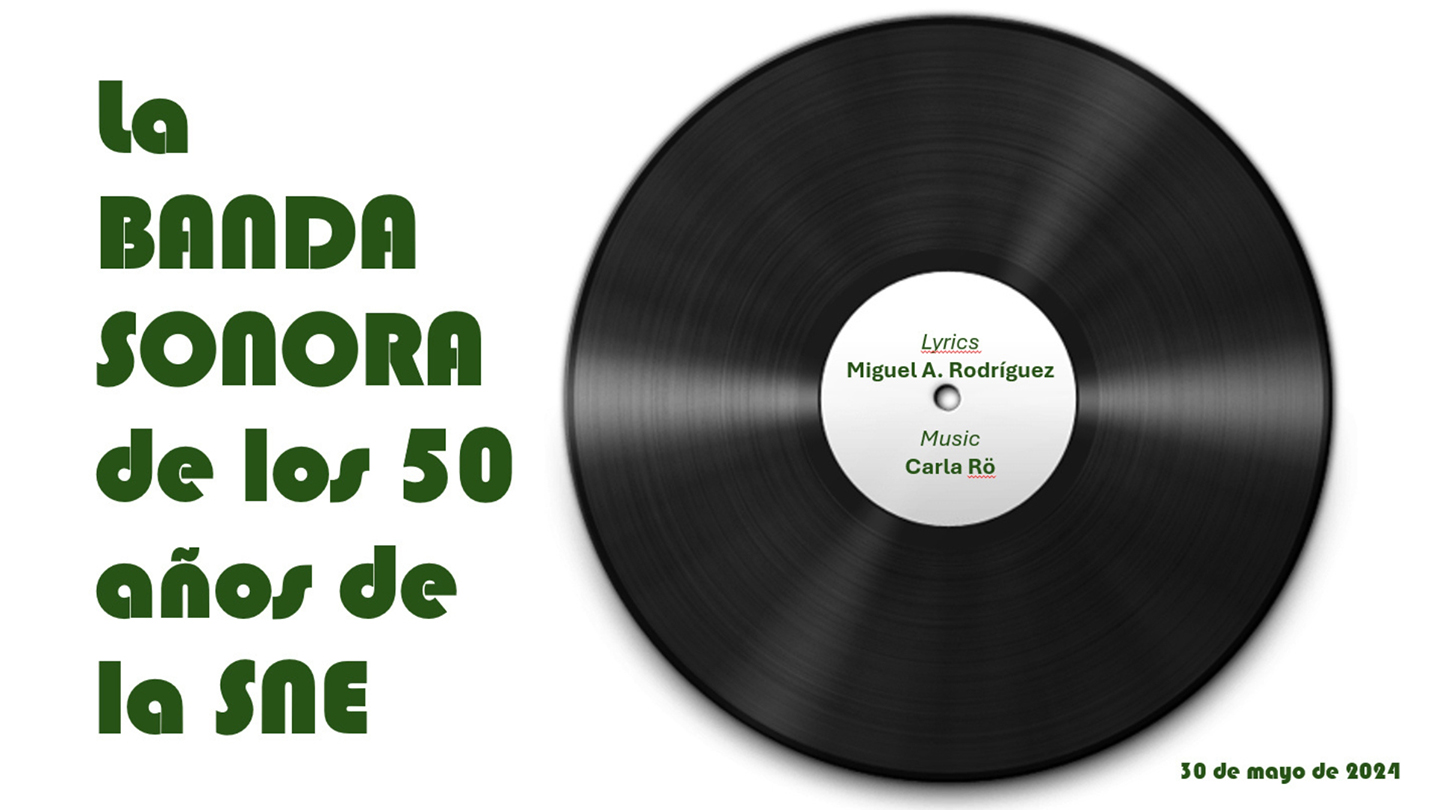
On May 30th, Carla Rö and I went to the headquarters of the Colegio Oficial de Ingenieros Industriales de Madrid (COIIM) (Official School of Industrial Engineers in Madrid) with a challenge: How to tell the story of the evolution of music in Spain throughout the last fifty years. The reason was none other than to commemorate the anniversary of the Spanish Nuclear Society (SNE for its initials in Spanish), with a vision of something, music, which many of us are passionate about.
Music loads our day with emotions. We turn the music on while driving, playing sports, dancing, to cheer ourselves up or just as background music. But, what about in 1974? What cassette tapes would our colleagues listen to when they left work at Zorita? Where would they go to see a concert? Would they dress like heavy metals, mods or rockers in the 80s? In these 50 years everything has evolved.
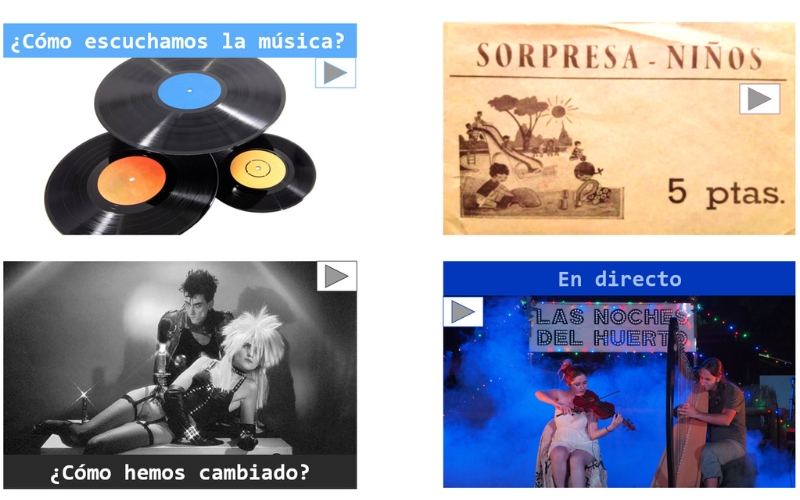
So, we got down to business by designing a presentation that would be some kind of immersive and interactive experience, and in which the audience’s participation would be part of theshow. After Julio Blanco’s presentation, and dressed inmicro my The Cure t-shirt and a headband microphone, as if in a TEDx talk, we started off like this:
“Music is an art, and therefore it conveys beauty. But the appreciation of beauty is a totally subjective fact. So don’t expect a masterclass today; today is actually more of a personal journey through these fifty years. You will miss things”.
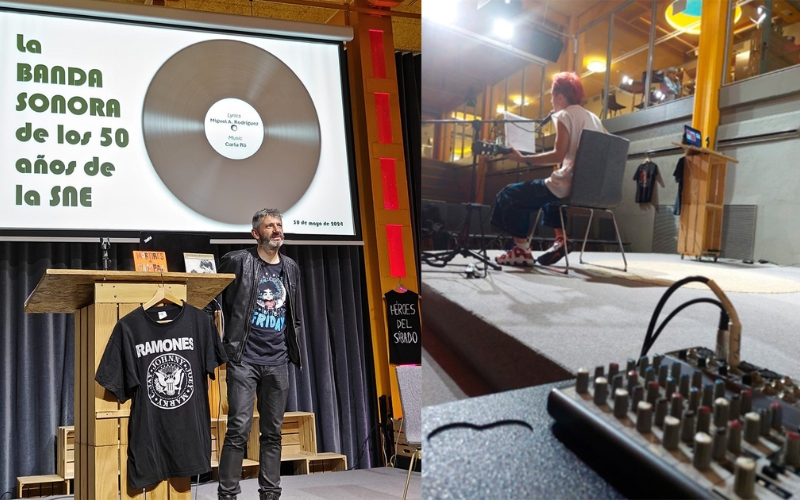
Accordingly, we prepared a presentation with a timeline in which we travelled through those five decades. For each of them, Carla performed, guitar in hand, a live song that we had chosen. This is how Ojalá (by Silvio Rodriguez), El cadillac solitario (by Loquillo), El sitio de mi recreo (by Antonio Vega), Turnedo (by Iván Ferreiro) and Los tontos (by C. Tangana) sounded.
During the performance, many songs were played and, above all, lots of anecdotes were told. Stories about the songs, about their publication or censorship, about how they were created or simply what they made us feel. And of course, Nuclear sí by Aviador Dro was played, among many others which are compiled in this Spotify playlist for those who want to remember or, perhaps, imagine the event.
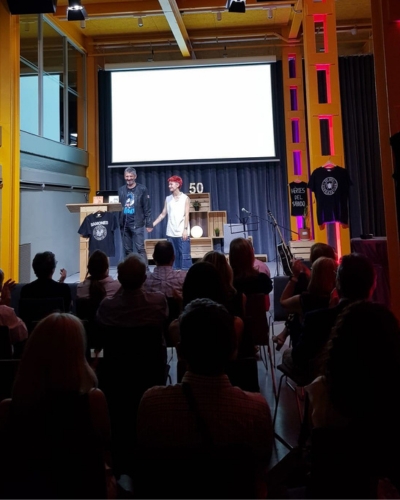 A nice moment was when we asked the attendees which song they would send into space for supposed aliens to hear (a real fact conceived by Carl Sagan that happened in 1977, when a golden record was sent into space with different songs representing the Earth). Mediterráneo by J. M. Serrat was the one most frequently mentioned.
Every so often, the timeline which marked the main presentation stopped, drifting to one of the three parallel topics we had prepared: one on how the home audio formats have evolved, from vinyl, cassettes and CDs to the present day, where from online platforms on line that you carry on your mobile phones you may access all the music, although, as we explained before, the experience of buying and listening to vinyl got lost in the way; another one about where we used to enjoy the music: we started off at parties and ended up in macro-festivals, passing through nightclubs, pubs and discotheques; and the third one, in which we talked about the evolution of the urban tribes and their way of dressing: bell-bottoms or skinny trousers, Mohican hair or long hair. In barely ninety minutes, with our particular Delorean, we travelled through the fifty years and it brought us back safe and sound, we believe, to 2024. There was still one last trip left as a final surprise, which you can see in the attached video. As we were saying, those of you who were there, experienced it; those of you who weren’t, will have to imagine it. For Carla and myself it was a once-in-a-lifetime experience and for which we would like to thank once again the Spanish Nuclear Society (SNE for its initials in Spanish) for this given opportunity.
In barely ninety minutes, with our particular Delorean, we travelled through the fifty years and it brought us back safe and sound, we believe, to 2024. There was still one last trip left as a final surprise, which you can see in the attached video.
As we were saying, those of you who were there, experienced it; those of you who weren’t, will have to imagine it. For Carla and myself it was a once-in-a-lifetime experience and for which we would like to thank once again the Spanish Nuclear Society (SNE for its initials in Spanish) for this given opportunity.


