

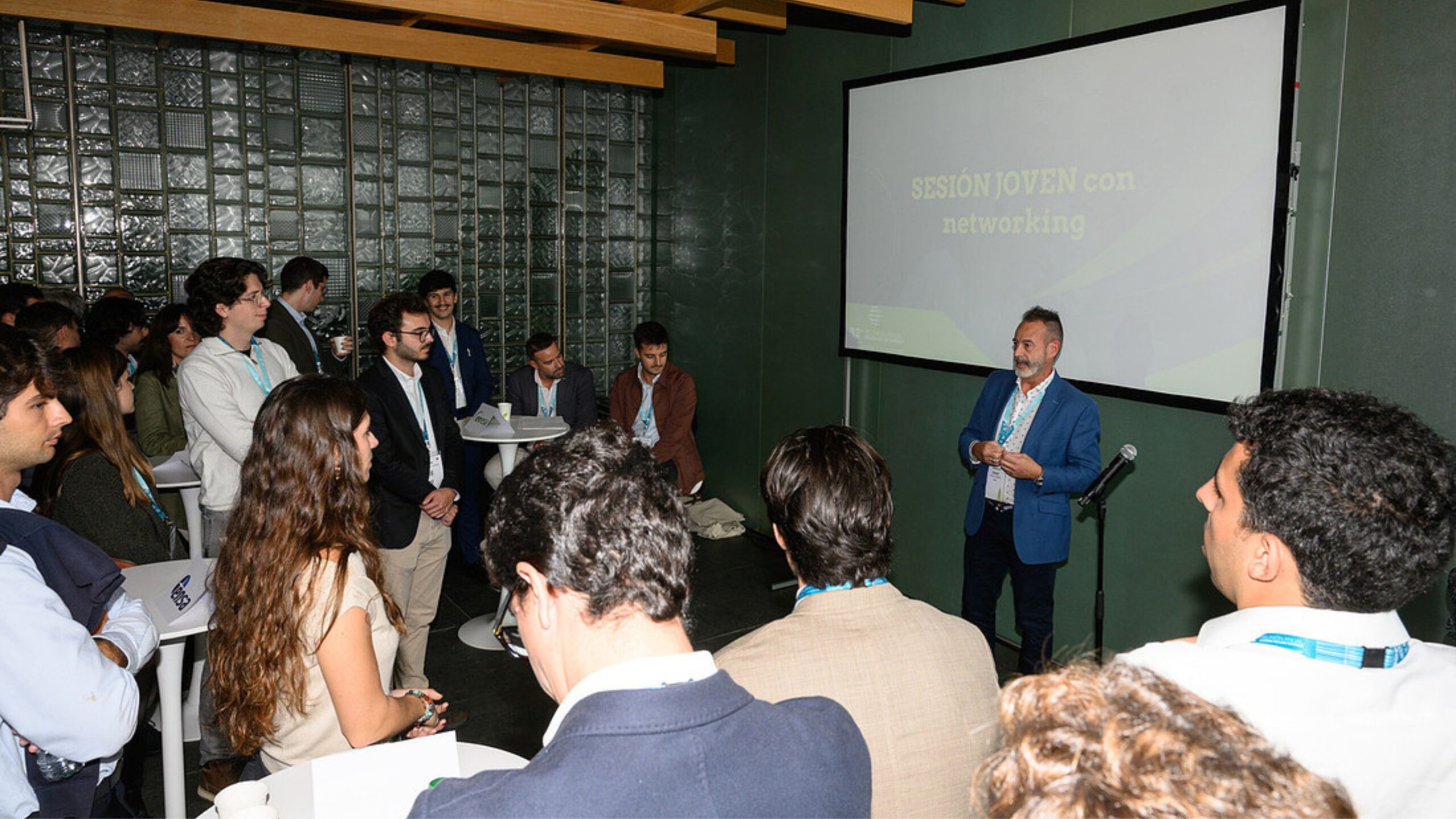
Some images convey the strength of an industry more effectively than a wealth of data. The 52nd Annual Meeting of the Spanish Nuclear Society, recently held in A Coruña, provided us with one particularly meaningful image: the strong and established presence of a new generation of professionals involved in nuclear energy.
Young people who are already working for companies in the sector, but also students in the final years of their education who see the nuclear industry as a field in which to build their professional futures. Seeing them participate, show interest, share knowledge and play an active role in an event that brings together more than 700 professionals sends an important message: the nuclear industry is alive, dynamic and has a future.
For a long time, when discussing nuclear energy, we have understandably focused on technology. We have talked about safety, industrial capabilities, operational excellence and the role of nuclear power plants in electricity generation. But perhaps the time has come to once again recognise the value of another of our industry’s greatest assets: its people.
Because behind every facility, every project and every technological breakthrough lies an extensive network of knowledge and expertise. Engineers, physicists, technicians, researchers and professionals from a wide range of disciplines who have accumulated decades of experience and who are now beginning to find a new generation ready to take up the baton. And that generational transition matters. A great deal. Bringing young professionals into the industry means ensuring that the knowledge built up over decades is passed on, while also introducing new skills, fresh perspectives and different approaches to technological challenges. It means combining experience with youth to continue building an industry that is ready to evolve.
The interest these young people are showing in becoming part of the nuclear sector should also prompt us to reflect on an issue that extends beyond the industry itself: what do we, as a country, want to do with all this talent?
Spain has highly qualified professionals, universities capable of educating and training them, companies with technological expertise and an industry that has demonstrated its technical capabilities for decades. Allowing a significant proportion of this human capital to have no choice but to pursue their futures in projects abroad would mean more than simply losing skilled professionals and the investment made in their education and training. It would also mean losing knowledge, industrial capabilities and wealth for our society.The international mobility of our professionals is positive and demonstrates the quality of their training. But ideally, working abroad should be a choice and an opportunity, not the only way to pursue a career in nuclear energy.
That is why, when considering our energy future, perhaps we should broaden our perspective. We are not talking solely about technologies or facilities. We are also talking about people, knowledge and industrial capabilities.
In this respect, the sight of so many young people interested in nuclear energy should give us reason for confidence. There is a generation that is educated, well prepared and eager to take up the baton. A generation that wants to get involved, make a contribution and continue developing this industry.
We have the talent. We have the knowledge. We have the experience. The real challenge is deciding whether we want that nuclear future to be built here or elsewhere.


