

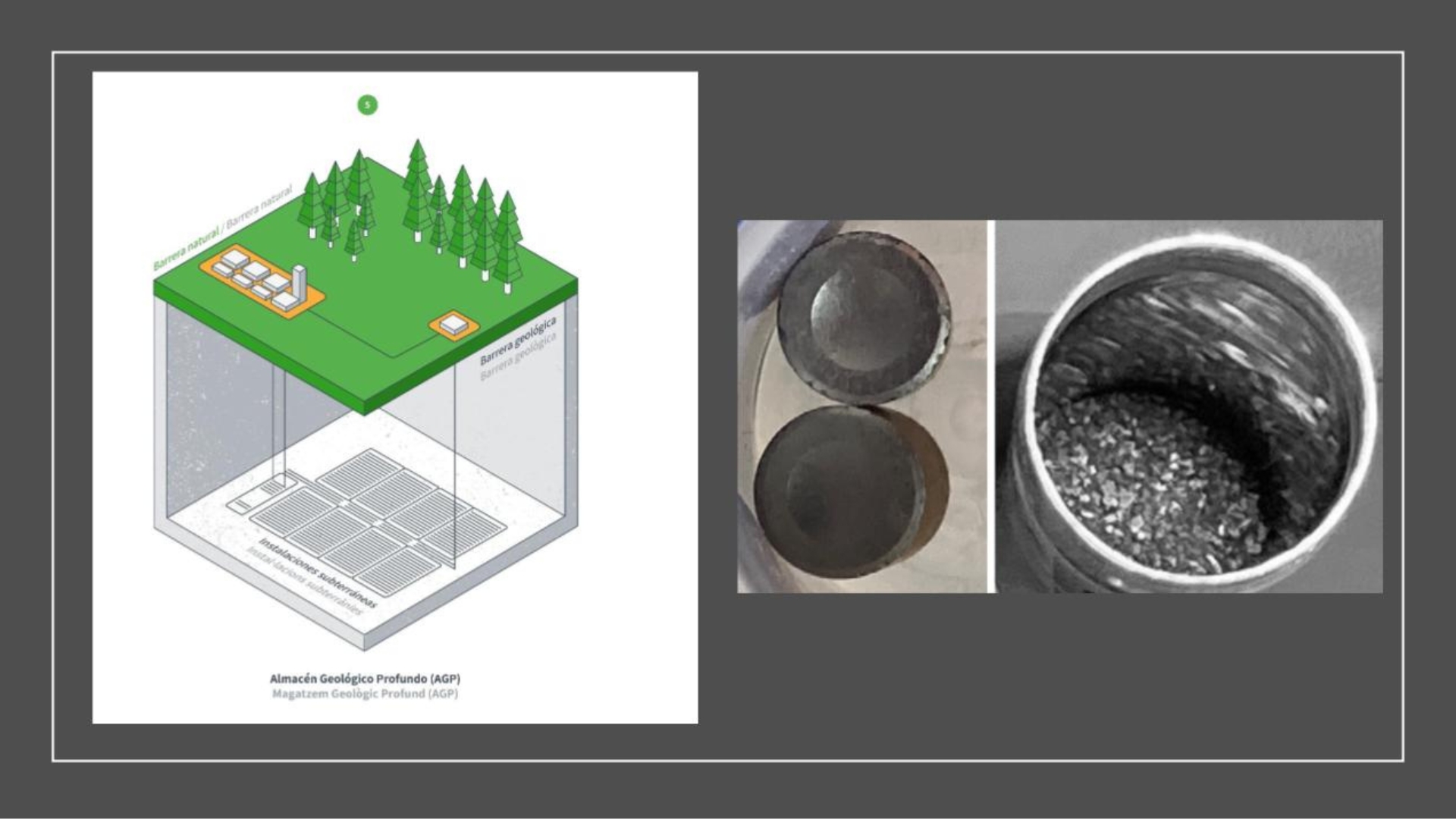

Fuel assembly handling may be carried out in air or in an inert atmosphere. At high temperatures, fuel pellet fragments from defective rods may oxidize if handling atmosphere is oxidizing. Fuel oxidation leads to swelling and eventually failure propagation, allowing a potential release of radioactive material.
Oxidation mechanism of UO2 pellets is well known, however there is a lack of knowledge about oxidation kinetics and the impact of parameters, such us temperature and oxygen content of the atmosphere. Additionally, the limited existing literature is mainly focused on unirradiated uranium oxides, pellet simulators or real pellets irradiated at burnups below 35 MWd/kgU.
To further investigate the kinetics of oxidation and determine the most appropriate operational conditions for the handling of spent fuel in air or in partially inert atmospheres, ENRESA and ENUSA developed a hot-cell experimental program of oxidation tests on irradiated fuels of different burnups, including high burnup fuels. Fuel oxidation behavior is studied by controlled oxidation tests using thermogravimetry and X-ray diffraction techniques in the Studsvik hot-cell facilities.
Selected irradiated fuel pellets for oxidation tests, along with testing parameters and the main oxidation results obtained so far, are presented in this paper.


