
Creep effects in the design of nuclear-class components subjet to high temperature operations

One improvement by some IV generation nuclear reactors and fusion reactors is the use of high temperatures in the primary circuit. Operations at higher temperatures allows for increased thermodynamic efficiency, potentially smaller reactor design and, therefore, reduced costs. However, the materials and equipment that operates at such temperatures suffer more demanding environment conditions, where creep effects can take place. Creep is the continuous inelastic deformation by the material when it is subject to stresses during its operation at high temperatures.

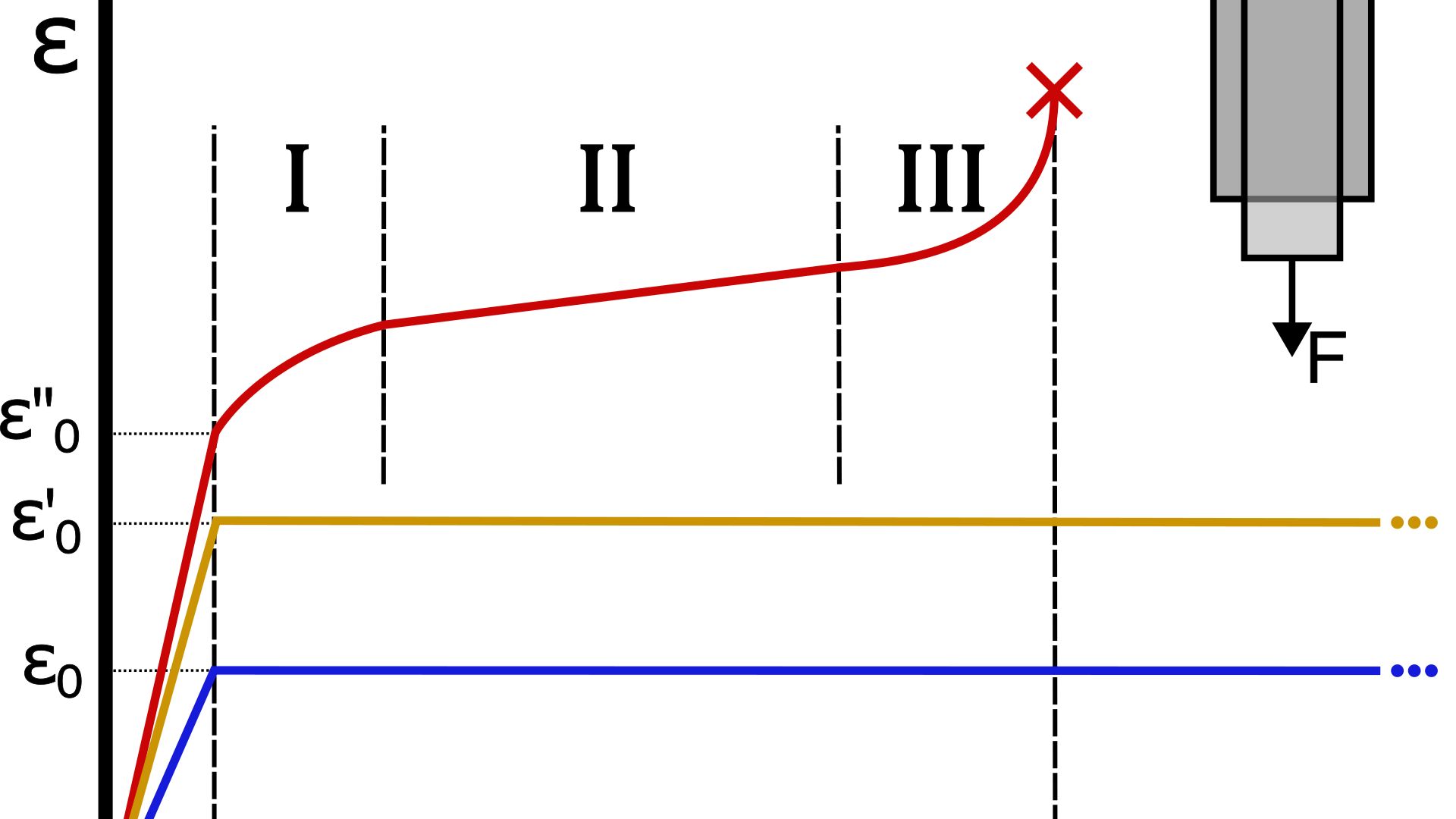
Creep in three phases

This article introduces the behaviour of materials under the effect of creep, which includes its three phases: primary, secondary and tertiary creep; and describes the evolution of stresses in two basic analytical cases: constant stress and constant deformation. Additionally, a brief introduction to the combined effect of creep-fatigue is given. With this theoretical introduction, the main points of ASME BPVC Section III Div. 5 are fully covered.
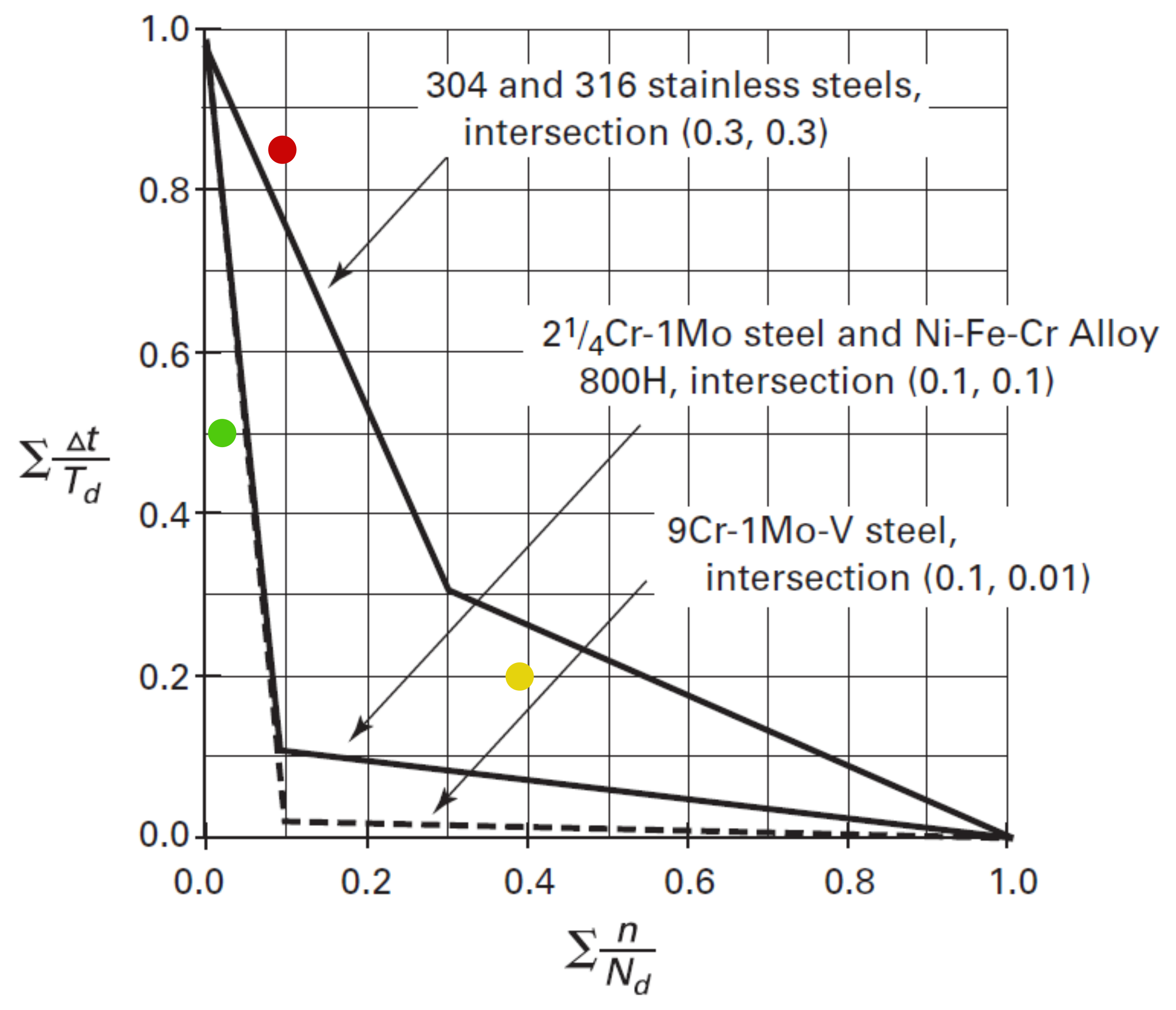
Creep–fatigue interaction damage envelope. The axes indicate the accumulated fatigue damage (horizontal axis) and creep damage (vertical axis). Three illustrative cases are shown: the red point exceeds the allowable damage limits, the yellow point would only be acceptable if 304 or 316 stainless steels were used, and the green point falls within the allowable limits for any material. Source: ASME III, Div. 5 (2021), Figure HBB-T-1420-2.

Considerations and design criteria

The work methodology for the design of equipment operating at high temperatures includes the calculation of the structural properties of the material, the limit of inelastic deformation during service and the classification of loads into primary and secondary ones. The design process is limited by the reduction of the structural capacity of the materials, the difficulty of supports and piping and the iterative nature of the design and calculations involved. Other aspects of high temperature design that are negatively affected are thermal insulation, equipment joints, preheating of systems and the lack of information of the effect of the refrigerant or nuclear fuel (molten salts or liquid sodium) on the equipment.

¡Recibe nuestra newsletter!

    The data provided by you is processed by the Spanish Nuclear Society in accordance with EU Regulation 2016/679 on Data Protection, with the purpose of managing your requests, answering queries, administrative, statistical processing and sending SNE communications, about your activity, events, etc. The transfer of data is not foreseen (unless legally required) or international data transfers; and through the Privacy Policy you have all the rights that assist you in terms of privacy.