

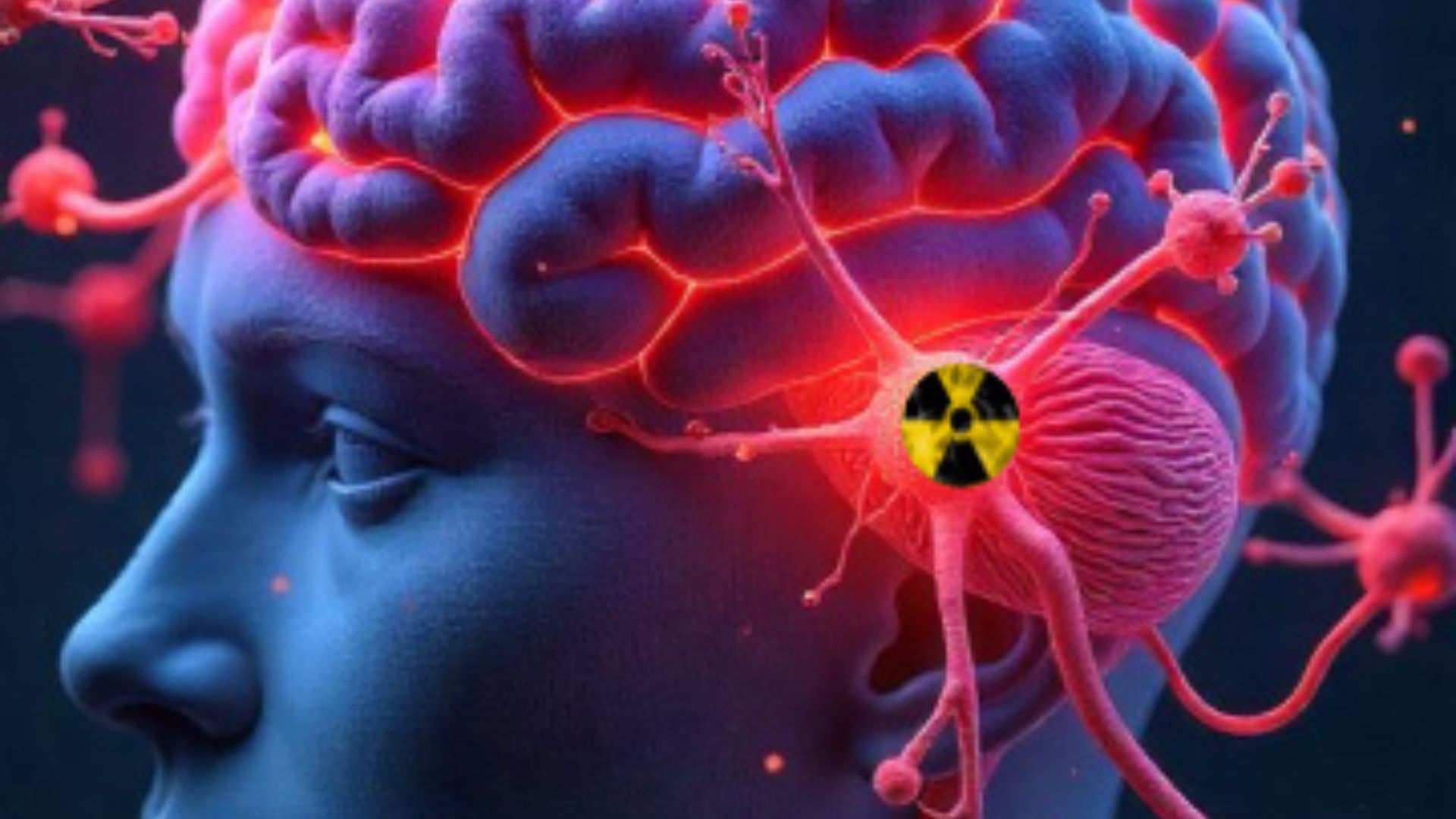

Beyond its devastating cognitive impact, this neurodegenerative condition carries a profound emotional burden for patients and their families, who often become caregivers. The progressive loss of memory, identity, and autonomy turns Alzheimer’s into a disease that not only erases memories, but also bonds, stories, and dignity. In this context, science seeks not only cures, but also hope.
Traditionally associated with cancer treatment and energy generation, nuclear radiation is now emerging as an innovative tool in the fight against Alzheimer’s. Far from the high doses that destroy tissue, low-dose radiation therapy (LDIR) offers a promising strategy that acts on the brain’s biological mechanisms without causing structural damage.
Initial preclinical and clinical studies have shown that LDIR can significantly reduce the pathological beta-amyloid (Aβ) and tau proteins, responsible for the plaques and neurofibrillary tangles characteristic of AD. Moreover, this form of radiation modulates neuroinflammation—a key process in the disease’s progression—by reprogramming microglia, the brain’s immune cells, into an anti-inflammatory and protective state.
Beyond molecular effects, low-dose radiation has been shown to improve synaptic function, protect neurons, and enhance brain insulin sensitivity—a factor increasingly linked to cognitive decline. In animal models, these changes have translated into improvements in memory and learning. In humans, phase I and II clinical trials have yielded encouraging results: good tolerance, no serious adverse effects, and cognitive improvements in some patients with mild Alzheimer’s.
From an emotional perspective, this line of research represents a light in the darkness—a recovery of hope that had vanished along with certain memories. The possibility that an existing, accessible, and relatively affordable technology like radiotherapy could bring relief to millions redefines the role of nuclear energy in modern medicine. It is not only a source of power, but also a source of light that illuminates the path toward the recovery of longed-for normalcy.
The road ahead is still long. More studies are needed to determine the optimal dose, the ideal timing for intervention, and the precise mechanisms of action. However, the transformative potential of this therapy is undeniable. In a world where Alzheimer’s threatens to become a silent epidemic, nuclear energy could prove to be an unexpected and decisive ally.
Low-dose radiotherapy not only opens a new therapeutic avenue, but also symbolizes a reconnection between science, technology, and humanity. Because in the fight against forgetting, every step forward matters. And perhaps, in the heart of an atom, we will find the spark that restores to millions the ability to remember… and to be remembered.


