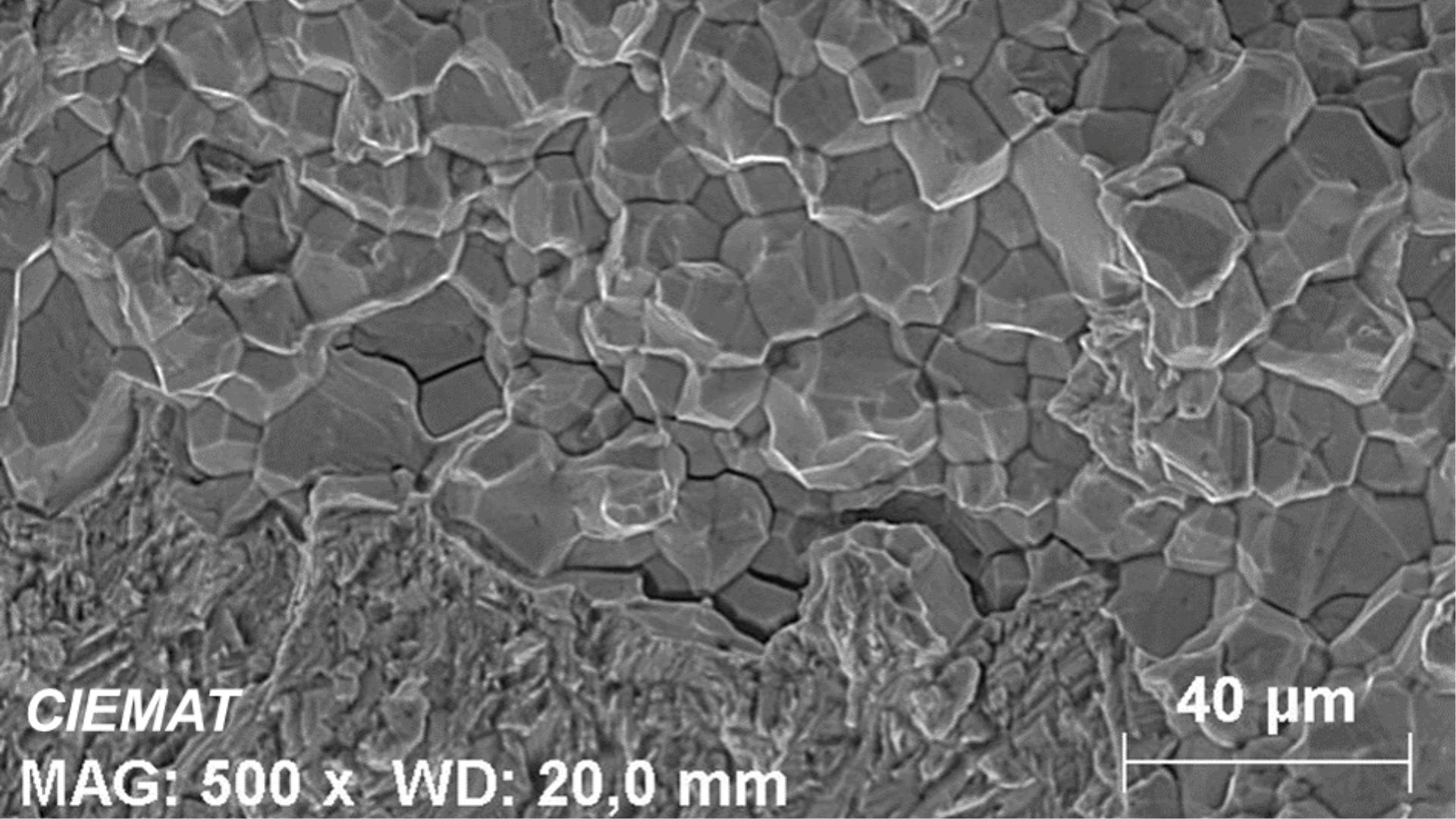
Stress corrosion cracking (SCC) is a type of degradation that affects metal components, causing the formation and propagation of cracks that have the potential to compromise the operation of a nuclear power plant (NPP). This phenomenon can be considered a complex and synergistic combination of mechanical, electrochemical and metallurgical factors. The phenomenon under discussion manifests in components that are subjected to three distinct conditions: tensile stress, an aggressive environment and a susceptible material. The composition of the coolant or environment is of paramount importance. Furthermore, the presence of contaminants such as chlorine ions has been observed to promote the formation of TGSCC (transgranular SCC), particularly in the context of austenitic stainless steels. The presence of oxygen and temperature have also been demonstrated to have a significant influence. It has been demonstrated that an increase in oxygen concentration can result in the initiation of corrosion processes, which are contingent upon the presence of very low levels of chlorides. Conversely, a decrease in oxygen concentration, accompanied by the injection of hydrogen, has been shown to reduce the corrosion potential. This process can be effectively moderated or decelerated by these interventions. On the other hand, tensile stress is an inherent factor in the structural components of nuclear power plants and its total elimination is impossible. Stresses can result from manufacturing, assembly, welding, coolant pressure, temperature changes, or corrosion products. Finally, alloy metallurgy is another crucial factor in the development of SCC. All alloys present in light water reactors, such as austenitic stainless steels, nickel-based alloys, and welding alloys, are susceptible to SCC. A common mechanism is sensitization, which occurs when unstabilised austenitic stainless steels are exposed to temperatures between 450–850°C.
For more than 35 years, CIEMAT’s Division of Materials of Energy Interest has been involved in numerous activities related to degradation phenomena in nuclear power plants, particularly in the field of corrosion in primary and secondary water, the latter related to steam generators. In addition, it has played a prominent role in studying the effect of irradiation on the microstructure of materials in internal components of LWR power plants. Furthermore, the results of the present study demonstrate that neutron irradiation has the capacity to enhance SCC. It has been established that the application of radiation results in alterations to the microstructure of the material, with the potential to generate a process analogous to sensitization. This process is referred to as Irradiation-Assisted Stress Corrosion Cracking (IASCC).
There have been many cases of SCC mechanisms occurring in nuclear power plants. The first case of IGSCC was recorded at the Dresden-1 BWR plant in type 304 stainless steel pipes in areas affected by welding. Alloys 600 and X-750 have also suffered IGSCC (intergranular SCC) in PWR reactors. Currently, SCC incidents continue to occur sporadically, as has recently been the case in some French plants, leading to the preventive shutdown of many 1450 MWe PWR plants. In Spanish nuclear power plants, CIEMAT has analyzed some components affected by SCC, mainly in circuits with low water flow or stagnant water, especially in socket welds and in the area of steam generators where phenomena known as ‘denting’ are precursors of SCC on the secondary side.
It is concluded that, although SCC is a complex and inevitable process, a thorough understanding of the three main factors (stress, material and environment) and the application of specific procedures can help mitigate its development.