

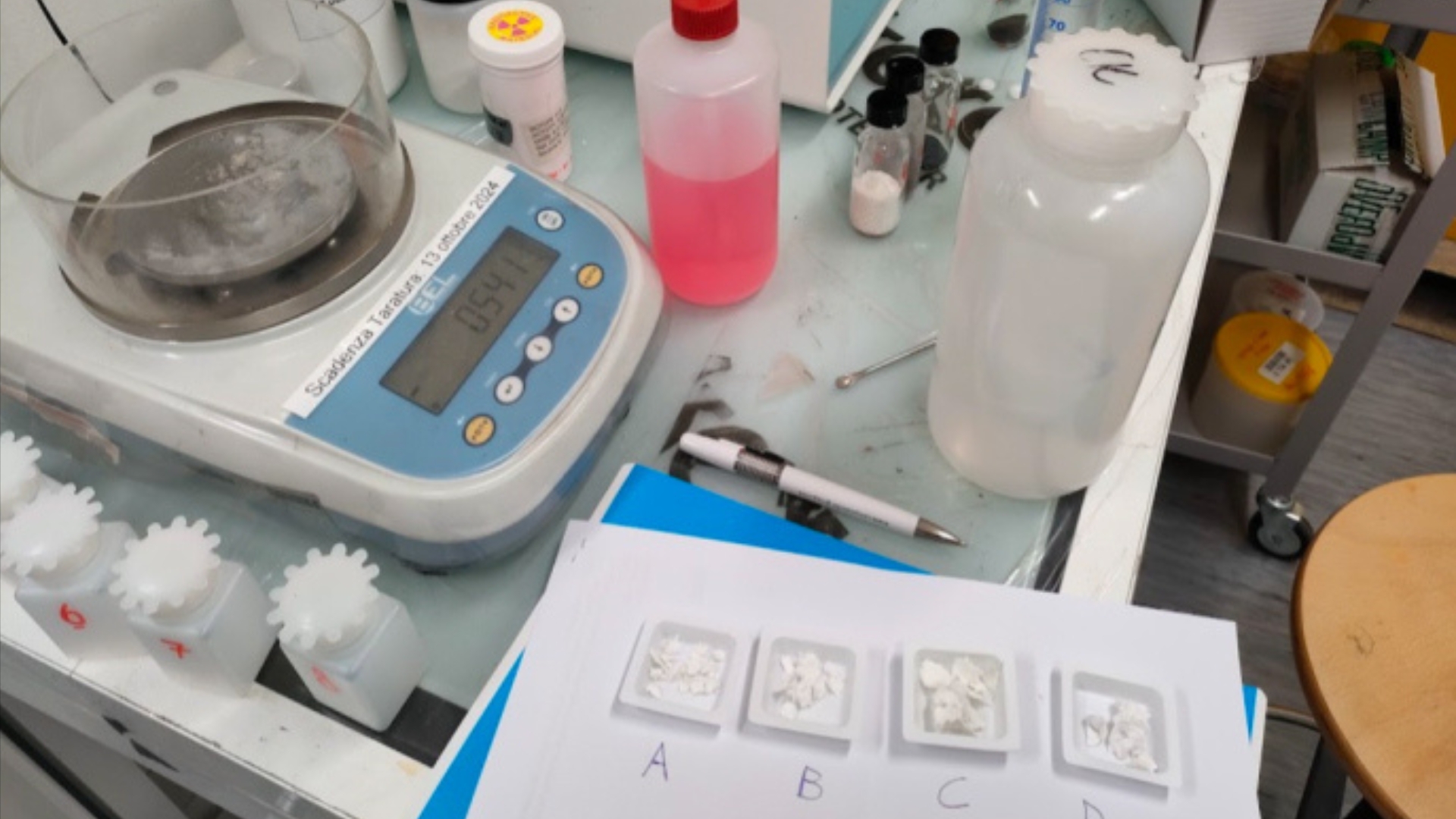

The research was carried out by NUCLEANTECH in collaboration with the radiochemistry laboratory at the Ascó nuclear power plant (Spain) between 2020 and 2023. It has been demonstrated that certain cellulose microfibers with a predominantly amorphous structure can adsorb significant amounts of tritium in aqueous solution, through a process likely based on the exchange of hydroxyl groups for tritium (–OH ↔ –OT) due to the kinetic isotope effect of tritium and, fundamentally, the formation of hydrogen bonds that are more stable than those of protium and/or deuterium.
The tests were conducted using diluted tritiated water solutions (~400 Bq/g), assessing various types and doses of cellulose under controlled pH, temperature, and contact time. The results indicate that maximum adsorption occurs at low cellulose concentrations (around 1 g/L), with yields reaching up to 47.9%. Optimal performance was observed at neutral pH (6–7), while basic conditions or high temperatures (>70 °C) significantly reduced adsorption efficiency.
Experimental data confirm that tritium adsorption by cellulose is a reproducible and promising phenomenon for radioactive effluent treatment. This approach offers a simpler and potentially more cost-effective alternative to conventional technologies, with additional advantages such as adsorbent reusability after filtration and freeze-drying. The development of this technological line may lead to more efficient solutions for reducing tritium levels in the operational effluents of nuclear power plants.


