

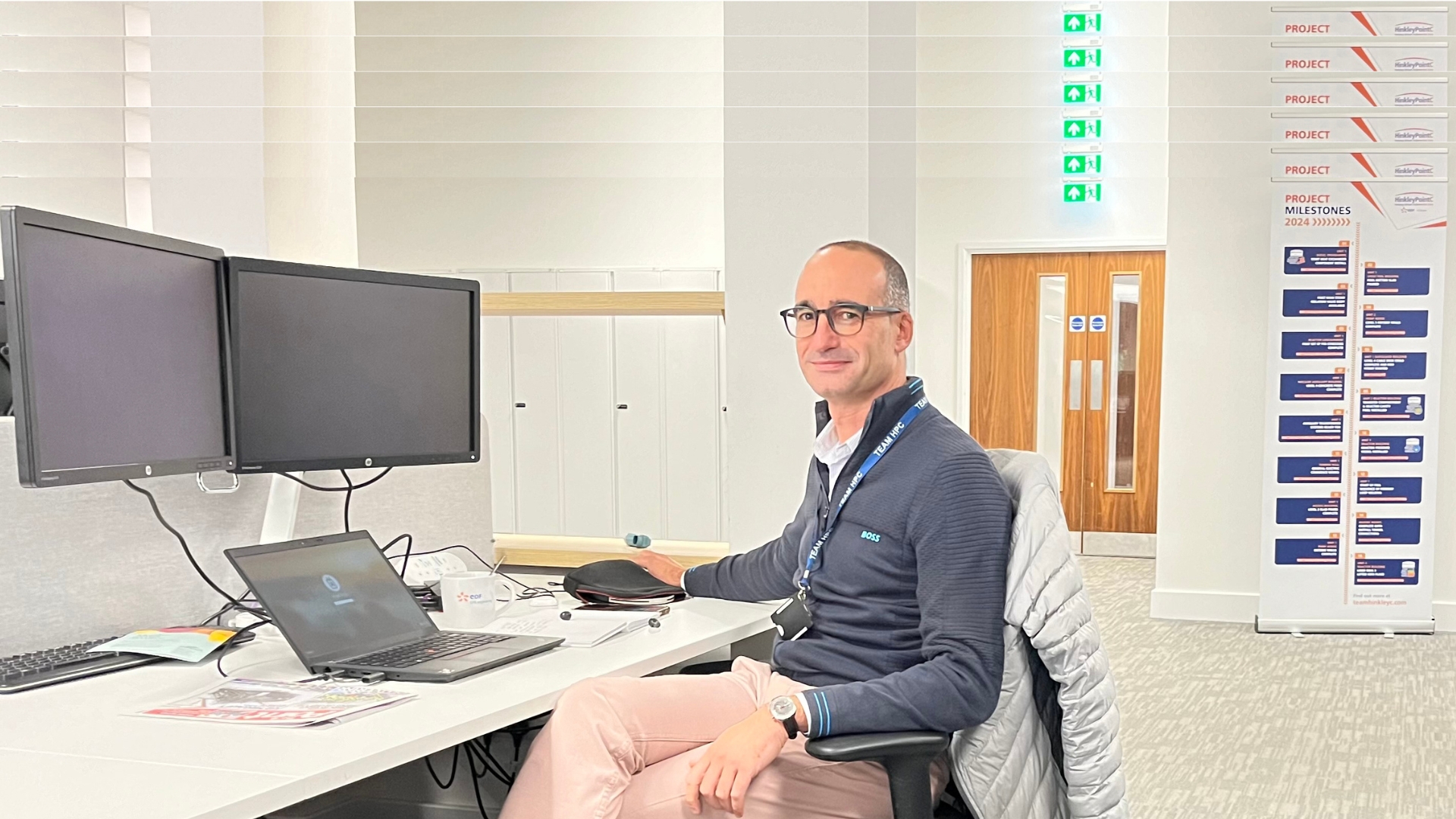
Textos y fotografías: Guillermo García López
Guillermo García López studied Industrial Engineering in University of Cantabria and started his professional career at Equipos Nucleares (Ensa) in Cantabria, in the Quality Department as Quality Engineer. After having worked for 15 years at Ensa, he decided to move to Bristol (United Kingdom) with his family in 2019 to join EDF as a Quality Management Lead for the construction of a new nuclear power plant (Hinkley Point C – HPC) in Somerset.
How many years have you been in your current responsibility?
I started working for the Hinkley Point C project in May 2019 as a Quality Lead and two years later my responsibilities slightly changed, becoming a Quality management Lead. I have been working in my current role for 5 years.
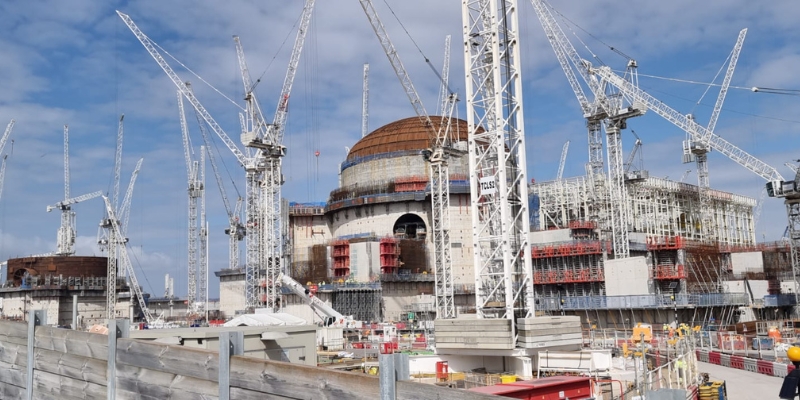
Within the different programmes for the construction of the nuclear plant, I belong to the quality team, managing and supervising the manufacturing of the components belonging to the Nuclear Steam Supply System (NSSS), which is a Framatome’s design. Hinkley Point C is a two-unit 3,200 MWe EPR nuclear power station. Framatome supplies the main NSSS components, such as the Reactor Pressure Vessel, the Steam Generators, the Pressuriser, the Internals of the Reactor, etc. These components are manufactured at Framatome’s different premises in France (Saint-Marcel, Jeumont…) or are subcontracted to other companies like Equipos Nucleares (Spain) or Skoda (Czech Republic).
In my case, I’m the responsible person for the supervision of the quality of the components during manufacturing in the different facilities.
Which are the main activities of your current position?
Among my responsibilities, the two main tasks are the management, resolution and approval of the non-conformities (NCRs) that may arise during the manufacturing of the components and the supervision of the End of Manufacturing reports (EoMRs) which contain the evidence that the components have been manufactured to the correct standards and requirements of a UK Nuclear Power Station.
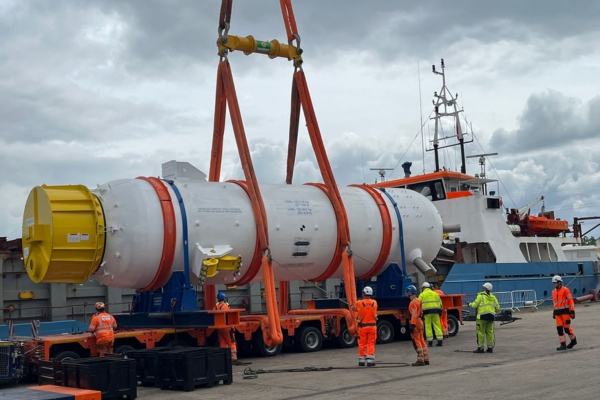
Additionally, I have to travel regularly to the different facilities to oversee the progress of the project. I also maintain regular meeting with the different stakeholders that are also involved in the inspection of the parts, likewise EDF Quality Inspectors and ITPIA (Independent Third Party Inspection Agency), who is in charge of accepting the conformity of the components in accordance with the NPE (Nuclear Pressure Equipment).
On some occasions, I have to attend different quality audits perform to our suppliers or attend the ONR (Office for Nuclear Regulation), which is the regulatory entity in the United Kingdom.
Which are the most significant aspects of your work?
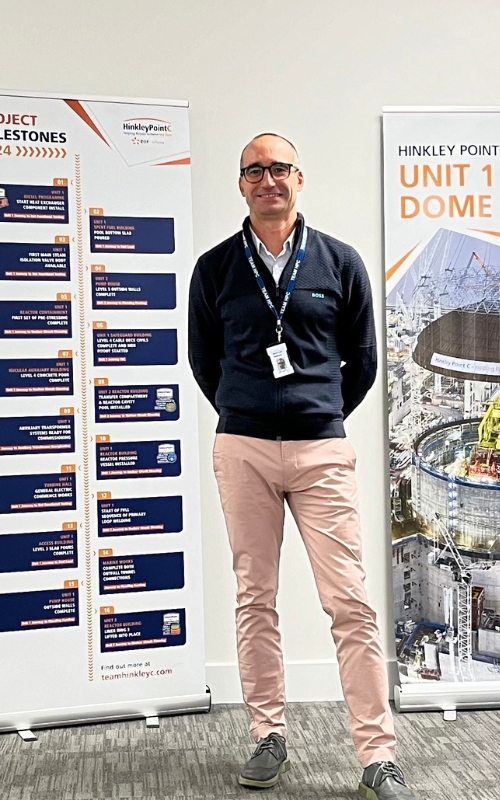 Being the Quality Management Lead signifies having the responsibility of approving the component before its installation in the Nuclear Power Plant. This implies working actively with the technical and project management teams within HPC, with the Contractor (Framatome) and its different suppliers and with ITPIA.
The manufacturing of these components must be performed in accordance with the contractual design requirements, with the different codes and standards (in this case, the main design and manufacturing code is RCC-M (Design and Construction Rules for the Mechanical Components of PWR Nuclear Islands), with the Nuclear Pressure Equipment Directive and the ONR License Conditions. The fulfilment to these requirements must be taken into account before releasing the manufactured equipment.
All these stakeholders and entities and based in different parts of the world, mainly in Europe (United Kingdom, France, Spain, Czech Republic…) and this makes the project having a great international environment.
How did the move influenced your family/personal life?
I spent my childhood and most of my adult life in Santander, but always wanted to experience living abroad for a period of time. It also helped that my wife also wanted the same. I had the opportunity to work in the United Kingdom and we thought that it could be a really good experience, not only professionally but also for my family. We have three children (two 12-years-old girls (non-identical twins) and a 8-years-old boy) and we wanted to give them the opportunity to learn English and live in another culture and country.
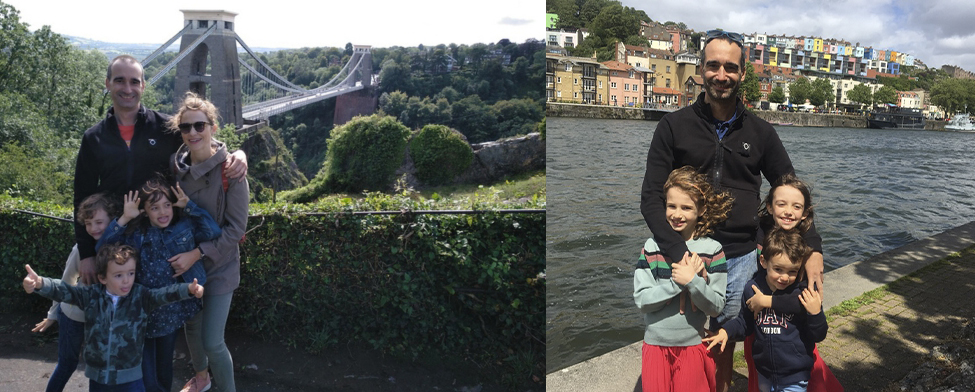
I must admit that I was expecting a tougher change, but it was much smoother than expected. I was used to work in an international environment, since most of Equipos Nucleares’ clients are foreign companies, but I had to adapt to live in another country, with all its differences. At the beginning I had to go to the office on a daily basis but, after the Covid-19 pandemic just a few months after we moved to UK, I can work from home and go to the office 2 or 3 days a week.
My wife is a primary and secondary school teacher and a few months after moving to UK she got a job in an English school as a Spanish and French teacher and had to learn the British Curriculum. Currently, she works in the same secondary school that our daughters attend.
It is highly remarkable the way our children adapted to the new circumstances. The year that we moved to UK, even though their level of English was quite basic, they did not have any problem to settle and make a lot of friends. They are fully bilingual now and we can see that the experience has made them grow in different aspects.
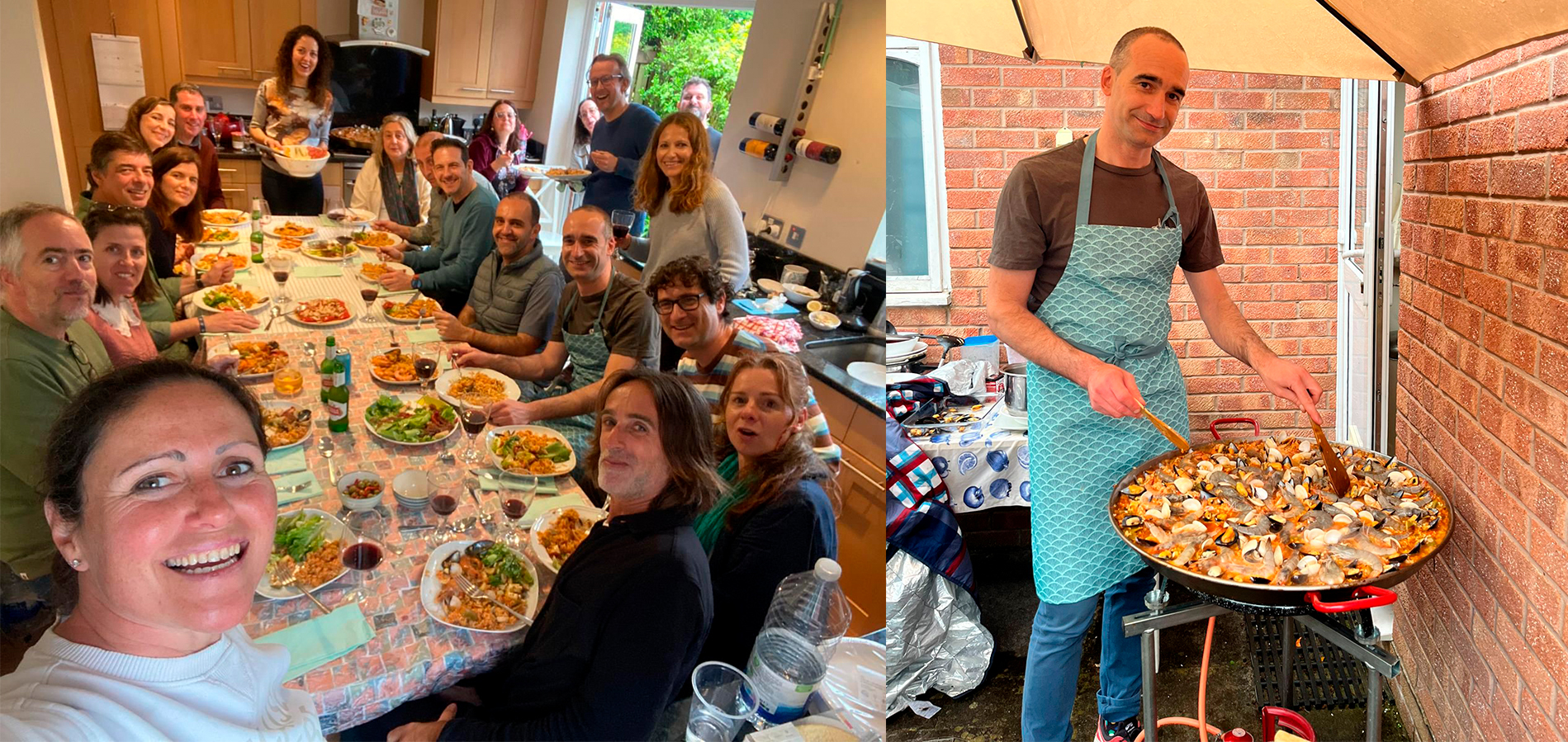
Despite of the distance, we still keep in contact with our families in Spain and return quite often. We have some English friends but, in general, we spend a lot of time with a group of Spaniards, with whom we meet to prepare a big paella, play padel or go for dinner.
What do you miss from Spain?
Obviously, I miss family and friends. Luckily, we frequently go to Spain to see our families. Many of our friends also live abroad or in another parts of Spain and we always meet in Summer and Christmas.
The thing I miss most living in the UK is authentic Spanish food, mainly fish and seafood. Here, in Bristol, it is possible to find good fish, but it is not as easy to find a fishmonger as it is in Spain.
Although I’m from northern Spain, I miss the sun and the light, mainly in winter, which is quite grey until the Spring comes.
Do you invite young people to broaden their professional horizons outside?
Of course I do invite them (and not only the young ones). I absolutely believe that the fact of living in another country, in another culture and with another language can be so rewarding, at any level: professional, personal, and familiar. I would recommend trying it, at least one or two years, if possible, and to avoid and major shock, try to find a job in a similar sector or role. Obviously, not everything is positive and there are tough moments. However, this experience takes you out of your comfort zone and you learn how to deal and adapt to new situations. I recognise that I’d love to come back to Spain in a few years’ time, but in the meantime, I keep enjoying this adventure.
It should be noted that the future of the nuclear industry in Europe is quite positive, and it will need a huge number of qualified and skilled people with experience in the nuclear business. In United Kingdom, and in addition to Hinkley Point C, a new nuclear plant (Sizewell C) has been approved by the British government and it is currently under development. In France, Framatome and EDF are deeply involved in the development of the EPR2, which is an optimised EPR design for its future implementation in future nuclear power plants.


