

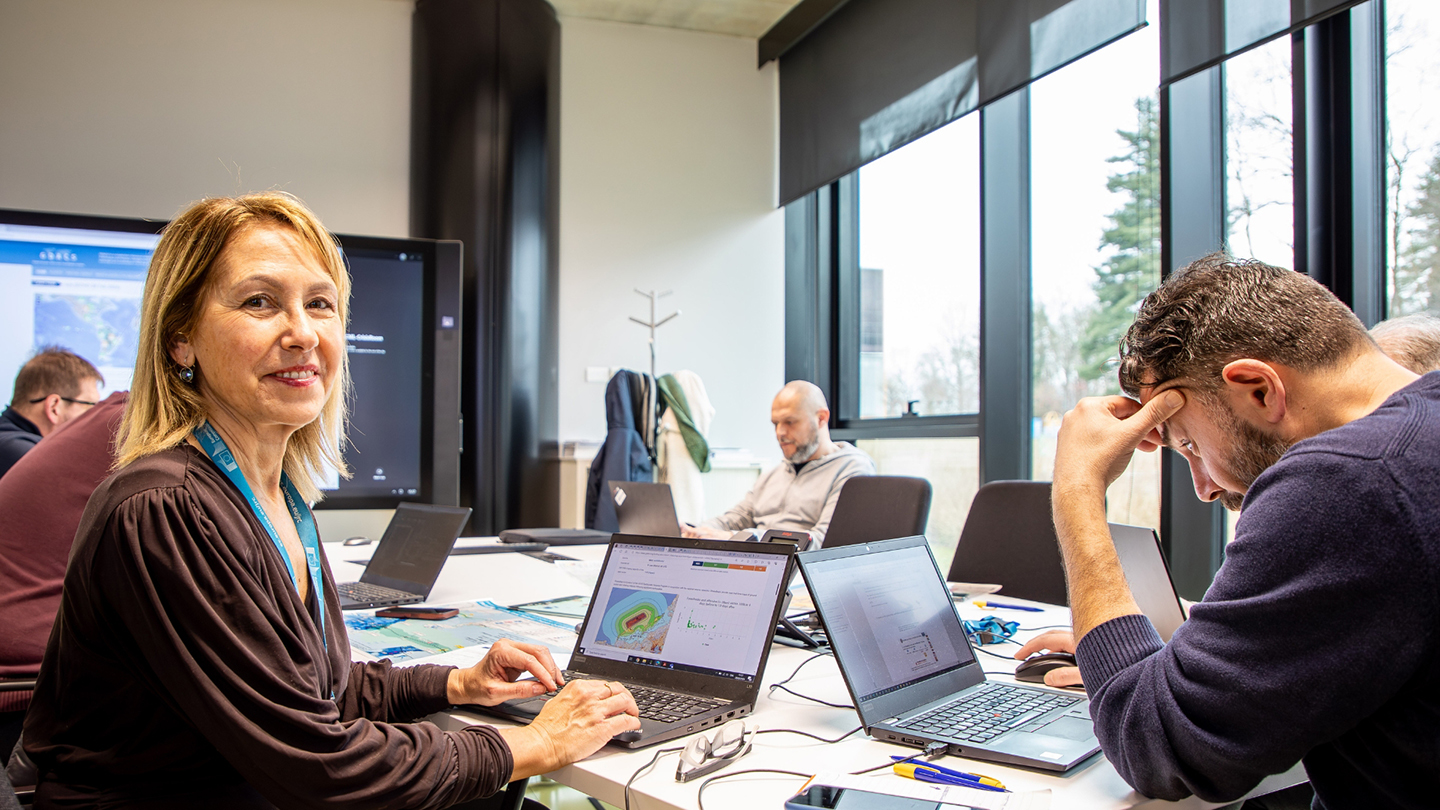
Texts and photographs: Patricia Pla Freixa
My name is Patricia Pla Freixa. I am an industrial engineer, specialised in energy technologies, graduated in the School of Industrial Engineering in Barcelona of the Technical University of Catalonia. I studied one year of the university at the Polytechnic of Milan in Italy. After an initial work experience at Bechtel in Barcelona, I packed my bags… I went to the Joint Research Centre (JRC) of the European Commission (EC) of ISPRA, Italy, for the PhD in severe accidents for 3 years and also, I worked in the IT field.
After that, I returned to Barcelona, defended my PhD and travelled to the Joint Research Centre (JRC) in Petten in Holland to work on European Union (EU) nuclear projects for the former Soviet countries. After that contract, I spent more than two years at the University of Pisa, Italy, with a Post-Doc from the EC on boron dilution issues and working for the licensing of the Atucha2 Nuclear Power Plant.
In 2009 I returned to the JRC in Petten to work on operational experience and nuclear safety and since 2012 I am an EC official. In 2019 I moved back to Ispra without changing my activities much, although adding a very interesting collaboration that I explain below.
How many years have you been in your current position, what are your responsibilities?
I have been working for fifteen years in the Reactor Safety and Components unit, in the Nuclear Safety and Security Directorate of the Joint Research Centre (JRC) of the European Commission (EC). During 2004-2006 and from 2009 to 2019 I was at JRC Petten (The Netherlands) and in 2019 I moved to JRC Ispra (Italy).
The Joint Research Centre (JRC) of the European Commission has expertise in many other disciplines and is spread over six sites in five different countries: Ispra (Italy), Karlsruhe (Germany), Geel and Brussels (Belgium), Seville (Spain) and Petten (The Netherlands). With the exception of Seville, nuclear activities are carried out at all sites.
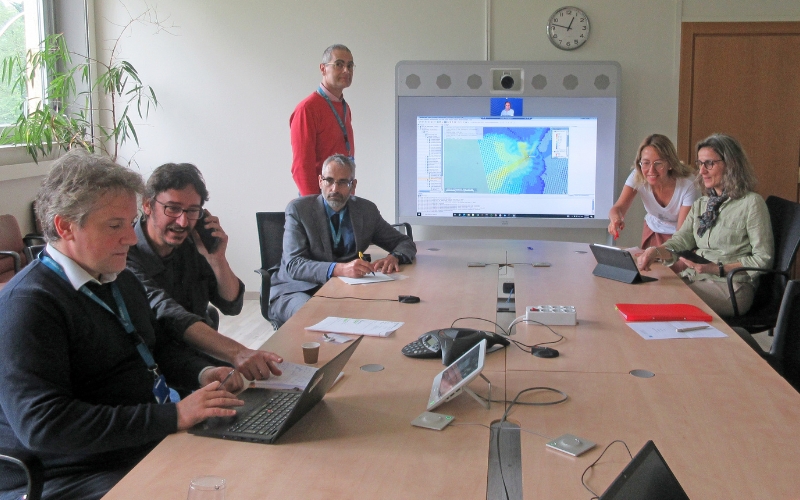
My work combines scientific, technical and administrative tasks, mainly related to IT support activities.
An important task that I address is the maintenance of the JRC database on thermo-hydraulics and severe accident experiments, STRESA (https://storage-thermal-reactor-safety- analysis-data.jrc.ec.europa.eu). I am responsible for the scientific content and in this role, I perform the management of user requests for documents/data of experiments produced in the past by JRC Ispra at LOBI, FARO, KROTOS, STORM facilities. I manage new users as well as new data that are proposed to be uploaded on STRESA and take care with the support of experts of the IT security. After an upgrade in 2023 we are also trying to offer the database as a secure experimental data warehouse mainly to European institutions. STRESA is since several years a reference in for European severe accident projects like SARNET1 and SARNET2. In 2011 I started to teach yearly a practical class in the Nuclear Master of the UPC about STRESA and the LOBI experiments of the JRC.
During my stay in the JRC Petten site, I worked on operational experience, system thermo-hydraulics and severe accident analysis. In addition, I delivered technical support to the European Union cooperation programs with third countries in nuclear safety (TACIS projects), for countries of the former Commonwealth of Independent States formed after the disappearance of the Soviet Union, and PHARE, for Central European countries. The European Instrument for International Nuclear Safety Cooperation (INSC) replaced these projects.
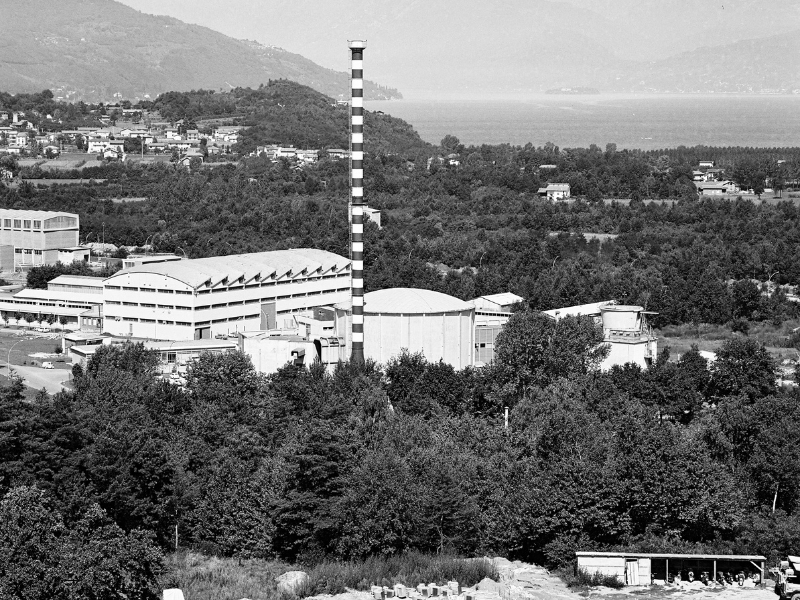
At the beginning of my career, I performed my PhD at the JRC Ispra site in the area of thermo- hydraulics of severe accidents, within a collaboration agreement between UPC and JRC, with a Grantholder contract of the JRC. In particular, I addressed experimental and analytical activities aimed to study the phenomena that occur in a severe accident when the molten core falls into the lower plenum of the reactor vessel and an interaction with the coolant takes place. It was wonderful to be able to attend the preparation and execution of the experiments at the FARO facility and I performed pre- and post-experiment calculations and code validation. I learned a lot. The activities and groups have changed, the experimental facilities have been dismantled, but it has been exciting to go back to the origins.
What are the main activities of your current position?
Apart from the responsibility for the STRESA database, I deal with other issues. One of them is really interesting:
The activity in the area of Emergency Preparedness and Response (EP&R) of the JRC has a long tradition, since the Chernobyl and Fukushima accidents. A few years ago, our group focused on the diagnosis and prognosis of nuclear accidents with the JRC DAPHNE methodology. Since a few years this activity is of clear interest to other groups of the JRC and the European Commission services dealing with civil protection and humanitarian aid. In particular, we collaborate with the JRC unit that owns the “European Crisis Management Laboratory” (ECML) or “crisis room” because when a major event occurs, emergency teams must have the fastest, most reliable and complete information possible to make operational decisions. This unit manages the Global Disaster Alert and Coordination System (GDACS), https://www.gdacs.org/default.aspx, and the Global Situation System (GSS). It is a “live” iteration process, as information can change, is updated, so we are in close contact with the GSS and GDACS groups. It is worth mentioning that we check and look for information when an event occurs near any nuclear facility in the world to be prepared to quickly analyze and inform these groups in case the situation may be critical. There are more details in the video we recorded for SNE and JRC in the “crisis room”.
Searching for news from different sources as the IAEA, nuclear regulators, energy ministries, nuclear power plants about risks at the Ukrainian plants is a job I continue to do as long as the war condition persists, especially monitoring the Khakovka dam near the Zaporizhzhia nuclear power plant is still an important task.
I perform severe accidents calculations with the MAAP code too, although the great experts in MAAP are other colleagues in the group, since my experience in thermo-hydraulics and severe accidents analysis has been with the RELAP, SCDAP and Cometa codes, but I try to lend a hand when necessary.
On the subject of operational experience feedback, I continue to contribute to the newsletter, where events at nuclear power plants around the world are reported and analyzed. This newsletter is published every four months for the European regulators’ Clearinghouse network (https://joint-research-centre.ec.europa.eu/scientific-activities- z/clearinghouse_en). We discuss and select during the Clearinghouse group meetings the most relevant events that then become part of the newsletter.
How did the move affect your family/personal life?
I left Barcelona for the first time to do my PhD at the JRC in Ispra in 1998, although I had already studied for 1 year at the Politecnico di Milano. Since then I have moved around a lot. I have lived and worked in Italy (at JRC Ispra and at the University of Pisa) and in the Netherlands more or less half and half the time in each country. There have been good and bad personal moments. As good things I have made friends and acquaintances that are spread all over the world and I have traveled a lot. But I don’t think I would adapt well to living in the northern European countries mainly due to the weather conditions with cold, rain and long dark days during the winter period. Now I am very happy in Ispra.
What are the most significant aspects of your work?
I hope that our public service work in the European Union will contribute to the improvement of the lives of European citizens. It is very interesting and attractive to work in a very diverse environment both in nationalities and professional profiles. And although I do not work so directly on it now, it has been very interesting to work on EU initiatives, participate in their preparation, project negotiations and the entities with which we interact: member states, third countries and other international organizations.
What details do you miss from Spain?
During my last years in Petten, I missed the warm weather, the sun, the Mediterranean feel, the Spanish food… Now that I live in Italy I miss almost nothing, in Italy I feel at home, although it is the north, the weather is mild, the food is excellent and the medical system is very similar to ours. The trip from Milan to Barcelona is also shorter, so I go to Barcelona several times a year.
Do you encourage young and not-so-young people to broaden their professional horizons beyond our borders?
It depends, each person must decide according to his or her own personal and professional circumstances. In Spain, there are still good nuclear career opportunities. The advantages of working abroad are learning and improving languages, especially English, and living and working in international environments with people from many places and cultures. The JRC and the EC offer many possibilities, as for instance trainee or visiting scientists positions that are more suitable to have a short term experience and could be linked to the completion the Master or PhD thesis work. Moreover, opportunities for permanent and temporary positions at the JRC or the other EU services are regularly published.


