


Defense-in-Depth as a Cornerstone of Nuclear Safety
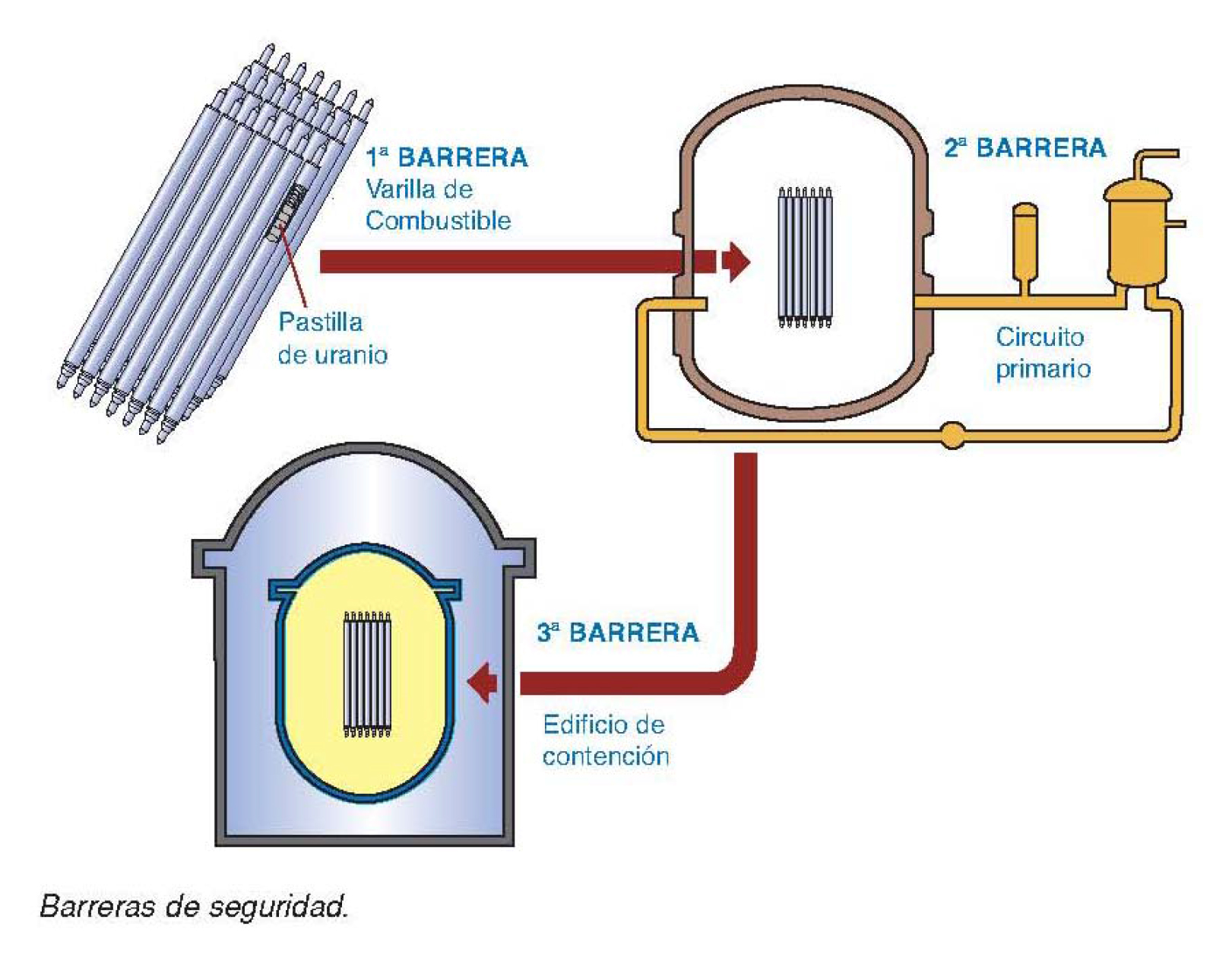
Within this comprehensive protection scheme, the so-called deterministic safety analyses (DSA) serve as the fundamental analytical validation tool for that defence in depth. Its methodology is based on the postulation of accidental events, technically known as design basis accidents (DBA). These scenarios are evaluated under strictly conservative assumptions and maximum limit safety criteria. By successfully passing these analytical simulations, the robustness of the plant’s three fundamental physical barriers is validated: the fuel cladding, the primary pressure circuit, and the reinforced concrete containment building.
Deterministic Analyses and the Validation of Protective Barriers
At a global level, the International Atomic Energy Agency (IAEA) publishes reference standards such as requirement SSR-2/1 and safety guide SSG-2, with the aim of standardizing and specifying the requirements for safety analyses applicable to nuclear installations. In the Spanish context, this framework is specified through instruction IS-37 issued by the Nuclear Safety Council (CSN). This regulatory framework requires that the results of deterministic evaluations be included within the facility’s Safety Analysis Report, guaranteeing the existence of wide safety margins to absorb any operational uncertainty.
La verdadera eficacia de estos análisis de seguridad se consigue trasladando estos requerimientos en la explotación diaria de la central. Esta transferencia se articula mediante sistemas operativos específicos basados en tres ejes dinámicos fundamentales:
- Technical Specifications for Operation (TSO / Tech Specs): a legal document that establishes the limiting conditions for operation and the minimum operability parameters of safety systems.
- Surveillance and maintenance programs: a systematic approach of mandatory periodic tests aimed at empirically certifying that components will respond with the required reliability in the event of a real demand.
- Design modification management: a process strictly regulated by the CSN’s instruction IS-21, which requieres the evaluation of any change in the installation to ensure that the licensing bases and authorized safety margins are not affected under any circumstances.
From Technical Assessment to Daily Plant Operations
Finally, in a long-term operation scenario, the continuous update of safety analyses is a technical imperative. The assimilation of deterministic analysis in every activity at the site not only preserves the safety margins and compliance with the required safety limits, but also strengthens the organization’s safety culture. It is this rigorous, demanding, and technical management that allows nuclear energy to be reaffirmed as a highly reliable source of electricity generation, operated under the strictest global radiological protection standards.


