

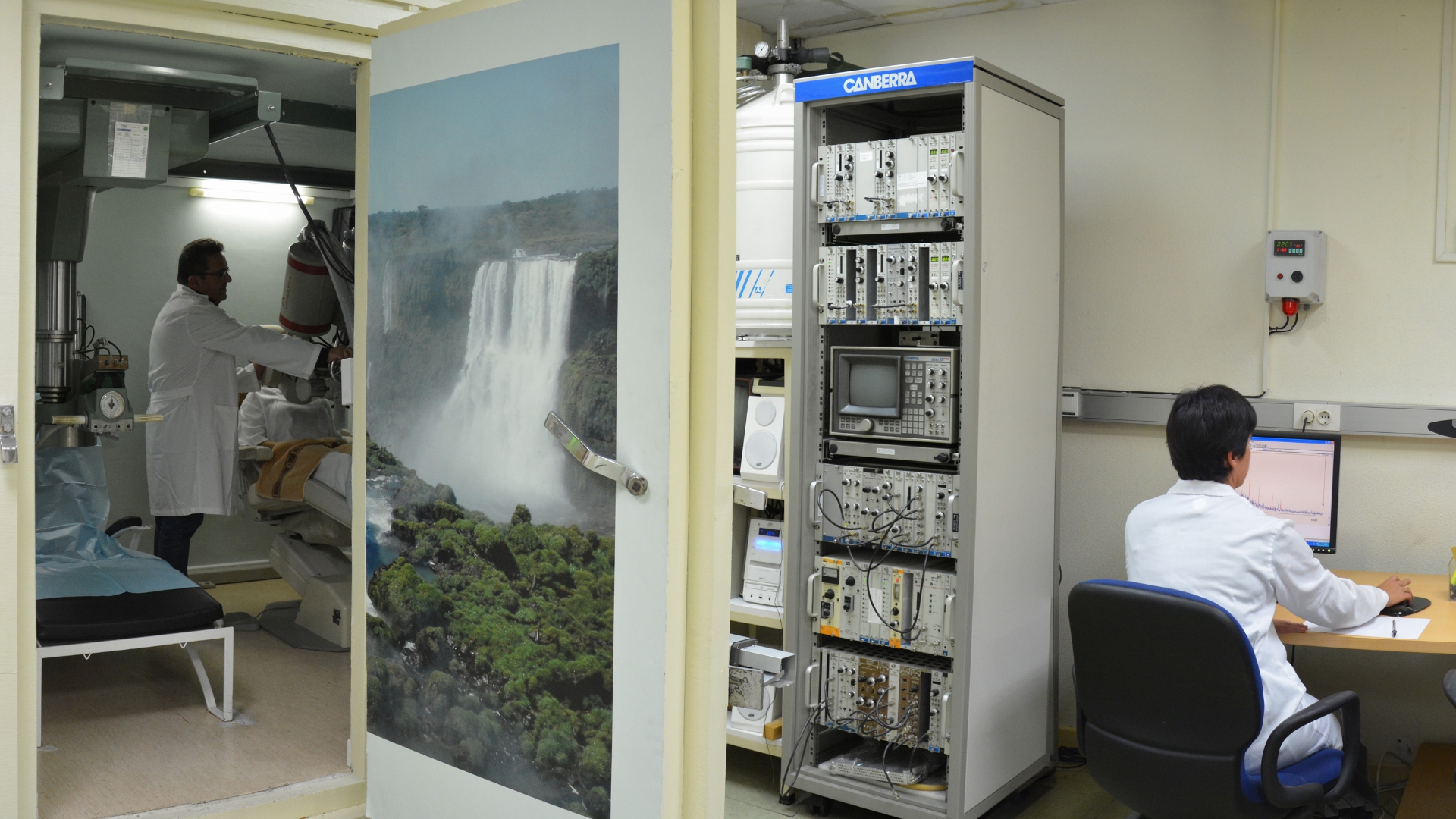

This article focuses on the direct (in vivo) measurement of internal contamination using the Whole Body Counters (WBC). We will discuss the origins of this measurement technique and its development, which has always been closely linked to advancements in radiation detection—from Geiger-Müller counters to sodium iodide scintillation spectrometers and semiconductor detectors. The most common shielding methods used to minimize the interference of environmental background radiation in measurements will be described, as well as the main in vivo calibration and measurement procedures implemented in WBCs for monitoring workers and the population exposed in emergency situations (total body or organ-specific measurements, such as the thyroid, lungs, or bones).
The description of the various measurement procedures will be illustrated with graphical examples, including the equipment used, measurement geometries, and calibration phantoms specific to each bioassay, which simulate contamination within the body. In this regard, we will review the most commonly used phantoms for whole-body simulation (BOMAB, IGOR), chest (LLNL, JAERI), thyroid (ANSI), and bone (Cohen skull, Spitz knee).
Quality control is essential in in vivo measurement laboratories within internal dosimetry services. This paper outlines the guidelines to be followed in such facilities to ensure quality assurance and technical competence. In our country, eight internal dosimetry services are authorized by the regulatory body (Nuclear Safety Council, CSN), two of which (CIEMAT and TECNATOM Westinghouse) are accredited by ENAC (National Accreditation Entity) under the ISO/IEC 17025 standard for their in vivo and in vitro measurement techniques, as well as for the estimation of committed effective dose E(50). One of the key quality requirements in such facilities is the participation in intercomparison campaigns among laboratories. In this context, the WBC laboratory at CIEMAT has acted as a technical support laboratory in the national WBC intercomparison campaigns organized by the CSN, aiming to ensure technical competence and harmonize in vivo measurement procedures at a national level for internal dosimetry services.


