

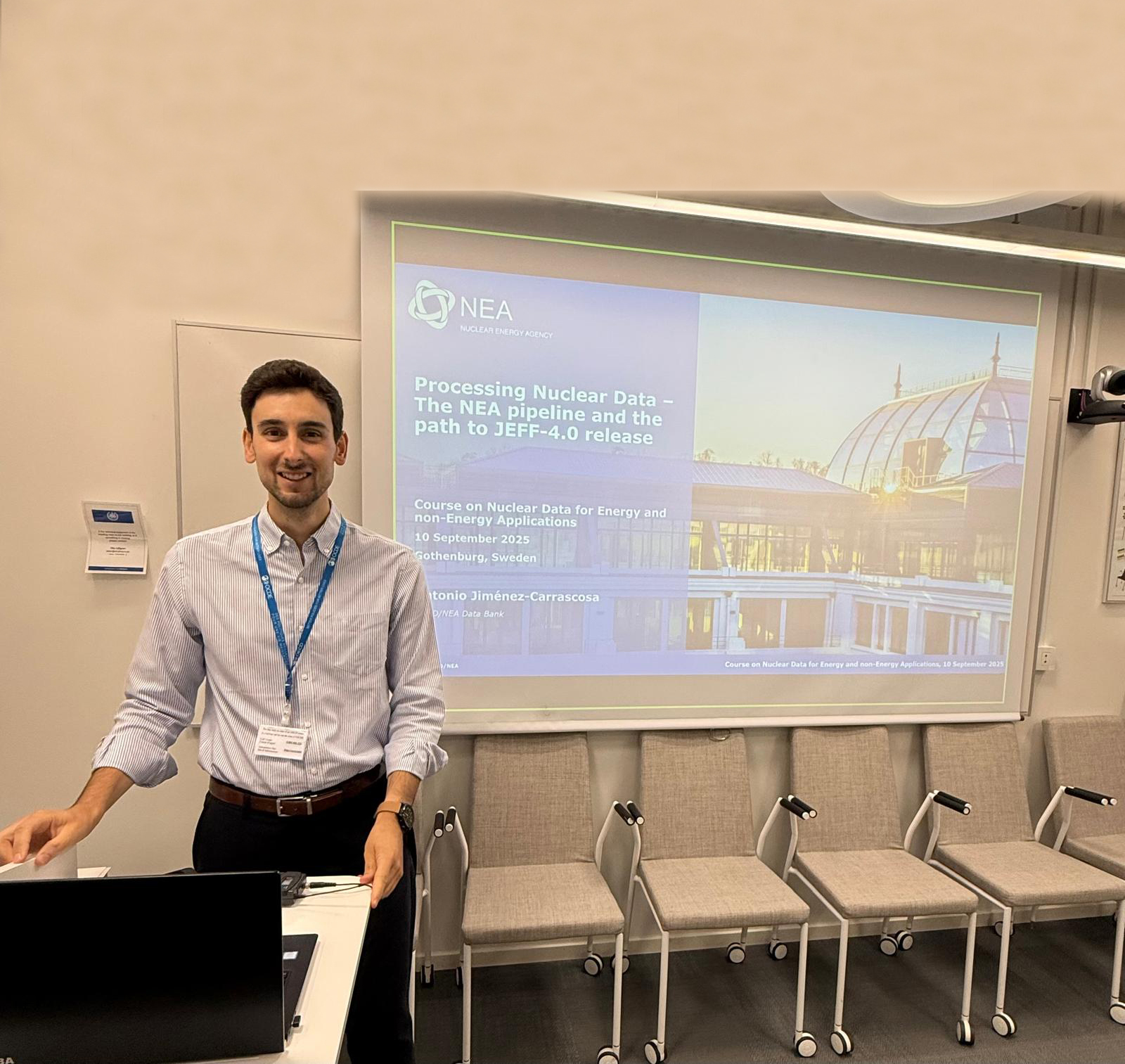
Text and photographs: Antonio Jiménez Carrascosa
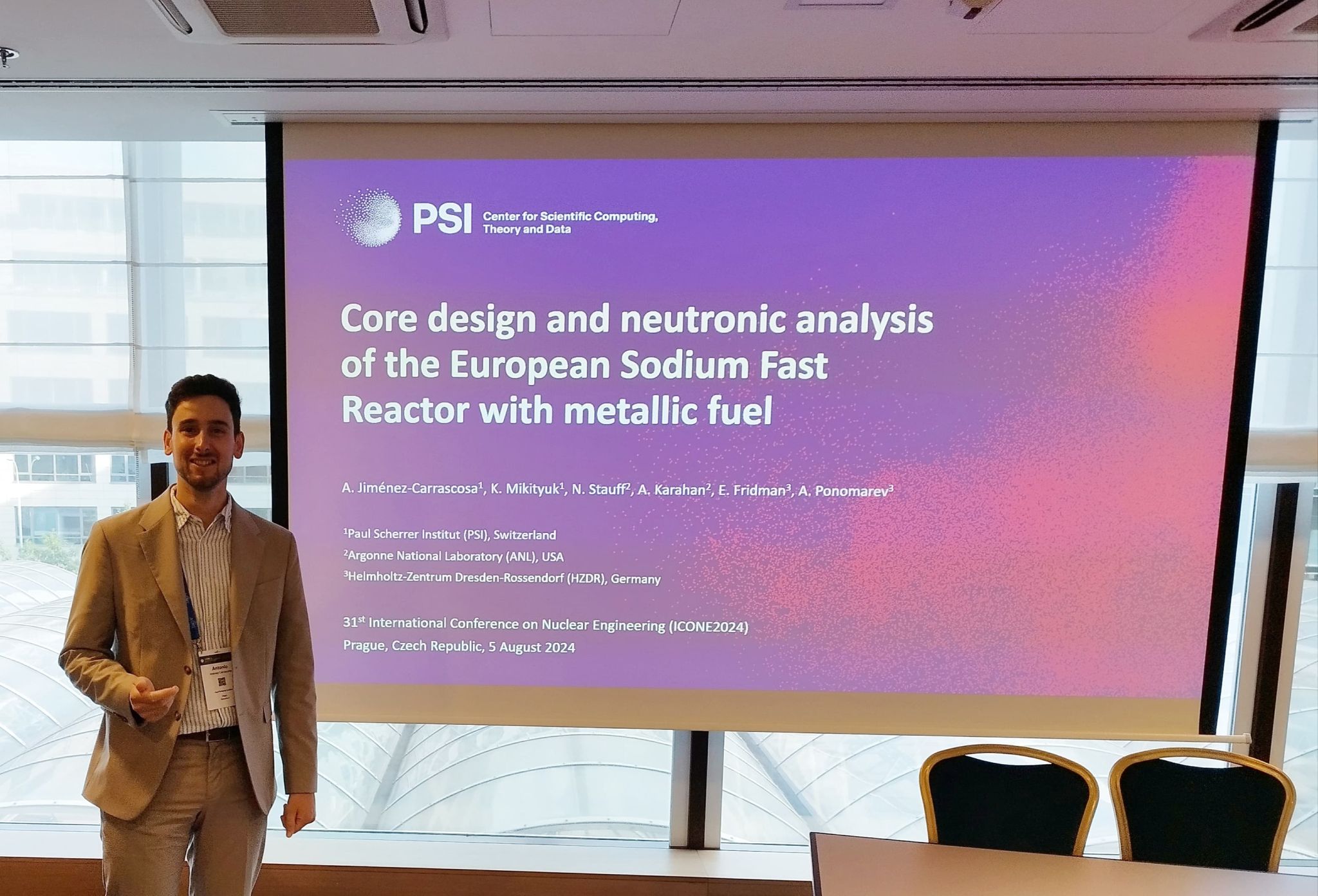
My name is Antonio, and I hold a PhD in Renewable, Nuclear and Sustainable Energy by the Technical University of Madrid. After 7 years living in Madrid, when I finished my PhD in early 2023, I went for my first international experience. I moved to Switzerland and joined Paul Scherrer Institut as a postdoc researcher, where I spent almost two years working on advanced sodium-cooled fast reactors physics. In early 2025 and after my time in Switzerland, I changed my job and the country, joining the OECD Nuclear Energy Agency as a Nuclear Data Scientist, in Paris. Here I came back to my main PhD topic, the nuclear data field, since I am working on different initiatives related to that topic coordinated by the NEA.
How many years have you been in your current responsibility?
It is still a bit soon for me to speak in terms of years since I took my current position in January 2025. I arrived in Paris only nine months ago, but it is already two years and a half that I have been living abroad, involving also my experience in Switzerland.
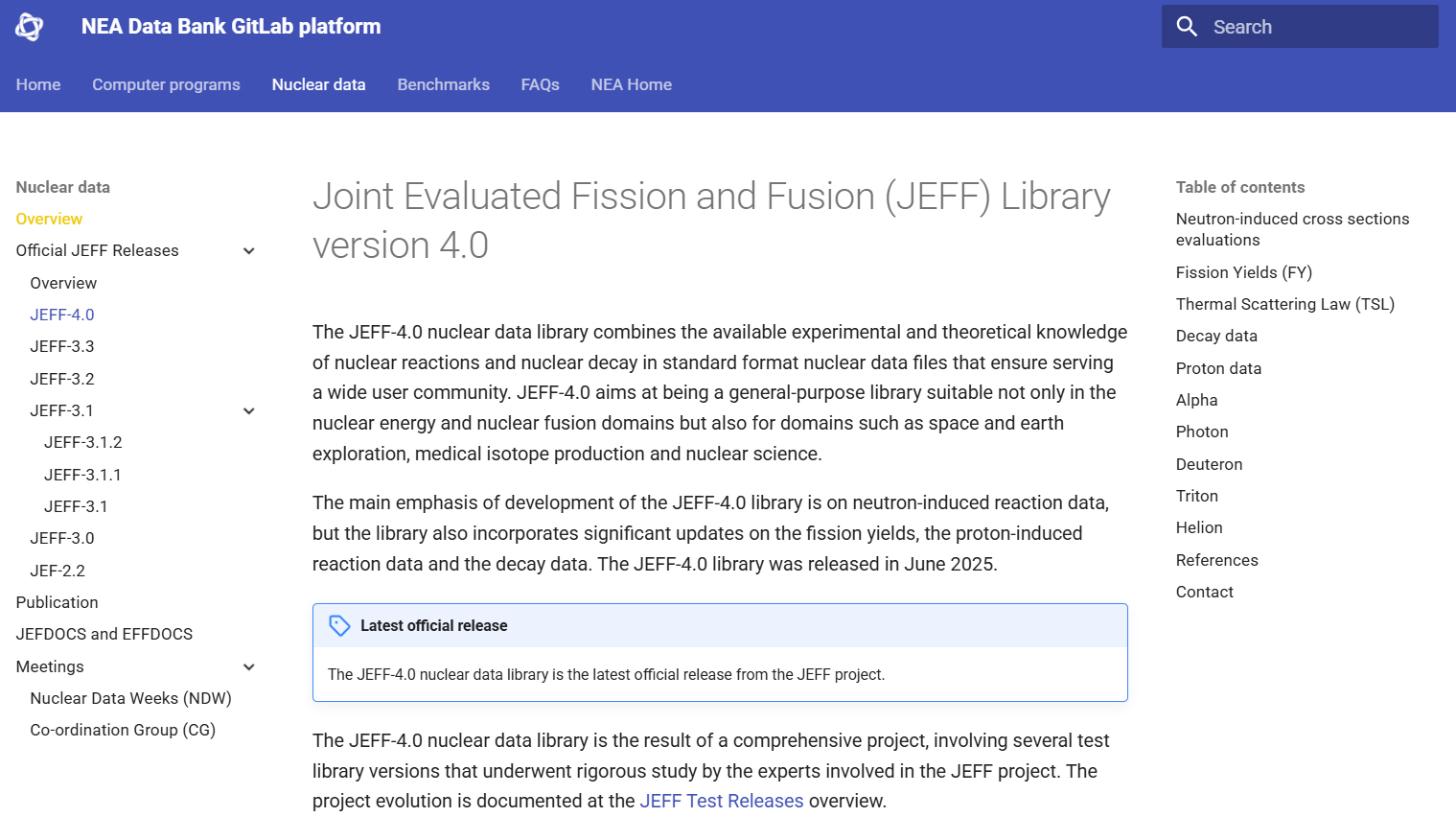
Currently, I work for the NEA Data Bank, where my main responsibility is to provide technical support to the JEFF project (Joint Evaluated Fission and Fusion), which oversees releasing the JEFF nuclear data library, widely used in several nuclear applications. JEFF is an extensive international project, involving a large community, so that at NEA we coordinate the project and organize related technical events. I didn’t have a relaxing time when I joined the NEA since the JEFF project was in the final stage towards the release of JEFF-4.0 nuclear data library after working on it for more than 8 years. Finally, in June 2025 we successfully released the new library, and it is publicly available for its use.
Additionally, I also contribute to other activities related to nuclear data in the frame of the working groups hosted by the NEA. In general, at NEA we provide technical support to those groups and coordinate their activities, so I have the chance to interact with a large nuclear data research community.
Which are the main activities of your current position?
Nuclear data libraries are a key resource for nuclear systems and applications simulation. From cross sections, which characterize the neutron interaction with the isotopes, to the radioactive decay chains, the JEFF project aims at providing a comprehensive dataset for its public use.
As the JEFF technical secretariat, my main task involves the coordination and management of the nuclear data library. That is, at the NEA we are in close contact with nuclear data evaluators, who are responsible for preparing and providing the files that are eventually incorporated to the library. We centralized the management of this information, and we test these files using a variety of processing and verification computational tools. When we complete that procedure, we make the new dataset available to the JEFF community so they can use it for the applications of interest. We have several technical groups and we have a one-week meeting twice a year for evaluating the status of the library and identify potential improvements that could be implemented in the future depending on the users’ needs and results. Likewise, we manage and collect the information provided by the users in order to reiterate with the nuclear data evaluators and propose further improvements.
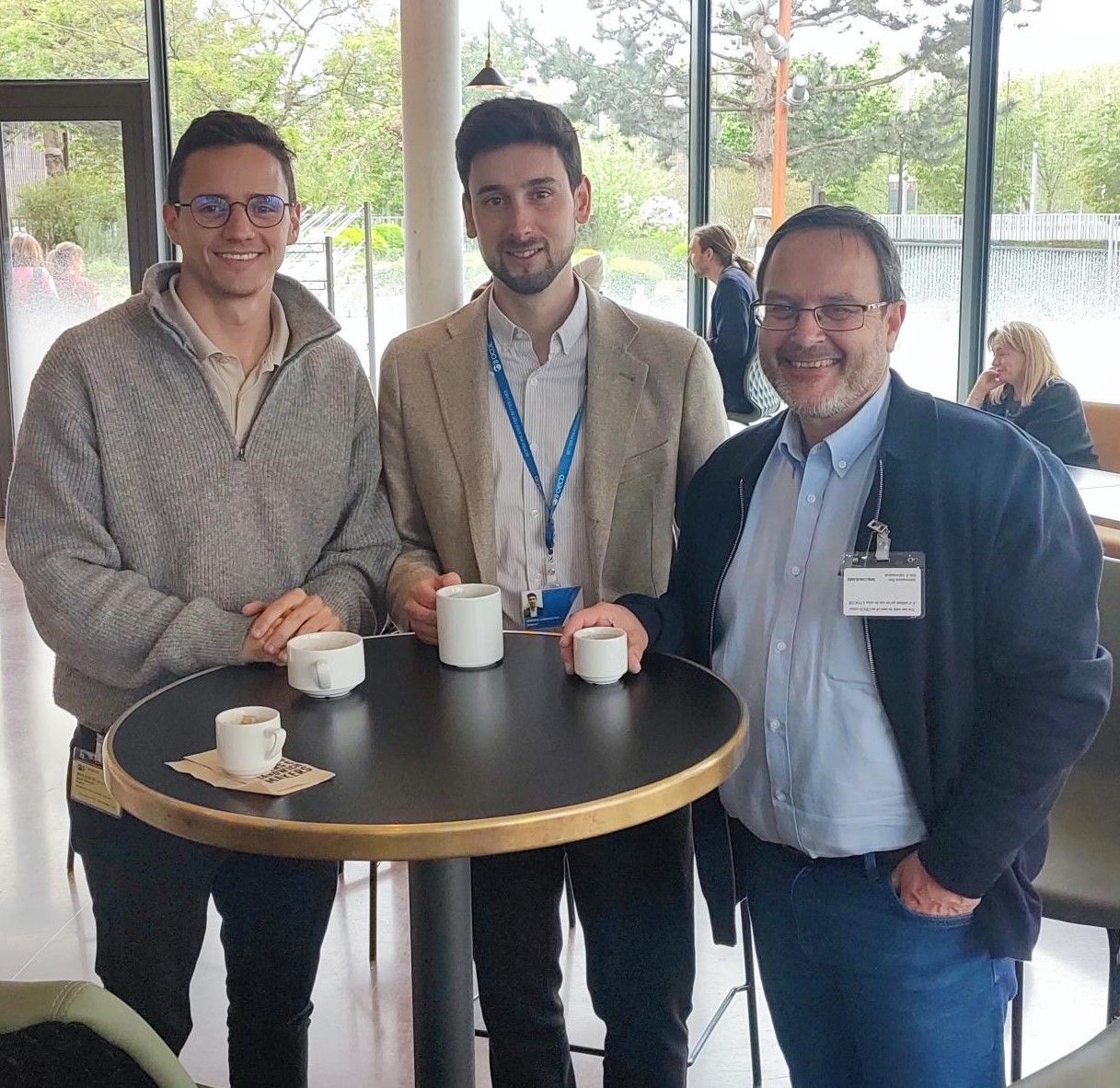
As aforementioned, when I arrived at the NEA, the JEFF project was very close to the milestone of releasing JEFF-4.0 library. In April 2025, we had our Nuclear Data Week, where we identified the final modifications that the library needed before the release and we coordinated one last iteration as a result of the feedback from the benchmarking activities provided by the JEFF community. That process is centralized at the NEA Data Bank, and we are also responsible of providing the library in different formats to facilitate its use by several different communities.
Besides my role as the JEFF technical secretariat, I also contribute to other NEA initiatives on nuclear data, such as the Working Party on Nuclear Data Evaluation Co-operation (WPEC), for which I have been providing interim support since I joined the NEA. Among our daily tasks, we indeed have to organize technical meetings and events required by each project and initiative.
Which are the most significant aspects of your work?
My day-to-day activities are essentially what I was expecting when I joined the NEA, and it is wonderful to be part of a project like JEFF. As I mentioned before, it is a wide community, with experts from very different fields so I have the opportunity of interacting with all of them and familiarise myself with those technical topics a bit far from my background. Likewise, my job at the NEA provides me the option of taking part in many meetings and event, both technical and decision-making oriented, so I am acquiring new skills different from those I got through my research career.
Nonetheless, I am still in close contact with the technical activities and at NEA we are always open to new ideas and initiatives, having complete freedom to launch them. Then, this is a great environment for someone coming from academia.
How did the move influenced your family/personal life?
In my case, that was reasonably easy since I was moving alone firstly to Switzerland and later to France. It was indeed difficult taking such decision after so many years living in Madrid, but I was absolutely determined to try an international experience. From the personal point of view, my life in Switzerland was awesome and I was really happy with the job there. I should say that I experienced some difficulties due to the cultural differences, and it took me some time to adapt to the local community. After two years, my German skills were very limited and I didn’t manage to properly speak the language. Overall, moving to Paris was like fresh air for me, talking both personally and professionally.
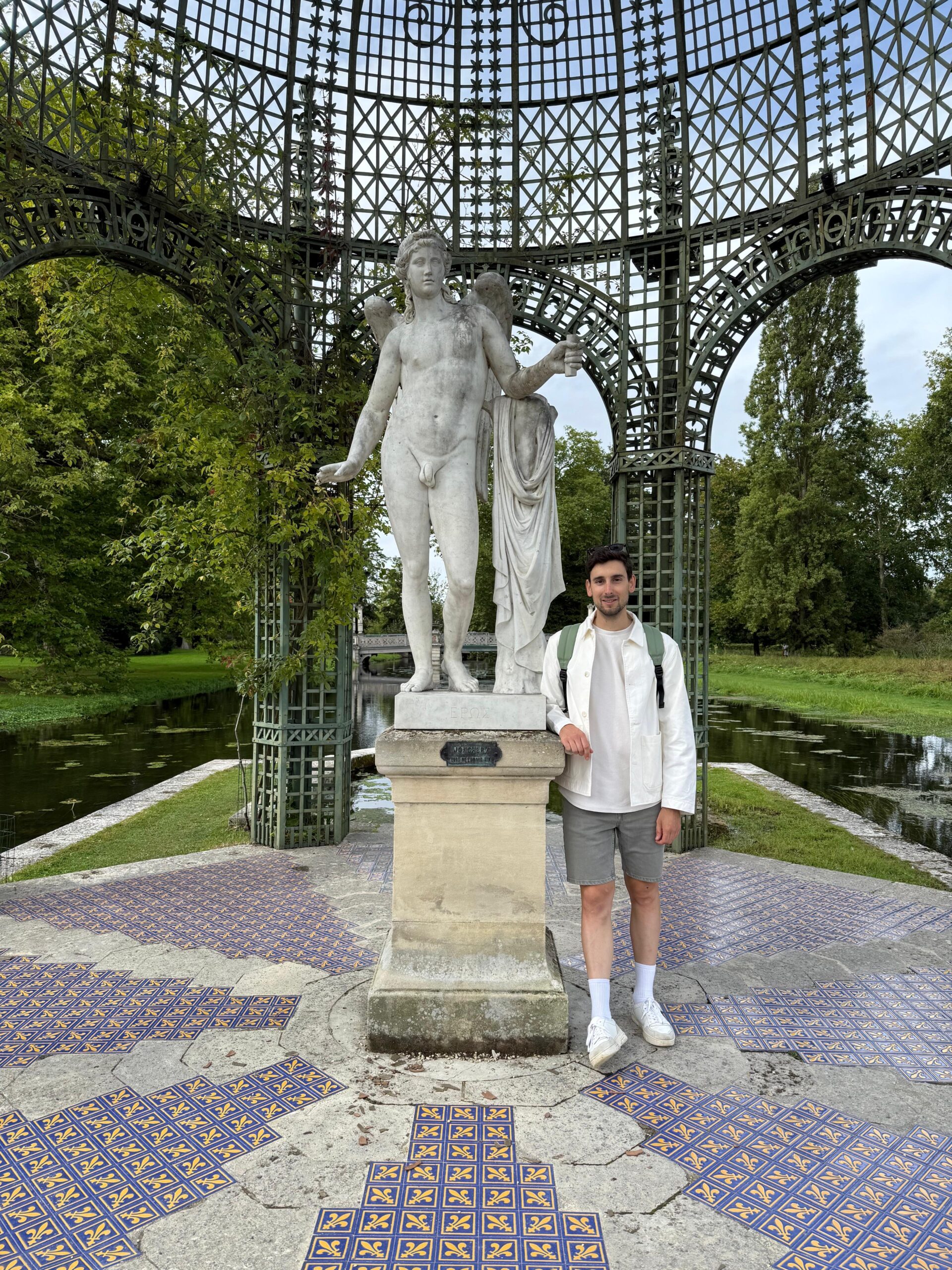
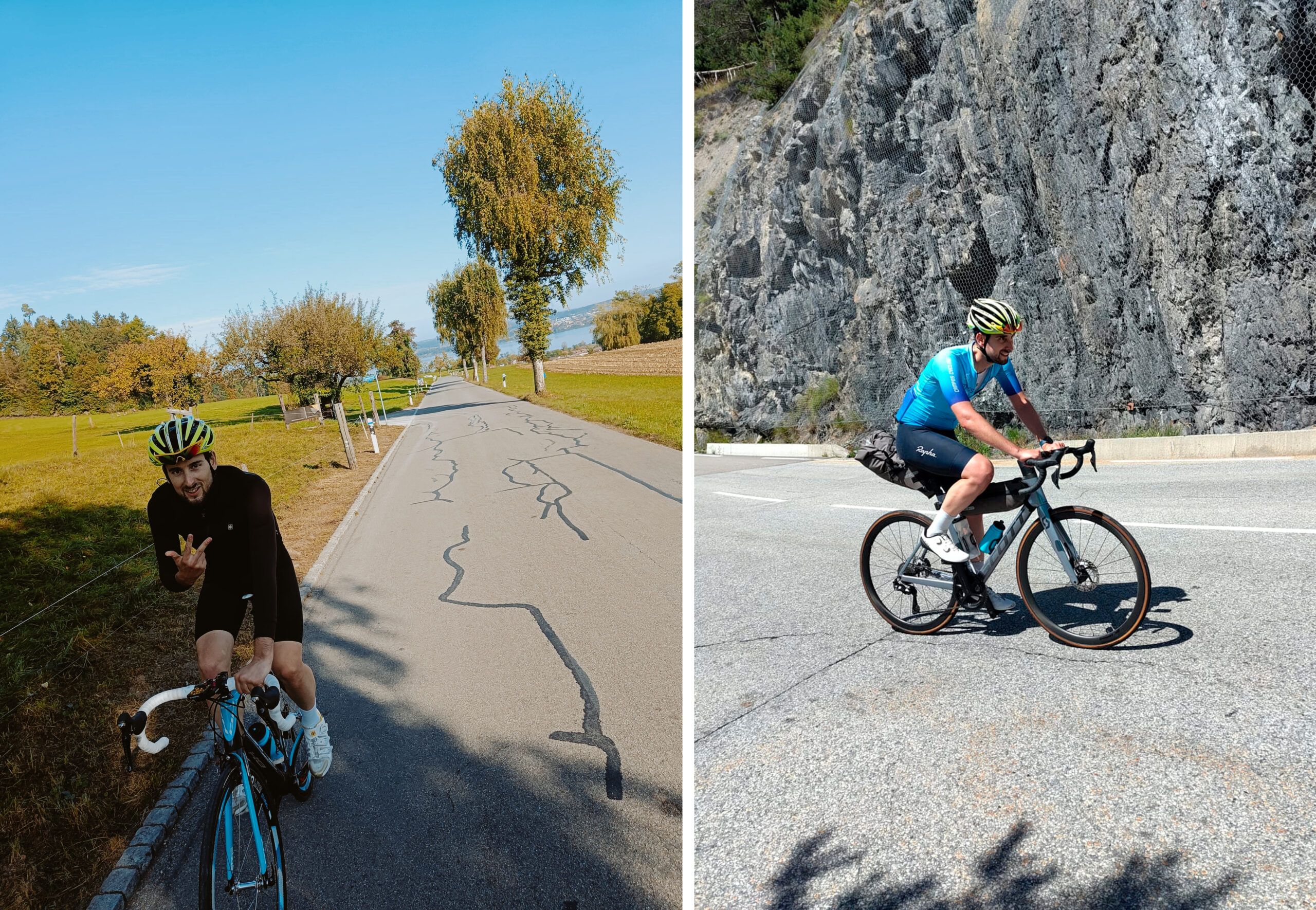
Now in France, the adaptation process is being much easier, I feel now that I am starting to speak some French in a decent way. In Switzerland, it was a bit simpler living with English but in France that is more complicated. Nevertheless, I believe that in France I can find those aspects I am missing the most from the Spanish culture. And to be honest, living in a city like Paris is an amazing experience since it offers you everything you might need so I would recommend everybody to try it. I have enjoyed a lot the spring and summer time here, and I believe that I can easily take the pique-nique culture in the Seine. I’m also a big fan of cycling and here I have found several communities in Paris that help me to enjoy cycling a bit more. And, of course, watching the Tour de France live in Paris was fantastic after watching it on TV for more that 15 years. As a cyclist, living relatively close to the Alps is also dangerous and this summer we went on a bike trip and completed a few famous Alps climbs.
What do you miss from Spain?
My first answer is going to be quite average honestly. The weather, both in Switzerland and in Paris, is a bit dramatic for an Andalusian like me. In the end, I managed to live with it so we try to enjoy much more the summer months, but I am not sure good weather for 3 months worths the rest of the year. Another typical aspect is the food and my relationship with the international cuisines is quite good and I try to enjoy the dishes from them all. Even though I am addicted to sweets and croissants, I really miss a toast with good olive oil and tomato. Obviously, there is a massive cultural difference and sometimes I really miss open communities such as the Spanish one.
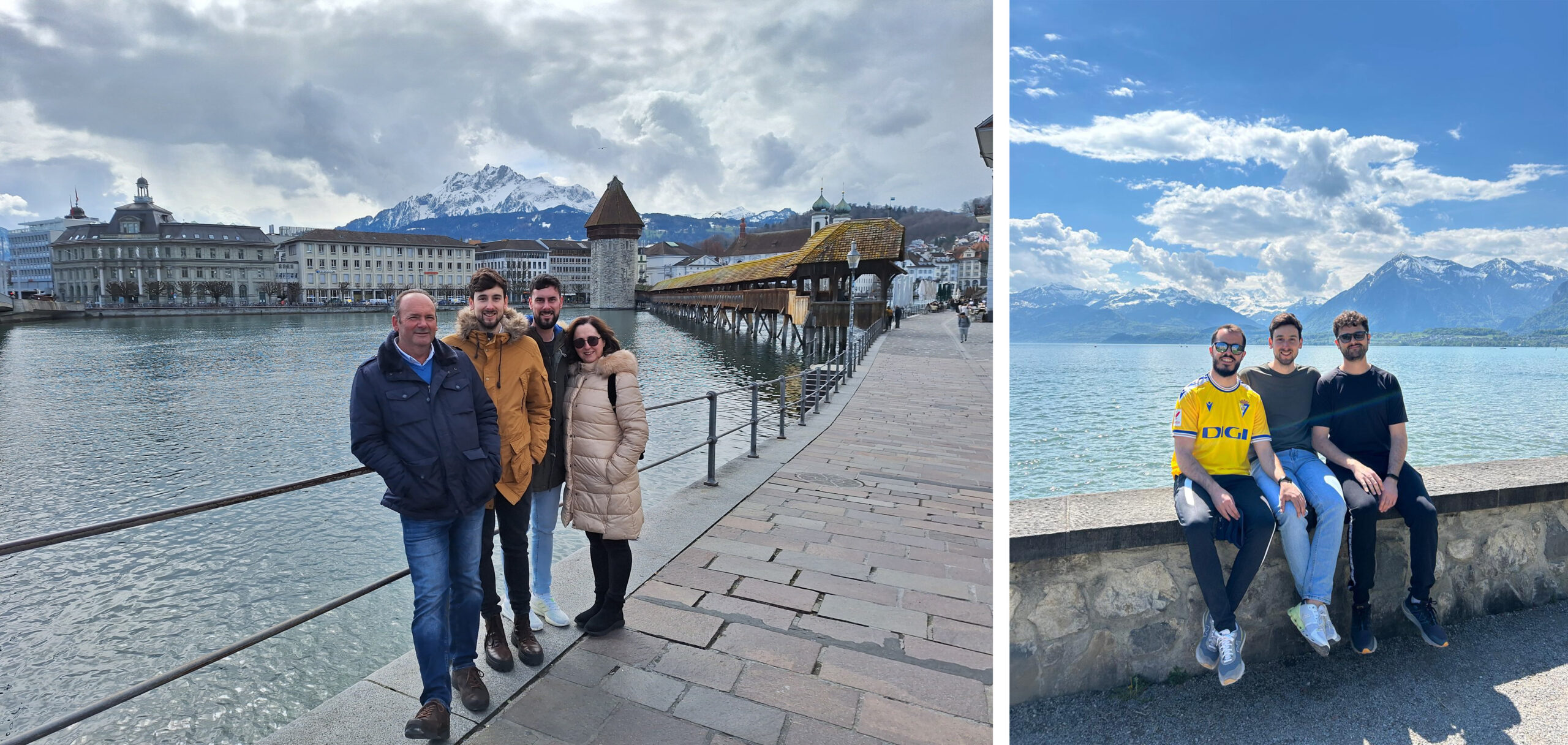
Leaving Madrid was especially hard because all my friends and colleagues with I was sharing experiences. Additionally, despite I left my family home 14 years ago, I strongly miss having my family a bit closer. I consider myself as a very familiar person and it is sometimes difficult relying on a flight to meet them, but they have always supported my decisions along the way. In any case, they have visited me several times in Switzerland and in France, so I felt like home for some days.
Do you invite young people to broaden their professional horizons outside?
Absolutely! It is obviously a though decision, it puts you in very difficult situations and it brings challenges in all aspects. I believe that going through it, and overcoming the challenges, changes your way of thinking and living. From the very beginning one is continuously learning, but it is an extremely enriching experience. Interacting and working with other cultures is a unique opportunity which makes you a better human being in every sense.
Of course, life comes with good experiences, and sometimes not so good, but I have been lucky throughout my way abroad regarding the people I have met. They have helped me so I should be very grateful. In general, I do not regret the decisions I have made, and I strongly encourage everybody to broaden their professional horizons. This kind of adventure helps us to push our limits way beyond what we could imagine.


