

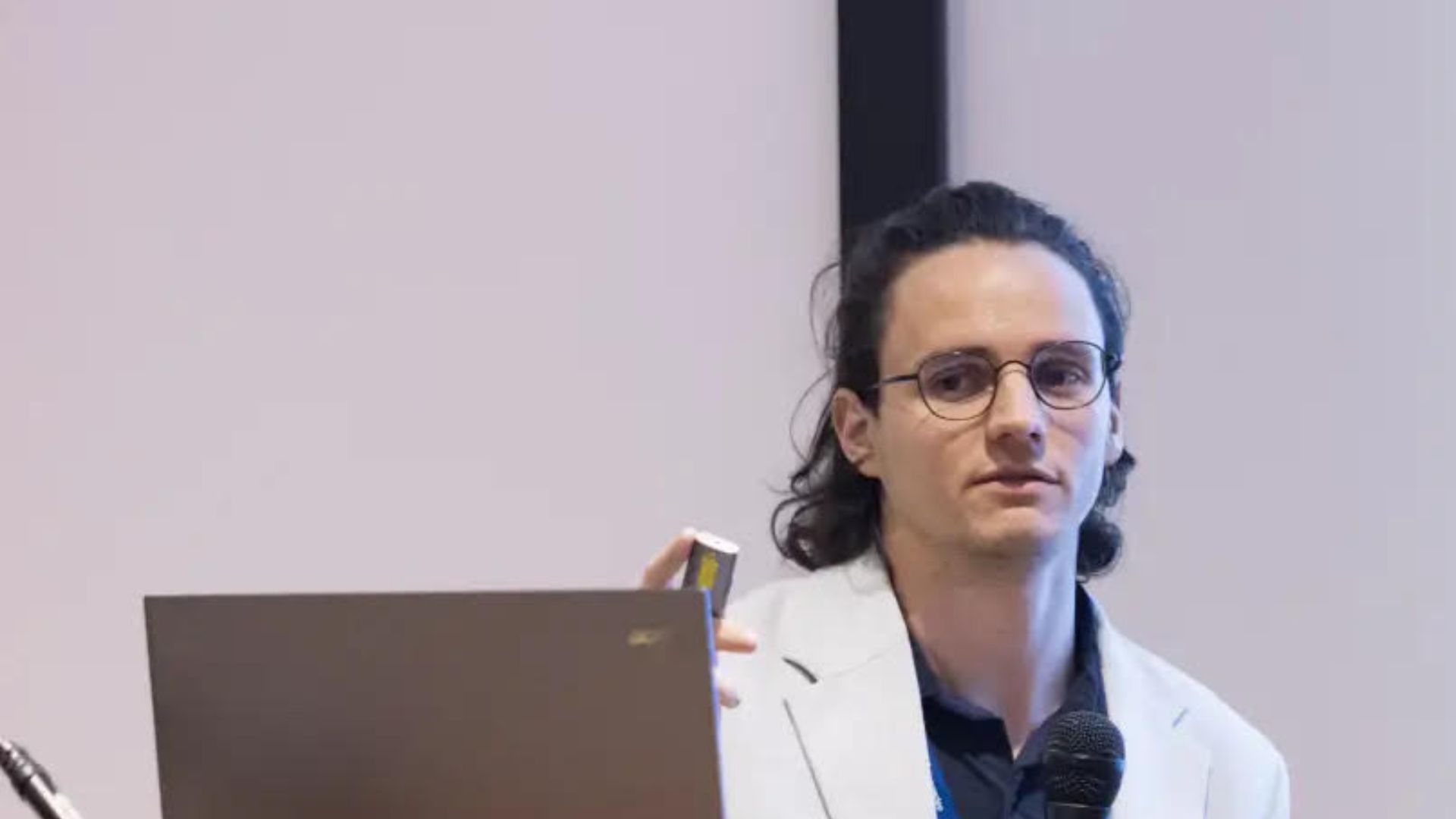
Texts and photographs: Juan Antonio Monleón
Juan Antonio Monleón is currently pursuing his PhD in Paris at the French Nuclear Safety and Radiation Protection Authority (ASNR), an organization created in early 2025 through the merger of the former IRSN and the French Nuclear Safety Authority (ASN). His research focuses on the study of neutron fluence in nuclear reactor pressure vessels and on quantifying the uncertainties associated with these simulations, a particularly relevant field in the current context of nuclear power plant lifetime extension.
Having studied at the Technical University of Madrid (UPM), with previous experience at ENUSA and the Belgian research center SCK CEN, Juan Antonio shares in this interview his academic and professional journey, his international experience, and his perspective on the opportunities that working abroad can offer in the nuclear sector.
To begin with, could you tell us about your academic background and how you ended up specializing in the nuclear field?
Initially, I started studying Telecommunications Engineering at the Technical University of Madrid. I spent two years there, but by the end of the second year I realized that it was not really what interested me most. So I decided to switch to Industrial Engineering, also at UPM.
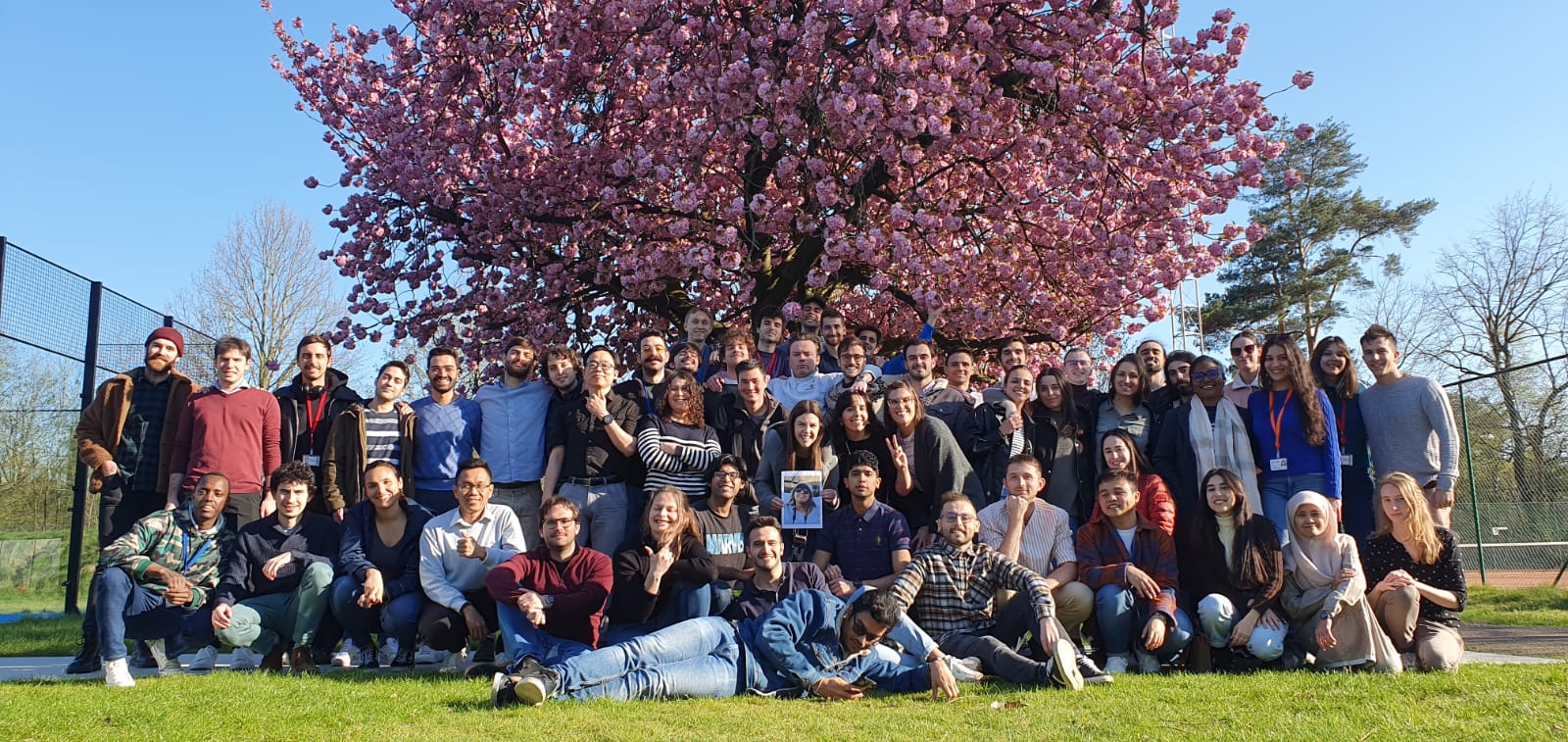
During my degree, I specialized in Energy Engineering. At that time, my initial plans had nothing to do with the nuclear sector, but I took a couple of courses related to this field that I found very interesting. That motivated me to apply for the double master’s program offered by UPM, which combines the Master’s in Industrial Engineering with the Master’s in Nuclear Science and Technology.
Taken separately, the two master’s programs would normally take three years, but there is the possibility of completing them in two thanks to course equivalencies. I applied, was accepted, and eventually completed the double degree.
What sparked your interest in the nuclear field?
I think it was a combination of the courses and the professors. The subjects themselves caught my attention, just as other energy-related courses did. But the Nuclear Engineering Department at UPM has excellent professors who are able to convey genuine enthusiasm for the field and motivate students.
In my case, they definitely succeeded. Those professors, together with the first courses I took, encouraged me to take the step and enroll in the double master’s in Industrial Engineering and Nuclear Science and Technology.
During the master’s program, did you have any experience that strengthened that interest?
Yes. During the double master’s, I completed a six-month extracurricular internship at ENUSA. It was more engineering-oriented than research-oriented, but it gave me my first professional exposure to the sector.
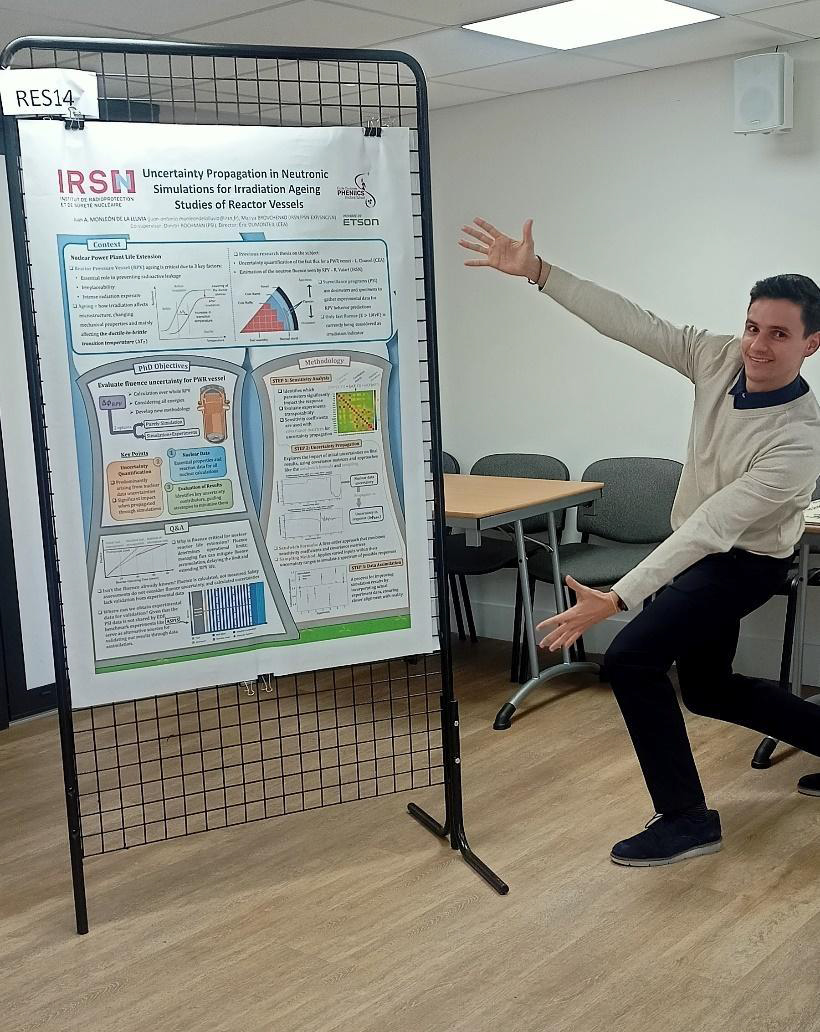
After the two years of coursework, I spent a third year working on my master’s theses. For one of them, I completed an internship at SCK CEN, the Belgian nuclear research center. I had the opportunity to go there with other classmates from the program to carry out research-related thesis work.
That was the first time I was truly immersed in the research world: I was able to see how it works, the kind of work that is carried out, and what day-to-day life in such a center is like. I enjoyed it a lot. After those nine months in Belgium, I spent the summer independently working on my second thesis project, also related to nuclear topics, although in a more autonomous way.
How did you then arrive at your first professional position?
While I was in Belgium, one of the researchers at the center forwarded me several PhD opportunities. One of them particularly caught my attention because it was closely related to the work I had been doing during my internship. It focused on neutronics, which was already an area that interested me.
The position was in Paris, at what was then the IRSN. I applied, went through several interviews, and was eventually accepted. That is how I started my PhD in Paris at IRSN, which later became part of the current ASNR.
Why did you decide that the opportunity in Paris was the right next step?
First of all, I had really enjoyed research during my master’s thesis work. I was quite sure that I wanted to continue in that field, and at that point I was not especially attracted to industry work.
In addition, I had found the experience of living outside Spain very positive. Once you are already abroad, it becomes easier to continue in another country than to take the first step directly from your hometown or usual environment. I wanted to take advantage of that momentum and start my PhD in Paris.
Paris was also a city that really appealed to me. It is a beautiful city, and it also offered me the opportunity to greatly improve my French. I had studied French at school and already had a foundation, but I knew that living and working there during the PhD would allow me to make major progress with the language. For me, that was a significant added value.
How long have you been in your current position, and what does your research involve?
I have currently been in the position for two and a half years, and I am now in the final stage of my PhD. In France, PhDs usually last three years, and in general they tend to fit quite closely within that timeframe. My thesis defense is scheduled for October this year, and my contract will also end that same month.
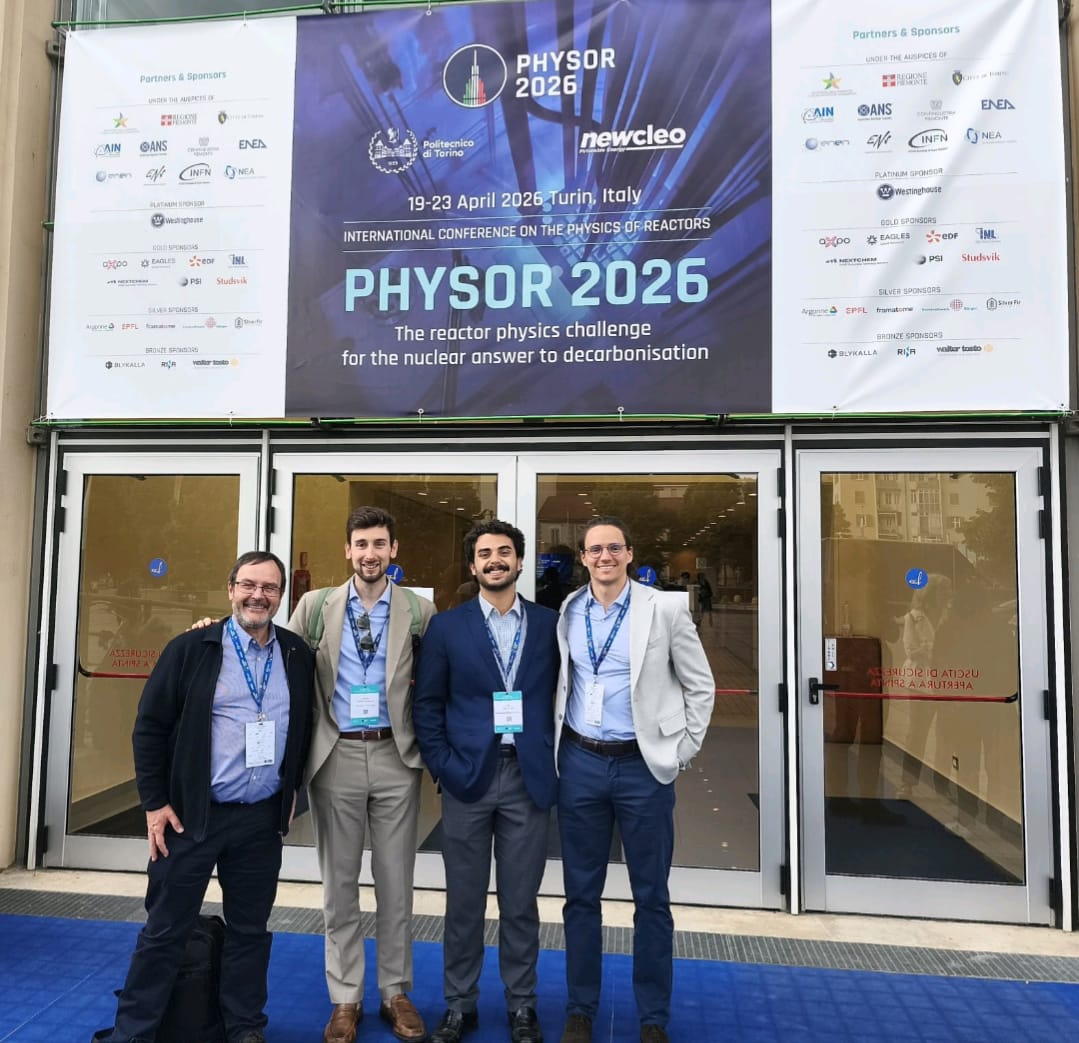
My research is part of the study of aging in nuclear reactor pressure vessels. More specifically, I study the neutron fluence reaching the vessels and the uncertainties associated with the simulations used to estimate it. The goal is to predict, with appropriate safety margins, the neutron fluence received by the vessel and to better characterize its impact on the material.
The reactor vessel is one of the key components that can limit the lifetime extension of a nuclear reactor. This is a very current topic, both in France and in Spain. The design lifetime of many reactors was originally set at 40 years, but that does not necessarily mean that this is their maximum operational lifetime. If the appropriate studies are carried out, that lifetime can be extended.
In France, the average age of reactors is around 40 years, so many plants are currently undergoing reviews and calculations to determine whether operation can be prolonged. My work is part of that broader context. I work in the field of neutronics and also with nuclear data, especially regarding the propagation of uncertainties from those data to the simulation results.
What does your day-to-day work look like?
My daily work is that of a researcher, mainly focused on simulation work. I do not directly perform experiments or work at experimental facilities, although I do use experimental results.
I work with particle transport codes, both deterministic and Monte Carlo methods. Using them, I carry out simulations, sensitivity analyses, and uncertainty propagation studies. All of this also requires substantial documentation work: properly recording what is done, the progress achieved, and the results obtained.
In addition, there is the writing of the dissertation itself. Although I am doing the PhD at ASNR, I am affiliated with Université Paris-Saclay, and my doctoral school requires at least one publication. So I also spend time preparing papers, reviewing results, and responding to comments.
Another important part of the work is attending conferences and giving presentations. There are also international working groups, often promoted by the OECD Nuclear Energy Agency, where researchers from different countries collaborate on specific topics. Since part of my research overlaps with some of those international projects, I also participate in those activities.
What aspects do you value most about your current work?
First of all, everything you learn. The nuclear field is very broad, and although everyone eventually specializes in very specific topics, learning never stops.
But what I value most is the international collaboration. I find it extremely enriching to meet people from many different countries, work with researchers from different institutions, and build a professional network. For me, that international dimension is one of the most valuable aspects of this experience.
Beyond the professional side, how did you experience moving to Paris?
I think the adaptation went quite smoothly. I had already spent nine months in Belgium, so the transition was not as abrupt as it might have been if I had moved directly from Spain.
Paris is a very beautiful city, and I am lucky to live in a very pleasant neighborhood with many local shops. It is not a touristy area, but it is close to the city center, which makes daily life very comfortable.
At work, I have not had any problems either. People have been very kind to me. It is true that there are cultural differences between Spaniards and French people, and sometimes you notice them, but overall I have met very welcoming people and the experience has been very positive.
What do you miss most about Spain?
Without a doubt, the weather. I miss having more months of warmth and sunshine. I also miss my family and friends, and of course the food. Food in France is good, but it is not Spanish food.
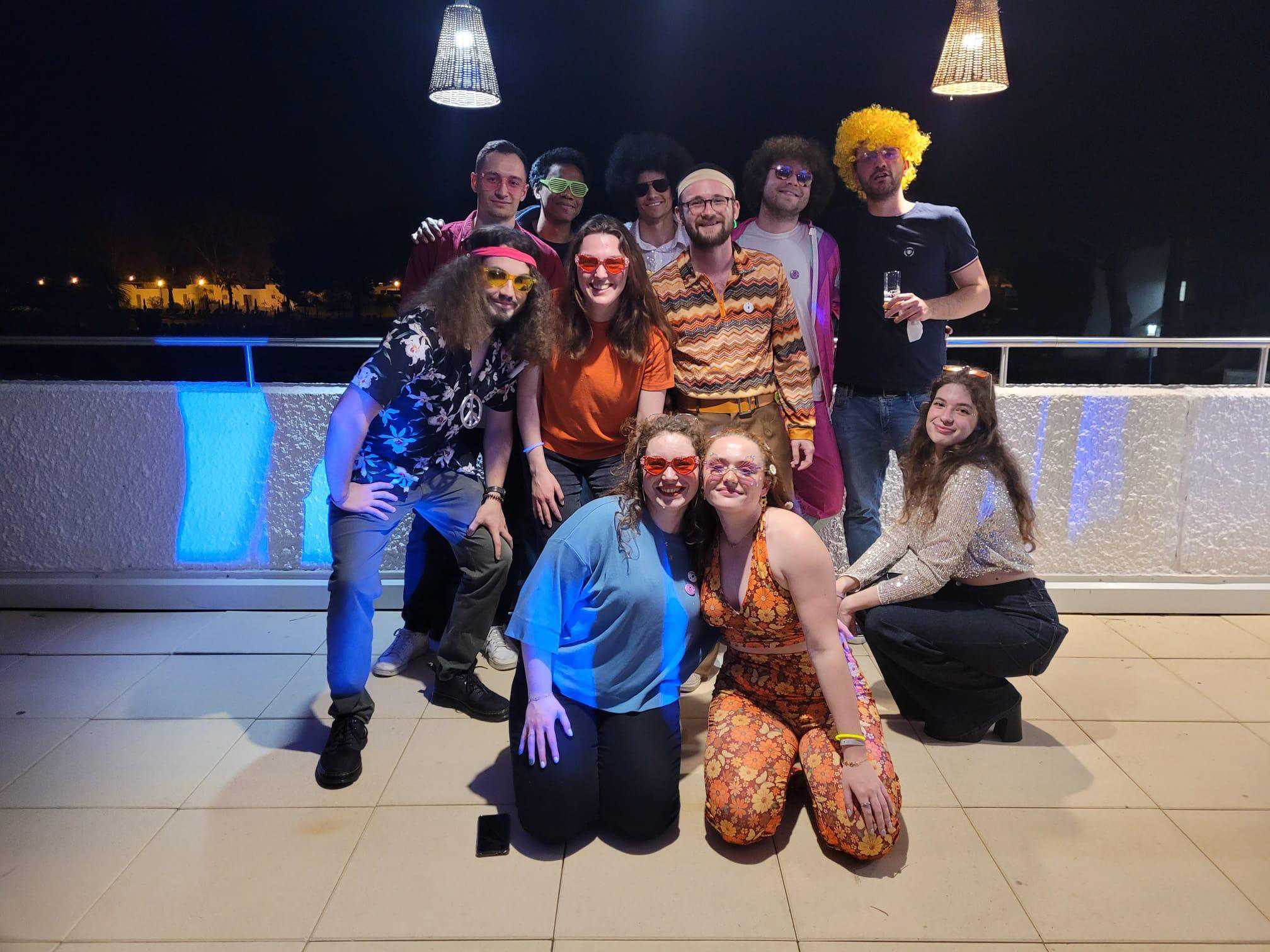
And what aspects do you especially value about living and working in France?
First of all, the opportunity to truly get to know another country in depth. Visiting a country is not the same as living there, working there, and understanding its culture and way of life more deeply.
I also really value having improved my French. Learning the language in both a professional and everyday setting is something I consider very positive.
Professionally, Paris offers very interesting opportunities. Since I am there, I have access to many activities within the nuclear sector. For example, the OECD Nuclear Energy Agency headquarters is in Paris, which makes it much easier to attend courses, meetings, conferences, and working groups. If I were based in another city, whether in Spain or elsewhere, participating in all those activities so easily would be much more difficult.
Based on your experience, would you recommend that young nuclear professionals seek opportunities abroad?
It is a very personal decision, and everyone has to assess it according to their own circumstances. But my advice would be that, if someone can consider it and has the opportunity, they should do it. They should not avoid it out of fear.
In my opinion, the opportunities and learning experiences you gain abroad are far greater than what I would have experienced had I stayed in Spain. And in the long term, there is always the possibility of returning. In fact, my intention is to return to Spain in the future. I do not know whether it will be immediately after finishing the PhD, a couple of years later, or further down the line, but I know that in the long run I want to go back, because life in Spain is very good and that is where my family and friends are.
From my internship in Belgium until now, I feel that going abroad has opened many possibilities that I would not otherwise have had. I probably would have found other opportunities by staying, but I think the opportunities that come with international experience are particularly valuable.
I understand that right now it may be tempting to move directly into industry, because there is quite a lot of work in the nuclear sector in Spain and many students finishing the master’s program can start working immediately. But those opportunities will still be there. Doing an internship abroad, a research stay, or any international experience allows you to meet more people, discover different working methods, and greatly broaden your professional perspective.
Looking ahead, what path would you like to follow after completing your PhD?
I would like to continue in nuclear research. I do not particularly see myself working in industry, although you can never say never. It is simply not what interests me most right now.
As you approach the end of a PhD, postdoctoral opportunities usually start to appear, and many of them are outside Spain. Returning to Spain is also a possibility, but I feel that if I want to do a postdoc abroad, now is the right time, just after finishing the thesis.
I am open to doing a postdoc abroad, ideally in Europe, perhaps in France, Switzerland, or another European country. I also know there are opportunities in the United States or Japan, although I still need to think carefully about it.
In the long term, within a timeframe that I do not really imagine much beyond two years ahead, I would like to return to Spain and develop my career there. I am interested both in research and academia. I know that the academic path is more difficult, because it depends on available positions and many other factors, but if in the future I could move in that direction, I would love to.


