

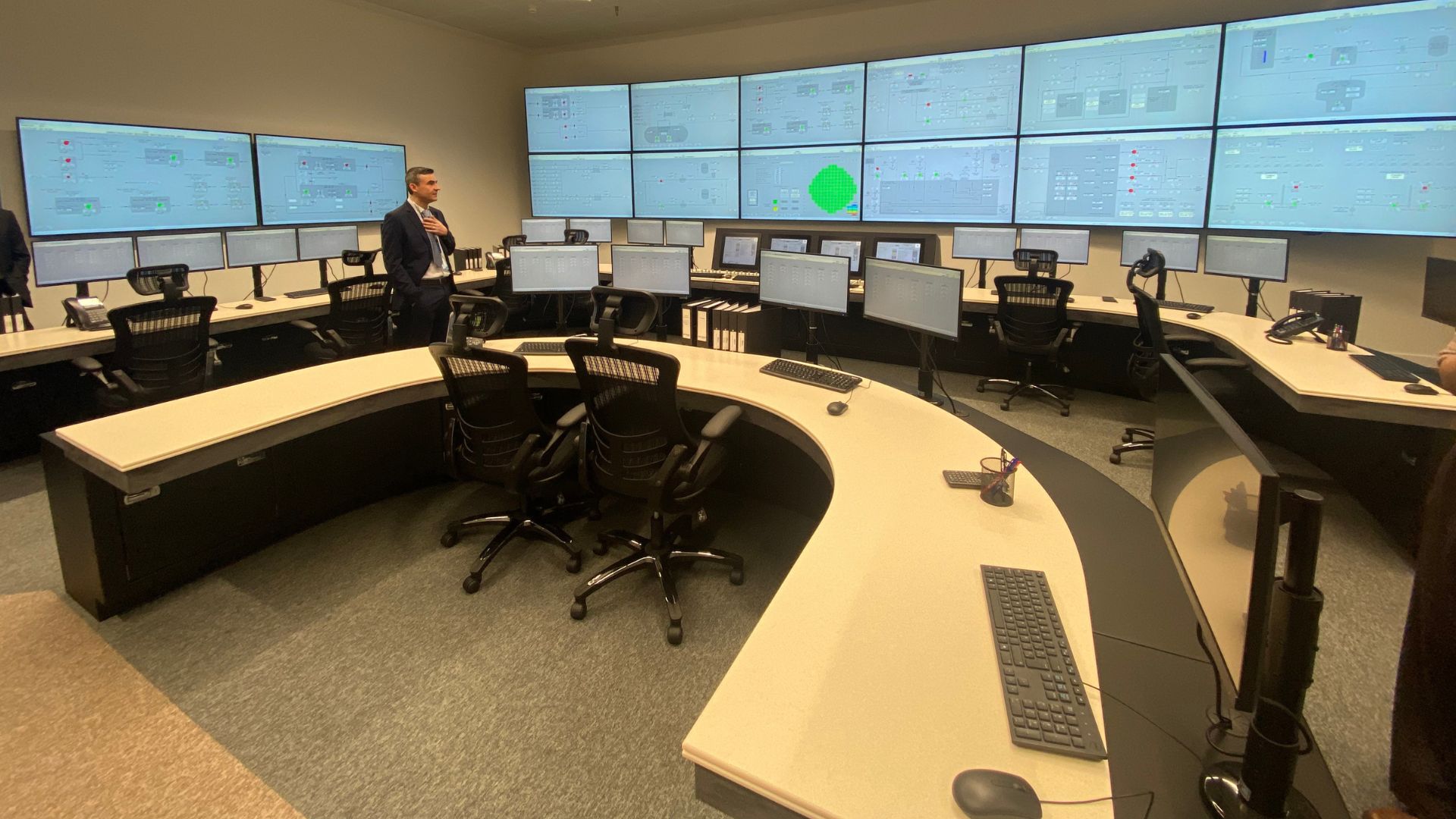

Westinghouse Electric continues to strengthen its commitment to operational excellence and talent development with the launch of the AP1000 Training Academy in Madrid, an advanced training center featuring a full-scope simulator and a full-scale replica of the main control room of the AP1000 reactor.
The new facility, located in San Sebastián de los Reyes, positions Spain as a strategic hub for training nuclear professionals in Europe, strengthening the country’s role within the company’s global structure.
During the presentation, held as part of an exclusive media tour, journalists toured the facilities accompanied by Luca Oriani, Global President of New Reactors (APx), and Xavier Coll, president of Westinghouse Spain. Both emphasized the Academy’s significance as a key element to guarantee operational excellence, safety, and the preparedness of the teams that will operate future AP1000 plants on the continent.
TRAINING AS A STRATEGIC PILLAR
For Westinghouse, training is not a complementary element but a structural requirement to ensure the safety and efficiency of Generation III+ nuclear power plants. “Training is essential for two fundamental reasons: to prepare the operators who will run the plant and to train the engineers who design and support its systems,” explained Luca Oriani. “We are talking about training processes that can take between three and five years.”
In newly built projects, training begins around five years before the plant enters commercial operation, ensuring that teams are fully prepared from day one.
Westinghouse also maintains a strong commitment to talent retention. Many of its professionals build long-term careers within the company, making investment in training a strategic decision with lasting impact.
A SIMULATOR THAT REPLICATES THE REAL CONTROL ROOM
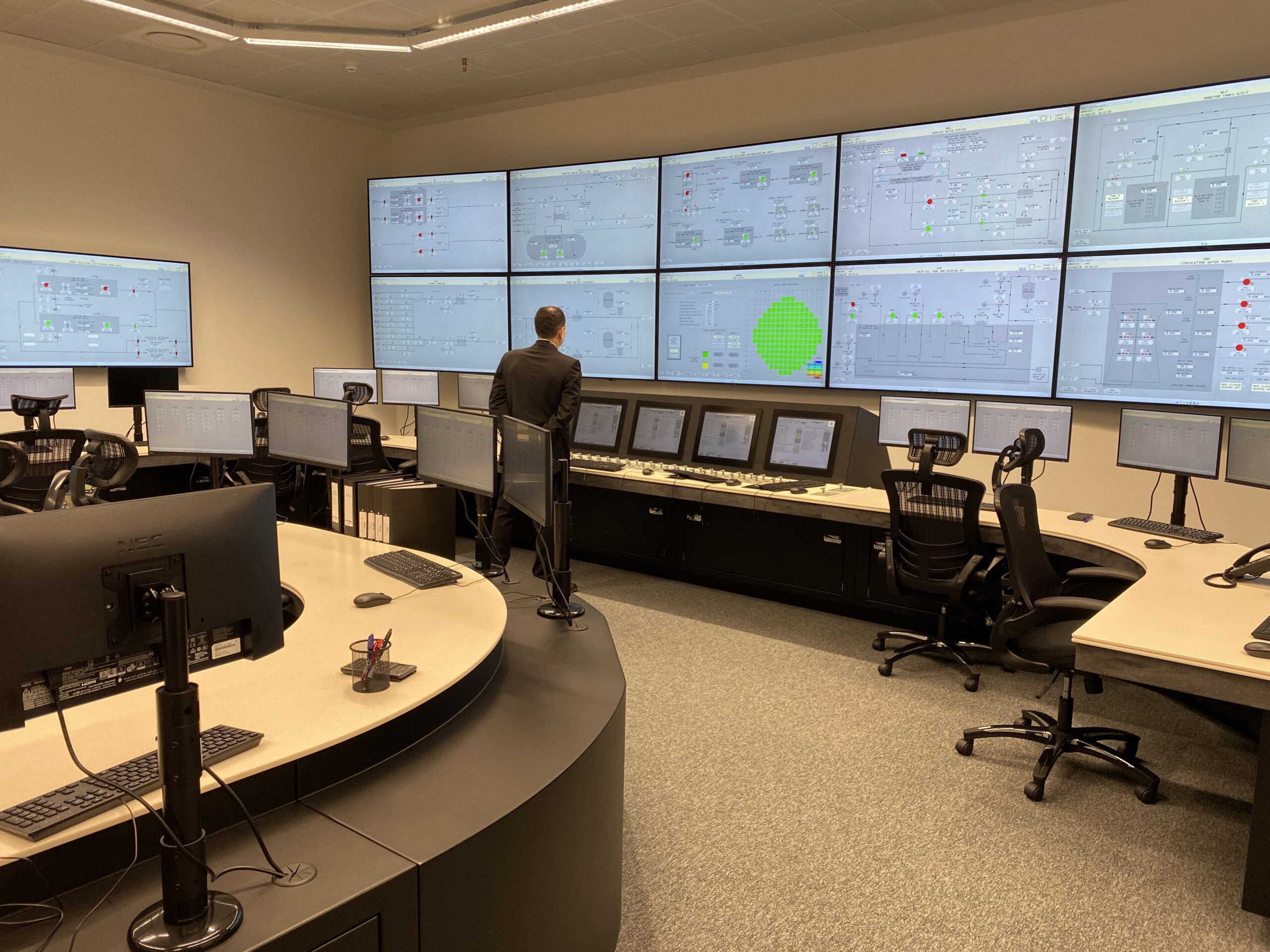
The AP1000 simulator allows operators to train in an environment that faithfully reproduces the actual control room, including digital instrumentation and control systems, consoles, and the dynamic behavior of the plant. “Everything in a nuclear power plant is based on extremely reliable technology, but it still requires highly qualified people who know how to operate each system correctly,” Oriani emphasized.
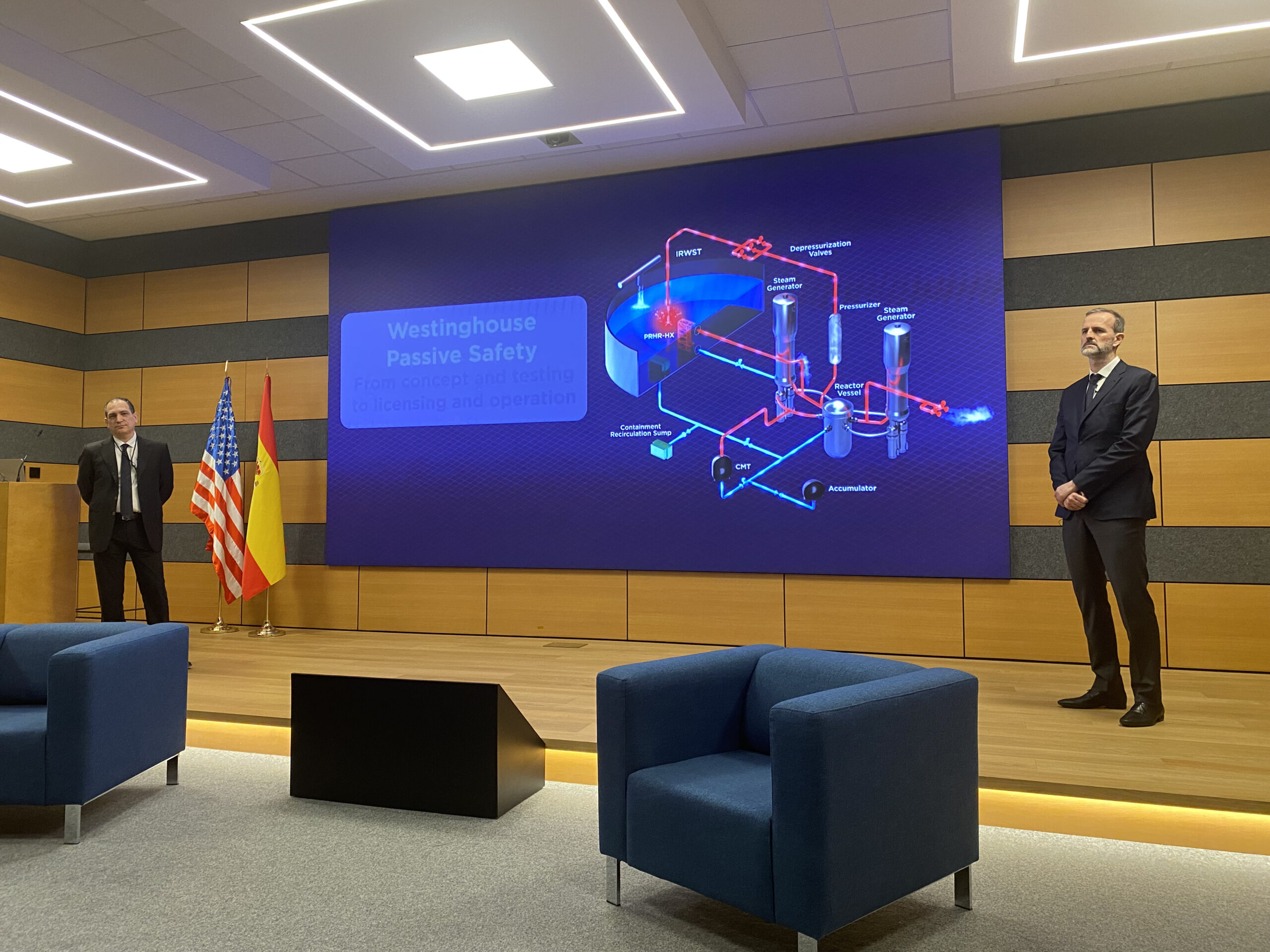
The AP1000 reactor incorporates passive safety systems capable of maintaining critical functions without the need for external power for at least 72 hours in the event of an extreme incident. This simplified and standardized design philosophy reduces dependence on active systems and strengthens overall plant robustness.
In addition, the modular design of the AP1000 makes it possible to optimize construction time and cost. As Oriani explained, standardization and structural simplification significantly reduce the amount of materials required compared to previous generations, which positively impacts schedules and investments.
GLOBAL DEPLOYMENT AND PREVEN PERFORMANCE
Currently, six AP1000 reactors are in commercial operation in the United States and China, with additional units under construction, and the company forecasting up to 14 new reactors in Eastern Europe (Poland, Ukraine, and Bulgaria). The AP1000 is a Generation III+ pressurized water reactor (PWR) technology with a nominal output of nearly 1,200 Mwe and a design that prioritizes passive safety and operational efficiency.
Globally, the AP1000 fleet has generated more than 245 TWh of electricity through 2024 and currently provides around 6.8 GWe to the power grid, with availability factors above 93%. In addition, the design has set industry records for refueling times and performance during early operating cycles.
SPAIN, IN THE NEW EUROPEAN NUCLEAR LANDSCAPE
The opening of the AP1000 Academy comes at a moment of redefinition for Spain’s energy framework, where the debate continues over the timeline for phasing out the current nuclear fleet and the role that this technology can play in the energy transition. In this context, the decision to locate a European-scale training center in Madrid reinforces the country’s position as a technical hub within the international nuclear ecosystem.
During the presentation, Oriani underscored the unique value of Spanish talent and the extensive experience of the country’s industry. “Spain is unique; it has the talent we need and very easily facilitates the arrival of experts from around the world,” he stated, highlighting the country’s capacity to integrate into projects of global scale.
Asked about the evolution of the national energy debate, Oriani adopted a long-term view: “Discussions change. Spain will build new nuclear plants. It may not be immediate, but we have been working for 140 years, and we know how to wait.” Beyond political timelines, the company thus maintains its strategic commitment to the Spanish market and its role in Europe’s nuclear development.
MADRID, EUROPEAN CENTER FOR NUCLEAR TRAINING
With this inauguration, Westinghouse consolidates its Nuclear Training Center in Madrid as a European benchmark for AP1000 technology training. The company plans to progressively expand its training portfolio and strengthen cooperation with clients and international organizations. “Spain is a strategic location”, Oriani emphasized. “Its geographical position facilitates connection with the United States, and with Central and Eastern Europe. It is a very convenient place to concentrate technical and training capabilities”.
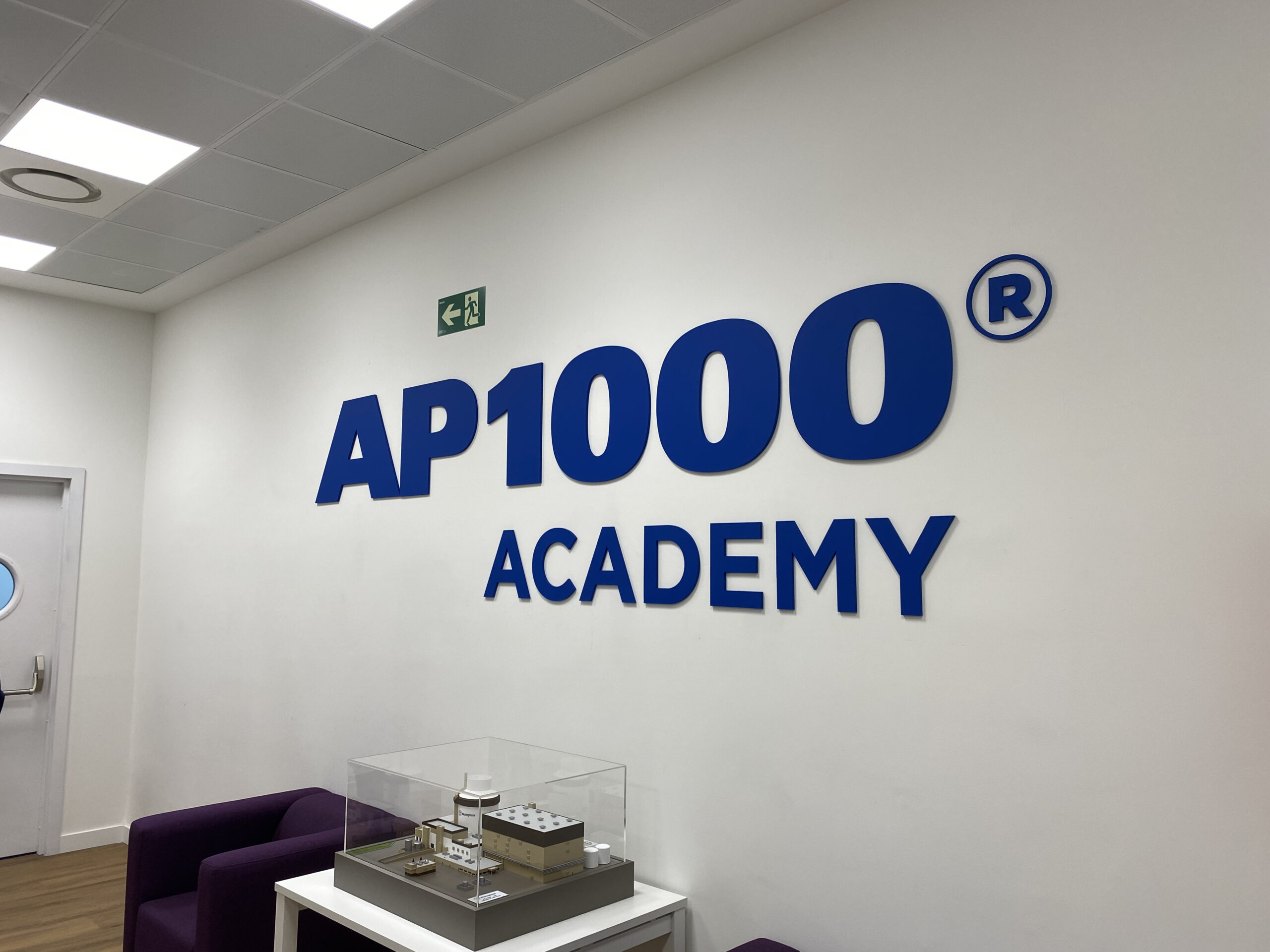
The launch of the AP1000 Academy not only marks the opening of a new training facility, but also represents a strategic step in preparing the talent that will operate future European nuclear power plants—at a time of energy transition in which nuclear power once again stands as a key element to ensure secure, stable, and emissions-free supply.


