

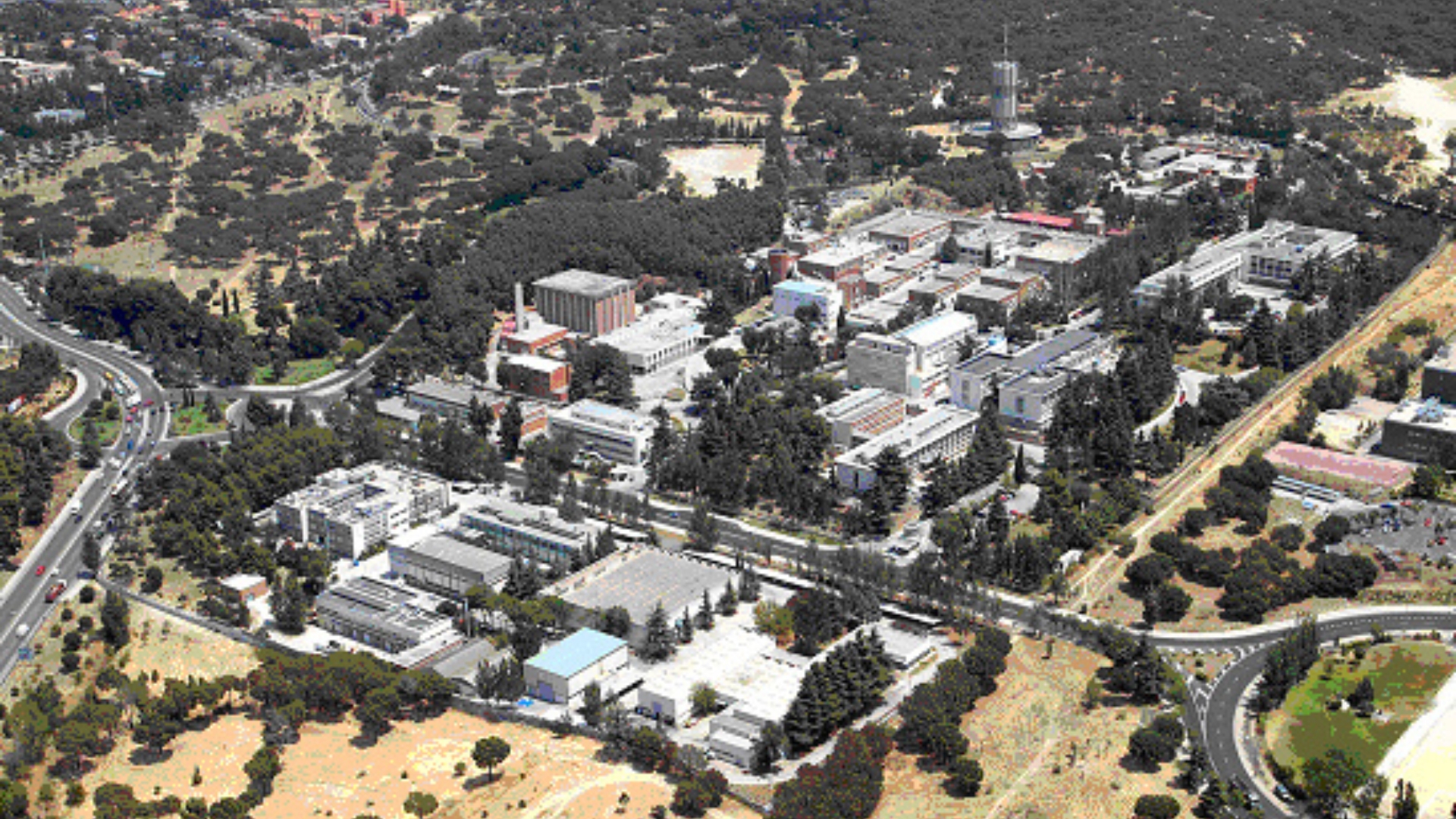

Since 1948, when the Junta de Investigaciones Atómicas (JIA) was created, Spain, like many countries, began its journey into the field of peaceful applications of nuclear energy, seeking to capitalize on its uranium mineral resources, which gave our country a privileged position in Europe.
LaJEN and CIEMAT have been key to the execution of the Spanish nuclear plans
Since then, Spain has made great progress in the field of nuclear energy, aided by the research of JIA, JEN and CIEMAT, which, along with the electricity sector, have been key to the implementation of the country’s energy plans. This included both the National Electricity Plan of 1972-1981, with a large number of planned nuclear power plants, and the Energy Plan of 1983, which substantially reduced the number of nuclear power plants and established a nuclear moratorium, proposing greater diversification of energy sources.
The JEN’s research facilities in the 1960s stood out within the Spanish R&D landscape
The enormous effort of the JEN to launch all the experimental facilities of the nuclear fuel cycle, except for enrichment, in a minimum amount of time was surprising.
There has also been an attempt to develop nuclear weapons, although this has been limited to preliminary reports and studies, which were never implemented.
The JEN entered a crisis in the 1970s, which was solved with the creation of CIEMAT.
The JEN suffered a crisis in the late 1970s due to: the abandonment of the closed cycle, following the ban on reprocessing in the US, in line with most nuclear-powered countries; the commercial consolidation of light-water reactors, which led to the abandonment of other developments, such as the DON organic liquid project, on which the JEN worked in collaboration with the US; the transfer of responsibilities for the first and final parts of the nuclear fuel cycle to the public companies ENUSA and ENRESA, to streamline management; and the transfer of regulatory competence to the CSN.
The solution to this crisis came in 1986 with the creation of CIEMAT, under the Science Law.
As in energy research centers in other countries, CIEMAT diversified its objectives to all energies
Since then, CIEMAT has adapted to the Government’s successive Energy Plans, which have limited the number of nuclear power plants to the current ones and have diversified energy sources, giving an increasingly important role to renewable energies.
In particular, within the nuclear field, CIEMAT has focused its research on the needs of the nuclear fleet: operational safety of nuclear power plants, extending their lifespan in the event that the Government decides to expand them, radioactive waste management, radiation protection, ionizing radiation metrology, and nuclear innovation, to monitor new nuclear developments that improve safety and contribute to addressing waste management issues.
Furthermore, CIEMAT has made a major effort in the development of renewable energies, which has placed this organization among the most important in the world, particularly in the development of concentrated solar power technology, in which it holds the world’s leading position.
In addition, CIEMAT has boosted research into thermonuclear fusion, constructing the TJ-2 facility, a stellarator-type configuration, included in the European EURATOM program.
Research in high-energy physics has also been very significant, contributing to important developments to CERN’s LEP ring.
CIEMAT has contributed very actively to transferring technology to the company for its participation in major science tenders
Since the beginning of 2000, CIEMAT has launched several equipment developments for high-level science, leveraging the technological capabilities of nuclear electronics, nuclear physics, and manufacturing techniques. These developments have focused on the development of superconductivity applications, the development of medical imaging equipment for diagnosis and therapy, and the development of superconducting magnets for large European experiments, particularly those at CERN.


